Welcome to the Inert Ordnance Collectors.
Page 2 of 3 FirstFirst 123 LastLast
Results 11 to 20 of 29
  1. #11
    Premium Member
    Join Date
    Mar 2009
    Location
    U.S.
    Posts
    2,578
    Thanks
    119
    Thanked 330 Times in 194 Posts
    Mike,

    The Fixor web site is pretty serious to say that their second component isn't AN. They say it is an inert material, whereas AN is usually considered an oxidizer. That is their big selling point, that their component is "inert", and they seem to be very secretive about what it is.
    ___HAZ/
    _____/ORD Hazardous Ordnance Recognition
    ________Saving Lives Through Education

  2. #12
    Premium Member
    Join Date
    Nov 2007
    Location
    Ohio, US of A.
    Posts
    1,634
    Images
    9
    Thanks
    208
    Thanked 120 Times in 73 Posts
    I discovered in my corner of the basement a book on Liquid explosives. Very neat to look at. There were three (if you consider each bottle) types of Astrolite A & B. Then came Astrolite G. The book starts out with the early developement of Astrolite's begining and what they used as chemicals back then. I will have to post some more info on this subject in an hour or two.
    V40
    Mark
    MACVSOG Living Historian"
    SOG weaponery and Ordnance Historian

    any live ordnance shown in my posts was dealt with accordingly by trained qualified professionals

    "Never start a fight that you can't win with everything you have right now" By Sergeant Joe Walker, 10 (One-Zero) of RT California, Vietnam.

  3. #13
    Senior Member
    Join Date
    Jun 2007
    Location
    Germany
    Posts
    1,781
    Thanks
    22
    Thanked 290 Times in 211 Posts
    Here what "Meyer's Explosives" has to say about:

    ASTROLITE
    Stochiometric mixture from hydrazine and ammonium nitrate. It was a
    spin off from the US-rocket program in the 60’s. Like in 19
    th century
    Sprengel (
    W Sprengel Explosives) already suggested, two non explosive
    components become cap sensitive after being mixed. Astrolite
    G and Astrolite A/A-1-5 (with 20 % aluminium additive) are called also
    “liquid land mine” or “binary explosive”. The explosive strength of such
    mixtures is very high (see also
    W Hydan) and exceeds in certain
    aspects even Nitroglycol. Detonation velocity of Astrolite G: 8600 m/s
    and Astrolite A/A-1-5: 7800 m/s.


    And here Wikipedia:
    http://en.wikipedia.org/wiki/Astrolite

  4. #14
    Senior Member
    Join Date
    Jun 2007
    Location
    Germany
    Posts
    1,781
    Thanks
    22
    Thanked 290 Times in 211 Posts
    And here some general info on liquid explosives:

    http://www.globalsecurity.org/milita...ves-liquid.htm

  5. #15
    Senior Member
    Join Date
    Jul 2008
    Location
    Germany (a civilian again!)
    Posts
    131
    Thanks
    3
    Thanked 5 Times in 4 Posts
    Liquid explosives have never been looked at favorably by the US military. Leakage from the ordnance is always a problem after a while, the low density of a liquid will limit the power of the explosive, and, in the case of the astrolite explosives- the hydrazine makes the explosive VERY toxic. Not to mention the economic reasons- hydrazine is not cheap to make, due to it's toxicity.

  6. #16
    Ordnance Approved
    Join Date
    Jul 2009
    Location
    Belgium
    Posts
    1,060
    Thanks
    439
    Thanked 140 Times in 85 Posts
    Here two links, one for astrolite that you have sure read, the second for kinepak, a binary explosive that we have tested. Our problem is the transport on airways. Therefor we are looking on binary explosives who are two different product, inert when take apart and then authorized in aircrafts. But it never give a similar effect as C4 or TNT !

    http://en.wikipedia.org/wiki/Astrolite
    http://www.havoc.com.au/KinePak_Brochure.pdf

    Yoda
    Any live or dug ordnance presented by me has been disposed of by EOD technicians.

  7. #17
    Senior Member
    Join Date
    Dec 2009
    Location
    England, Lincs
    Posts
    510
    Thanks
    65
    Thanked 124 Times in 65 Posts
    In the mid 1980s I was a guided weapons instructor at the Army School of Ammo and occasionally helped out the EOD branch on the demolition ground. The EOD branch acquired a liquid explosive that was in spray cans, named Foamex. It was simply squirted from the can onto whatever you needed to use it on, then you placed a detonator into the liquid. The liquid had to be thick enough not to run or, if on a vertical surface a bund had to be improvised to keep it in place. It was best to keep the time from spraying to detonation as short as possible. I think its use for what we then needed was limited. I do not remember from where it was sourced.
    Any live or dug ordnance shown in my posts has been dealt with accordingly by eod personel

  8. #18
    Senior Member
    Join Date
    Jul 2008
    Location
    Germany (a civilian again!)
    Posts
    131
    Thanks
    3
    Thanked 5 Times in 4 Posts
    I've heard of this foaming explosive- it was based on nitromethane, and was intended for humanitarian mine clearance. Foamed nitromethane can be detonated, but it is easier/cheaper to ship than a "real" explosive to a mine-filled country.

  9. #19
    Ordnance Approved
    Join Date
    Dec 2010
    Location
    Illinois USA
    Posts
    490
    Thanks
    1
    Thanked 152 Times in 77 Posts
    When I worked for Ensign Bickford we made the foam in a can, as well as an extrudable explosive that looked like a chalk gun. There was some thought the foam expl (called LEXFOAM®) would work in the mione clearance arena. There was anotherm call MNX foam, nitromethane based, in 2003 the Army wrote a report on it say 1 can for a AP mine and 2 cams for a AT mine 0 too expensive. The FBI and ATF got involved in it and as the stroey goes, put enough pressure on the manufacture not to market it, thought it would be too great of a terrorist tool. I have 4 or 5 reports on both of these foams. As for Fixor, the patent talks about AN mix with AL and a catalyst, same goes for a explosve called
    Tannerite it supposedly is not an oxidizer either but again the patent says AN with AL. So who knows.

    Following is a write up on Lexfoam:

    LEXFOAM®
    Objective
    Provide for in-situ explosive neutralization of surface and buried AP and AT mines, using a nonexplosive material that is safe to transport and store and can be mixed on site to form a Class 1 explosive.

    Description
    Liquid Explosive Foam (LEXFOAM®) offers a highly efficient and versatile alternative to conventional high explosive blocks for the demolition of landmines and some unexploded ordnance. Mines are neutralized by spraying the LEXFOAM® on the mine and then detonating it from a distance with a standard blasting cap or a detonating cord. LEXFOAM® is composed of nitromethane stock solution which is mixed with liquid propane under a blanket of pressurized nitrogen. When this mixture is exposed to the atmosphere, the liquid propane expands to a gas producing a foam with the physical consistency of shaving cream. Prior to foaming, all components are classified as either inert (nitrogen) or as a Class 3 flammable liquid (LEXFOAM® stock solution and liquid propane). Only after foaming is a highly effective explosive produced. Another advantage of LEXFOAM® is that it makes intimate contact with uneven and rounded surfaces of mines where the use of explosive blocks might not initiate sympathetic detonation. The LEXFOAM® system was originally developed as a vehicle and a backpack delivery system. A new effort has been initiated to create a hand portable aerosol can delivery system that is a substantial improvement in weight and cost over the backpack version. The aerosol system consists of one can containing the LEXFOAM® stock solution and a second smaller capsule containing liquid propane. In the field, the liquid propane is injected into the LEXFOAM® stock solution container. The aerosol delivery system will be tested in December 1998.


    Golden West Products International
    15233 Ventura Boulevard, Penthouse 8
    Sherman Oaks, CA 91403
    ATTN: Joseph L. Trocino
    Phone: (818) 981-6400 or Fax: (818) 501-6181

  10. #20
    Ordnance Approved
    Join Date
    Dec 2010
    Location
    Illinois USA
    Posts
    490
    Thanks
    1
    Thanked 152 Times in 77 Posts
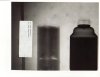
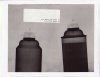
    Foam explosives X ray compared to shaving cream and a cast booster

    foam exp cast boost.jpgfoam exp shav.jpg


Page 2 of 3 FirstFirst 123 LastLast

Bookmarks

Posting Permissions

  • You may not post new threads
  • You may not post replies
  • You may not post attachments
  • You may not edit your posts
  •  
Back to top
Website designed and maintained by Tucanoo Solutions Ltd