What's new
British Ordnance Collectors Network

This is a sample guest message. Register a free account today to become a member! Once signed in, you'll be able to participate on this site by adding your own topics and posts, as well as connect with other members through your own private inbox!

Can somebody point me to the right British manual?

Hoeksel

Well-Known Member
I recall having a British manual showing the mark attached as being a reject case. I looked hard in my references but I could not find it, annoyingly I know I do have it. I have many digital copies of well known Britisch ammunition and packaging manuals. Can one of the experts on this forum help me?

1766218864265.jpeg
 
Hi Hoeksel,
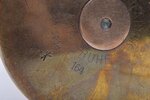
Take it you mean the two arrow tips, point to point, if so, this is the sold out of service mark, and will probably be found in Quartermaster instructions rather than ammunition manuals as such.
Alan1
 
I'm actually not sure that this is a condemned case mark. Looks to me to be the sale mark that was often stamped on military property, even if said property was not actually manufactured by us. I have seen it on other items, eg a Guedes rifle that was captured during the Boer War, repurposed, or reissued for use by one of the Colonial units and then disposed of on the commercial market.
Perhaps Tim can help - he knows all about marking on ammunition.
 
But that is a German case ......
It looks like a 77mm FK 96 case. One possibility is that during WWI the British equipped somewhere between 60 and 100 merchant ships with captured FK 96 barrels mounted on RCD Woolwich-made carriages, as extemporised countermeasures against U boats. A number of examples exist (Ottawa War museum Canada has one), and it was known as Ordnance QF 77mm MkI.

Another possibility is that German guns were captured and evaluated, as was ammunition. At the end of the war with the sell off of Ministry of Munitions surplus, German 77mm cases stamped SOLD M /|\ M were disposed of - discussed previously with example:

https://www.bocn.co.uk/threads/british-markings-on-german-shell.68656/#post-134335
 
Better to ignore the shell case as if will make the question more complex ;-). It is a large navy shell case by the way, not a 7,7 cm, more specifically a 10,5 cm SK L/35-L/45 C/95. I write about this case in my "Krupp" article.

You have to agree the marking I show has a striking resemblance. Thanks for the link explaining this mark as a "sold" mark. I have seen it more often, but this mark is pretty rare.

That being said, the "sold" explanation would make more sense. It is very likely the British took a lot of WW1 stuff home for whatever reasons and sold it off later. I also have another strange image series of another large German case with a British primer and typical non-German/very-British slots at the mouth of the shell case. The British did do more weird stuff than documented for sure ;-).

 
Last edited:
Better to ignore the shell case as if will make the question more complex ;-). It is a large navy shell case by the way, not a 7,7 cm, more specifically a 10,5 cm SK L/35-L/45 C/95. I write about this case in my "Krupp" article.

You have to agree the marking I show has a striking resemblance. Thanks for the link explaining this mark as a "sold" mark. I have seen it more often, but this mark is pretty rare.

That being said, the "sold" explanation would make more sense. It is very likely the British took a lot of WW1 stuff home for whatever reasons and sold it off later. I also have another strange image series of another large German case with a British primer and typical non-German/very-British slots at the mouth of the shell case. The British did do more weird stuff than documented for sure ;-).
It goes with our national characteristics :)

The Broad Arrow stamp was held by inspectors and examiners under the control of the Master General of Ordnance. Basically these guys stood at the boundary between Government and contractor and had the responsibility of managing stores passing across the boundary. Stores taken into service from Trade would be marked with the broad arrow, so the origins of the "double arrow" was the cancellation of the government ownership mark by using a second strike of the same mark. I have seen situations where the arrow strikes are from different punches, but they are rare. Most times you used the same broad arrow stamp to mark "Out of Service".

Broad arrow stamps were only held by MGO inspectors and quite closely controlled, latterly from Woolwich Arsenal.

Most of these provisions were controlled by Materiel Regulations for the Army
 
I may be out of step with the thinking of others, but I don't believe that is the British 'double arrow' mark. It looks like a single stamping, not two. A single arrow would indicate Government service and a second stamp would take it out of service.
 
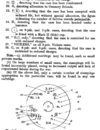
From a Great War Publication - "List of Stamps used by the Department of Inspection of Munitions"

Section A - Stamps used on gun ammunition

tamps_Page_1.jpg
Stamps for Cartridge Division Stores

tamps_Page_2.jpg
Section E - Stamps used on Small Arms and their components.

tamps_Page_3.jpg

The examples I've seen have always been perfectly aligned, leading me to believe that a single stamp was used. However, if circumstances dictated, there's no reason why the original broad arrow couldn't be amended.

Furthermore I would think there was a bit of "definition shift" - items that were originally rejected or condemned and would normally would have been recycled, at war's end were disposed of.

TimG
 
Top