
I saw this item in a shop and looked on the net for ID. The chute photo is taken from the net.
It has a parachute that screws onto a flare of some kind so an airforce item? Dated 1945.
I ask what flare it screws onto and how the flare is ignited. Any help/photos appreciated.
It has a parachute that screws onto a flare of some kind so an airforce item? Dated 1945.
I ask what flare it screws onto and how the flare is ignited. Any help/photos appreciated.
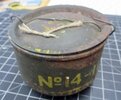
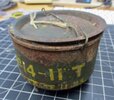

 I do not remember which Mark of the device had what particular size of chute but there were at least 2 different sizes used, and IIRC with the smallest being Ø1 ft and the largest being Ø2 ft. I cannot say for sure what method was used to describe the diameter of the chutes in the document, but I think in the WWII era the British used the diameter of the chute when in use (aka the diameter of the opening when the chute is filled with air and the appropriate weight suspended beneath) - not when lying flat on the ground. Using this method, a chute of Ø16" when laid flat would approximately equal the Ø1 ft opening of a parabolic chute when in use.