What's new
British Ordnance Collectors Network

Join over 14,000 collectors of inert military ordnance. Get expert identification help for shells, fuzes, grenades, and more — plus access our classifieds marketplace and decades of archived knowledge. Free to register, takes seconds.

L2A1 Firing Device

jvollenberg

Well-Known Member
Ordnance approved
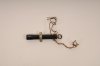
Here is a L2A1 firing device ...

Does anyone have any data sheets on this item?

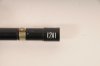
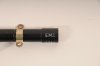
Also what does E.M.I stand for?

Joe
 

Attachments

  • DSC_0730.jpg
    DSC_0730.jpg
    253.4 KB · Views: 80
  • DSC_0736.jpg
    DSC_0736.jpg
    249.6 KB · Views: 58
  • DSC_0735.jpg
    DSC_0735.jpg
    258.6 KB · Views: 51
E.M.I-Does it sound feasible that it could have been made by "Electronic & Musical Industries Ltd," England?!

Martin.
 
Hi Joe

I believe Sprockets is correct and these items were indeed produced by Electronic & Musical Industries Ltd, England. I have no definite references for this, but I do know that EMI had defence interests as well as their better known musical department. Bonnex will probably be able to give us some more information.

I have two slightly different variants dated 1971, but I have never seen any published information or Data Sheets regarding this Switch, which I presume was a proposed replacement for the Switch No 4 Pull.

Cheers

Switch
 
Close up i thought it looked more like a number 1 instead of a letter I in the E.M. stamp
 
Last edited:
Hi Joe

I believe Sprockets is correct and these items were indeed produced by Electronic & Musical Industries Ltd, England. I have no definite references for this, but I do know that EMI had defence interests as well as their better known musical department. Bonnex will probably be able to give us some more information.

I have two slightly different variants dated 1971, but I have never seen any published information or Data Sheets regarding this Switch, which I presume was a proposed replacement for the Switch No 4 Pull.

Cheers

Switch


Switch. Sorry I missed this post. Yes, the Firing Device was designed as a replacement for the No 4. It was designed by the 'Fuzes Branch' of the Armament Design Department, Fort Halstead in 1954 and was one of a number of firing devices (switches) worked at that time as a part of a programme to update equipment in the early years of the Cold War.

I cannot be absolutely sure that the monogram is for Electric and Musical Industies although it is a very good candidate. EMI didn't just put holes in gramophone records. EMI ran an 'Agency Factory' at Springfield Road, Hayes (Near Heathrow) for the Ministry of Supply (MOS) during World War Two and made fuzes (early prox fuze was made here) and the No 8 Switch for instance. After the war they continued working for the MOS and, later, MOD. They were a major supplier of proximity fuzes (I worked on some of these in their Springfied Road Research Lab) and made the generator for the Rapid Cratering kit etc., etc. The reason I cannot be sure about the manufacture of the L2 switches is that EMI usually used the monograms TGCo (The Gramophone Co), SR (for Springfield Road) or TGSR. But there were other parts of EMI that did use EMI as a monograme.

One of the reorganisations of Fort Halstead created EM Branch (understood to be Explosive Methods) and they used drawing prefixes of EM1, EM2 and EM3 so, if it is a later production firing device, the EM1 monogram could refer to this Branch.

Incidently the No 4 Switch (and the No 5 and No 6 switches, all designed by ISRB/SOE during WW2) remained in Service until the 1990s and are commonly seen whereas you will be hard pressed to find an L2 Pull Switch which says something about the ISRB designs. It makes you wonder why they disbanded the SOE Station IX and Station XII people at the end of the war.
 
Top