Hello guys,
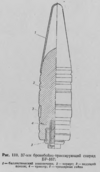
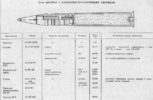
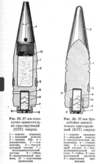
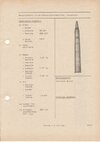
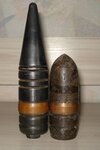
I`ve recently wrapped my head around russian 37mm ammo and oddly enough it seems that this is not very well documented on the internet.
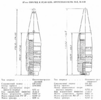
My main question here is wether or not the ammunition uses the same bodies and has different indexes depending on what casing it is being fitted to.
For the 1939 61-K AA gun, we have
OR-167 without tracer, using MG-8 fuzes
OR-167 with tracer, using MG-37 or MG-37M fuzes (until 1967 it used the "no.5" tracer, since 1968 it used "no.9" tracer)
OR-167N with tracer, using B-37 fuzes
OZR-167 with (?) tracer, using MG-37 fuzes
BR-167 with tracer, no fuze (solid shot)
For the NS-37 air cannon we have
OZT with tracer , using ?? fuzes (probably MG-37)
BZT with tracer, no fuze (solid shot)
For the N-37 air cannon we have
OFZ without tracer, using B-37 fuze
OZT with tracer, using MG-37 or A-37 or A-37u (depending on year of production)
BZT with tracer, no fuze (solid shot)
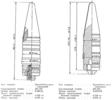
My question here is, can we assume that OR-167 = OZT and BR-167 = BZT? Meaning that the same projectile receives a different index depending on what case it is being mated with, but essentially it is the same projectile? I have not been able to confirm this through the documents available to me.
Thanks in advance.
I`ve recently wrapped my head around russian 37mm ammo and oddly enough it seems that this is not very well documented on the internet.
My main question here is wether or not the ammunition uses the same bodies and has different indexes depending on what casing it is being fitted to.
For the 1939 61-K AA gun, we have
OR-167 without tracer, using MG-8 fuzes
OR-167 with tracer, using MG-37 or MG-37M fuzes (until 1967 it used the "no.5" tracer, since 1968 it used "no.9" tracer)
OR-167N with tracer, using B-37 fuzes
OZR-167 with (?) tracer, using MG-37 fuzes
BR-167 with tracer, no fuze (solid shot)
For the NS-37 air cannon we have
OZT with tracer , using ?? fuzes (probably MG-37)
BZT with tracer, no fuze (solid shot)
For the N-37 air cannon we have
OFZ without tracer, using B-37 fuze
OZT with tracer, using MG-37 or A-37 or A-37u (depending on year of production)
BZT with tracer, no fuze (solid shot)
My question here is, can we assume that OR-167 = OZT and BR-167 = BZT? Meaning that the same projectile receives a different index depending on what case it is being mated with, but essentially it is the same projectile? I have not been able to confirm this through the documents available to me.
Thanks in advance.