
British Ordnance Collectors Network
You are using an out of date browser. It may not display this or other websites correctly.
You should upgrade or use an alternative browser.
You should upgrade or use an alternative browser.
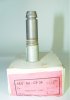
14x20mm subkaliber
- Thread starter pzgr40
- Start date


pzgr40
Well-Known Member
Some trnslation would be nice. Czech is quite a difficult language I think.
What is in the projectile body? And how does it function?
In the fuze a re two ring halves , a spring and a firing pin in the nose. I do not know how the rest works...
Thanks in advance, Regards, DJH
What is in the projectile body? And how does it function?
In the fuze a re two ring halves , a spring and a firing pin in the nose. I do not know how the rest works...
Thanks in advance, Regards, DJH
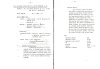
Here the translation, I tried to stick to the original as possible:
Chapter 6
Ammunition
42. For firing the training instrument vz. 34 the 14,5 mm reduced round is used (pic.17).
1. Round description
43. Round composes of two major parts
a) Cartridge 1, that is a cartridge case with powder and cap
b) projectile 2 with smoke and flash composition and a fuze.
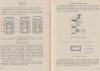
Cartridge case 1 (Pic 18) is brass (in the time this manual was printed there were no steel cases). At the bottom are three flash holes. In a recess at the bottom is a cap pressed 2. Powder charge 3 is sealed by cardboard discs 4.
Projectile body 5 has lead driving band 6. Bottom part of the projectile is closed by a plug 7. Plug seals the internal cavity of the projectile and does not allow the burning gases of the powder chargé to reach the compound. On projectile explosion the plug is ejected by the pressure of burning smoke and flash compound.
Smoke and flash compound 8 is closed by cardboard cover 9. The space of the fuze is closed by paper cover 10 and cardboard spacer 11.
2 Fuze
(Pic 19)
44. Fuze used for the 14,5 mm reduced round is point detonating highly sensitive with barrel safety.
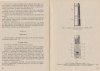
It consists of body 1, membrane 2, needle 3, primer housing 4, two jaw segments 6, winding belt 7, inertia sleeve 8, safety 9.
Pic 19 Fuze and its function
a-at rest; b- on firing and during flight; c upon impact
3. Function of the fuze
45 Upon fire the inertia sleeve 8 cuts the copper safety 9 and moves to low position. With rotary movement in the barrel a centrifugal force is created and the belt 7 is unwinding. The belt is fully unwind in front of the barrel. Afterwards the jaw segments 6 are moved aside by the centrifugal force and the needle 3 is armed. Upon impact the membrane 2 is punctured and the needle impales the primer. The primer is in this moment initiated. Produced flame ignites the compound inside the projectile body. Generated gases push the plug and from the projectile bottom fires a flame with a significant sound effect.
After the compound is burned a smoke cloud is created.
During transport and manipulation is the needle held by the segments 6, who are in their basic position held by the belt 7 and inertia sleeve 8.
The compound is V-KP50 about 50% potassium perchlorate and 50% aluminium.
The belt is not a spring. Similar to German fuzes after it is unwind (unwound?) it does not want to return to its original state. So it is not much elastic more plastic.
@DJ Czech language is one of the more difficult languages of the world, but if You use enough Czech beer in the learning process it is nearly painless.
Chapter 6
Ammunition
42. For firing the training instrument vz. 34 the 14,5 mm reduced round is used (pic.17).
1. Round description
43. Round composes of two major parts
a) Cartridge 1, that is a cartridge case with powder and cap
b) projectile 2 with smoke and flash composition and a fuze.
Cartridge case 1 (Pic 18) is brass (in the time this manual was printed there were no steel cases). At the bottom are three flash holes. In a recess at the bottom is a cap pressed 2. Powder charge 3 is sealed by cardboard discs 4.
Projectile body 5 has lead driving band 6. Bottom part of the projectile is closed by a plug 7. Plug seals the internal cavity of the projectile and does not allow the burning gases of the powder chargé to reach the compound. On projectile explosion the plug is ejected by the pressure of burning smoke and flash compound.
Smoke and flash compound 8 is closed by cardboard cover 9. The space of the fuze is closed by paper cover 10 and cardboard spacer 11.
2 Fuze
(Pic 19)
44. Fuze used for the 14,5 mm reduced round is point detonating highly sensitive with barrel safety.
It consists of body 1, membrane 2, needle 3, primer housing 4, two jaw segments 6, winding belt 7, inertia sleeve 8, safety 9.
Pic 19 Fuze and its function
a-at rest; b- on firing and during flight; c upon impact
3. Function of the fuze
45 Upon fire the inertia sleeve 8 cuts the copper safety 9 and moves to low position. With rotary movement in the barrel a centrifugal force is created and the belt 7 is unwinding. The belt is fully unwind in front of the barrel. Afterwards the jaw segments 6 are moved aside by the centrifugal force and the needle 3 is armed. Upon impact the membrane 2 is punctured and the needle impales the primer. The primer is in this moment initiated. Produced flame ignites the compound inside the projectile body. Generated gases push the plug and from the projectile bottom fires a flame with a significant sound effect.
After the compound is burned a smoke cloud is created.
During transport and manipulation is the needle held by the segments 6, who are in their basic position held by the belt 7 and inertia sleeve 8.
The compound is V-KP50 about 50% potassium perchlorate and 50% aluminium.
The belt is not a spring. Similar to German fuzes after it is unwind (unwound?) it does not want to return to its original state. So it is not much elastic more plastic.
@DJ Czech language is one of the more difficult languages of the world, but if You use enough Czech beer in the learning process it is nearly painless.


I copy and pasted the image directly into the forum. Not sure why it won't display for you.
Here's a link to the files in google photos
https://photos.app.goo.gl/jEoSty2ugXMkx8ju5
https://photos.app.goo.gl/JsokAYjiyEZCRRXR6
Here's a link to the files in google photos
https://photos.app.goo.gl/jEoSty2ugXMkx8ju5
https://photos.app.goo.gl/JsokAYjiyEZCRRXR6