What's new
British Ordnance Collectors Network

Join over 14,000 collectors of inert military ordnance. Get expert identification help for shells, fuzes, grenades, and more — plus access our classifieds marketplace and decades of archived knowledge. Free to register, takes seconds.

18pr Mk III case

Burney Davis

Moderator
Premium Member
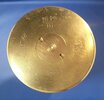
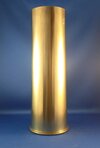
I've recently added this to my collection, one that doesn't' come up very often in the UK.

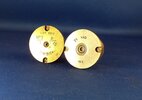
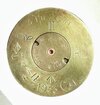
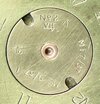
But the thing that got my attention was the markings on the primer, being marked "Mk E" I have seen No 5 primers with a "Mk K" but never seen a Mk E one.

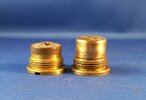
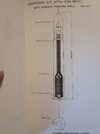
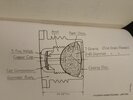
The last picture shows the difference between this and a regular No I Mk II. I wondered if the "E" referenced "Extended". Does anyone have any information on this?
 

Attachments

  • 1000059500.jpg
    1000059500.jpg
    356.6 KB · Views: 22
  • 1000059501.jpg
    1000059501.jpg
    762 KB · Views: 23
  • 1000059491.jpg
    1000059491.jpg
    498 KB · Views: 23
  • 1000059492.jpg
    1000059492.jpg
    451.5 KB · Views: 20
That’s a really nice case Darrel. 18 Pr Mk III cases are much more common here in Aus, particularly the locally made MF cases from the late 1920s right through until 1942 which seems to be the end of them.

I can’t help with the Mk E primer, but the thing that got my attention is the date (year) on your EOC made case - 1928.

Vickers Ltd acquired Armstrong Whitworth in 1927 with an effective date of 1st January 1928 and the new company was known as Vickers Armstrong Ltd.

Ordnance manufactured at the Armstrong Whitworth factory in Elswick, Newcastle had, up until this time, used the headstamp monogram EOC. After the Vickers takeover the new monogram from the Elswick factory was VAEL - Vickers Armstrong Elswick Ltd. Similarly, the Vickers factory in Dartford, London that had used the VSM monogram then used VAD - Vickers Armstrong Dartford (as per your Mk E primer).

So I am surprised to see your EOC case with a 1928 year on it - must have taken a little while for the tooling to be changed.

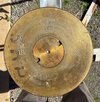
Here is a 1927 Mk III EOC case I have (well it’s part of a complete round with a 1928 Mk XVI shrapnel shell and age related fuze).

Graeme

IMG_1026.jpeg
 
Last edited:
The Mk K primer I only found in export cases, I would expect this primer to be export as well. Case also looks export to me due to lack of typical GB inspection/acceptance marks. Would be cool to know the meaning of "K" and "E" on the primers. Or it is an unfinished case.....the lot number is not printed (yet).
 
That’s a really nice case Darrel. 18 Pr Mk III cases are much more common here in Aus, particularly the locally made MF cases from the late 1920s right through until 1942 which seems to be the end of them.

I can’t help with the Mk E primer, but the thing that got my attention is the date (year) on your EOC made case - 1928.

Vickers Ltd acquired Armstrong Whitworth in 1927 with an effective date of 1st January 1928 and the new company was known as Vickers Armstrong Ltd.

Ordnance manufactured at the Armstrong Whitworth factory in Elswick, Newcastle had, up until this time, used the headstamp monogram EOC. After the Vickers takeover the new monogram from the Elswick factory was VAEL - Vickers Armstrong Elswick Ltd. Similarly, the Vickers factory in Dartford, London that had used the VSM monogram then used VAD - Vickers Armstrong Dartford (as per your Mk E primer).

So I am surprised to see your EOC case with a 1928 year on it - must have taken a little while for the tooling to be changed.

Here is a 1927 Mk III EOC case I have (well it’s part of a complete round with a 1928 Mk XVI shrapnel shell and age related fuze).

Graeme

View attachment 209586
Great information Graeme, many thanks. Nice to see the SAP ink stamp on your case as well.

Your information adds another layer of complexity to this case. As Kornel has said, there is no lot number and no typical "C F" indicating British use. But I don't believe it is an unfinished case as the unusual primer has been fired and I think original to the case. It was difficult to remove and had original luting / sealing around it

Hopefully someone can offer up information about the primer.
 
Top