Join over 14,000 collectors of inert military ordnance. Get expert identification help for shells, fuzes, grenades, and more — plus access our classifieds marketplace and decades of archived knowledge. Free to register, takes seconds.
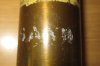
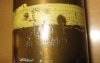
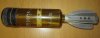
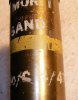
Nicely early marked round in wartime practice colours, I assume South African markings related to commonwealth identification of the UK. Never seen seen these marked sand before only on later post war rounds with the light blue bodies. Practice could be fired from a mortar and could be recovered for reuse depending on condition after ie bent tail fin etc. Drill usually had a wooden plug inserted in the tail so a cartridge couldn't be inserted or fired, drill round used to get used to handling, ie unscrewing a cap ready for loading etc.
Nice find, what's under the cap, I assume a stripped fuze of its parts.
I know that we were making .303 Ammunition in 1940, nut I am not so sure about 2" Mortars. If it was S A manufactured I am sure there would have been a U with a broad arrow.
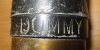
My collection of early practice bombs about 4 with varnished bodies and yellow bands have no sand filled markings but have the mazak practice fuzes and not the inert stripped fuzes stamped DUMMY, was sand used early on to make up the weight as the early inert dummy ones were much lighter than the purposely made practice fuses with steel shipping caps
AE501 knows this but DWS (Director of Warlike Stores) Notes start at Number 6A and finish on No 20 (as far as I am aware). The first 6 issues were released as DDOS(A) [Deputy Director Ordnance Services (Ammunition)] Notes on Ammunition and are an economy standard of printing. I mention this because, with the poor production quality and lack of DWS on the first page, they are easily overlooked in a secondhand bookshop. Sets are very uncommon. The DDOS(A) issues cover:
No 1 - General ammunition brief updates
No 2 - Don't know (anyone got a copy?)
No 3 - 75mm American ammunition
No 4 - Includes a drawing of the early pattern Mk I ST grenade and sections on No 4 Trip Mechanism and Naval Beach Mines
No 5 - SAA and packaging, 2-pr ammunition and effects of German incendiaries on ammunition stacks.
No 6 - Demolitions - replaced by DWS 6A
Norman
I know about Wali as an inspector, repairer and disposer, at depot and service unit level. I was using these publications in the late 1950s, even though they had been superseded, first by RAOS Part 7 ( which was renamed RAOS Vol 3), reissued as RAOS Vol 3 and finally changed to RAOS Vol 4, which they are today..
While I was busy using the publications I was given, which were strictly controlled and updated at the time by hoards of National Servicemen and exchanged one for one, you had started a lifelong interest in acquiring publications and drawings from any source possible.
Such was your interest that while normal people were having a lie in, you were out in the pouring rain digging in the butts of some alleged WWI grenade range which someone had told you about, looking for bits.
I rest my case.
Bill,
i am not sure about all of that What I am sure about is that you taught me more about ammunition than anyone else I know - something you still do!
This site uses cookies to help personalise content, tailor your experience and to keep you logged in if you register.
By continuing to use this site, you are consenting to our use of cookies.