Join over 14,000 collectors of inert military ordnance. Get expert identification help for shells, fuzes, grenades, and more — plus access our classifieds marketplace and decades of archived knowledge. Free to register, takes seconds.
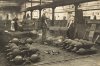
Images of the manufacture of 2-in Trench Howitzer bombs are not commonly seen, so here is one of the bomb head casting shop. They were cast in pairs in sand boxes, and the photo shows the emptying of the boxes in a Falkirk works.
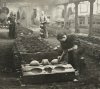
As Hazord says, a sand core was used which forms the cavity when the molten metal is poured into the mold. Another image attached, this time of core setting, in which the sand core is carefully placed into the drag (the lower half of the mold). Once in position the cope (the upper half of the mold, in the immediate foreground) is placed on top of the drag, exact alignment being maintained by the vertical locating pins.
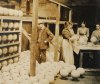
Once cast and all the machining processes done, and tested for leaks, the raw bomb was washed and thoroughly dried and then painted. The second image shows the yellow ochre paint being painted on by brush in the paintshop.
This site uses cookies to help personalise content, tailor your experience and to keep you logged in if you register.
By continuing to use this site, you are consenting to our use of cookies.