What's new
British Ordnance Collectors Network

Join over 14,000 collectors of inert military ordnance. Get expert identification help for shells, fuzes, grenades, and more — plus access our classifieds marketplace and decades of archived knowledge. Free to register, takes seconds.

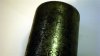
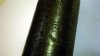
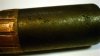
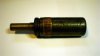
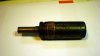
2 Pr AT

Known as Shot, Flathead, Practice, Q.F., 2-PR. (Mks IX & X, if I have good eyes)
 
Last edited:
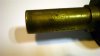
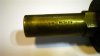
Markings are,

P 2Pr I T
Mks IX & X Guns
RL
62
10/38
BS

Other smaller marks,

U \l/ \l/ PN /l\ JD and a crows foot in a diamond along with an "N" below the drive band.
 
This could well be quite rare. They and other flathead shot were made specifically for use on short or small ranges to limit ricochets and tracers flying outside the range area.
They were always kept separate in storage to prevent Practice AP/T, which were ballistically matched to the AP/T shot, from being wrongly issued by mistake.
After the introduction of the Mark 10B SV gun they were not used as much due to the squeezebore adapter, but many armoured cars still had the Mark 9 to 10A HV gun and may well have continued to use the flathead shot.
 
The pheon within a diamond is a "Material Acceptance Mark"
The other pheons and initials are more than likely examiners' workmarks.

TimG
 
Sorry to resurrect an old thread what colour would this round be painted as.
 
Would these flat headed shot be used more for target work on tank shaped moving targets made of wood or paper rather than a tank target of a derelict tank. I assume such a round would make its mark better on a paper target that a pointed AP shot. Is there any information on the ballistic coefficient of this flat headed practice round compared to normal AP round, did it have a reduced charge.
 
Top