

British Ordnance Collectors Network
You are using an out of date browser. It may not display this or other websites correctly.
You should upgrade or use an alternative browser.
You should upgrade or use an alternative browser.
303 Gaudet round
- Thread starter Andysarmoury
- Start date

TonyE
HONOURED MEMBER RIP
Gaudet
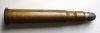
Major Gaudet submitted his short range round to the British authorities in 1902, but these would have been on Canadian cases.
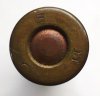
Woolwich held trials between the Gaudet, the Ewart No.1 and the Kynoch "B" in 1903-04 and your round dates from this period. The headstamp relates to the original round so it is quite probable that yours was actually reloaded by Woolwich.
The Gaudet was favourably reported on and would have been adopted for the Volunteers and Militia but for the fact that it produced heavy barrel fouling.
RL issued 2,000 rounds of Gaudet, presumably for a trial, in the 1910/11 financial year.
Regards
TonyE
Major Gaudet submitted his short range round to the British authorities in 1902, but these would have been on Canadian cases.
Woolwich held trials between the Gaudet, the Ewart No.1 and the Kynoch "B" in 1903-04 and your round dates from this period. The headstamp relates to the original round so it is quite probable that yours was actually reloaded by Woolwich.
The Gaudet was favourably reported on and would have been adopted for the Volunteers and Militia but for the fact that it produced heavy barrel fouling.
RL issued 2,000 rounds of Gaudet, presumably for a trial, in the 1910/11 financial year.
Regards
TonyE
Thanks Tony, Would the E in the headstamp be for Ewart
Cheers
Andy
Cheers
Andy
Last edited:
TonyE
HONOURED MEMBER RIP
Gaudet
No, the "E" in your headstamp is for Eley Bros, as the original round was a Cordite Ball Mark II made by them.
Your round is a proper Gaudet, as shown by the heavy neck cannelure just above the shoulder and the slight belt on the bullet at the case mouth. the Kynoch had a longer and heavier lead bullet, but little information on the Ewart has survived. There are however examples of a short range round with a long lead bullet that may be the Ewart.
I will post photos later of my examples, one of which is identical to yours.
Regards
tonye
No, the "E" in your headstamp is for Eley Bros, as the original round was a Cordite Ball Mark II made by them.
Your round is a proper Gaudet, as shown by the heavy neck cannelure just above the shoulder and the slight belt on the bullet at the case mouth. the Kynoch had a longer and heavier lead bullet, but little information on the Ewart has survived. There are however examples of a short range round with a long lead bullet that may be the Ewart.
I will post photos later of my examples, one of which is identical to yours.
Regards
tonye
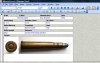
Thanks again Tony for clearing that up and look forward to seeing yours later, i can log that one know and by the way i managed to write myself a program using Access 2003 its not quite the same as yours but close and i can include a photo.
Cheers
Andy
Cheers
Andy
Hi Jan, in the early ones they were black powder but in the Kynoch B cartridge they used smokeless propellent.
Andy
Andy
TonyE
HONOURED MEMBER RIP
Pictures
Here as promised, some pictures of short range rounds.
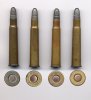
Picture 1 - Gallery Practice Black Powder Mark I. These can be recognised by the heavy cannelure which acts as a bullet seating stop. The bullet weighed 90 grns with a charge of about 9 grns BP.
Headstamps l. to r.
D^C C II
E C II
8 C IV
All headstamps relate to the original ball load, and despite two being British they were probably all reloaded in Canada.
There is a Mark I Smokeless version also, but that does not have the seating cannelure. Charge weight was 6 grns. Unfortunately i do not have an example, so if any Canadian friends have one.....
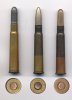
Picture 2 - Gallery Practice Mark II
This had a slightly heavier 125 grn bullet and a charge of 5 1/2 grns smokeless powder.
Headstamps
DAC 1915 VII cancelled
R^L C II cancelled
DAC C II cancelled
DAC 1917 GP-B
Picture 3
Left is one of the rounds trialled by Woolwich in 1903-4 and may be the Kynoch version.
Centre is Ball, Short Range, Practice Mark I of 1895. The special bullet weighed 150 grns and the charge was 9 grns of Size 3 2/4 Cordite. It did not last long and manufacture was discontinued in 1897.
Right is Ball, Short Range, Practice Mark IV introduced in 1913 for Naval service at certain Coastguard stations. Again a special bullet was used weighing 188 grns. with a charge of 18 grns. Cordite MDT 4-2.
The Short Range Practice Mark II and III were externally identical to the Mark IV, differing only in the charge type and the bullet alloy.
Headstamps
E C * II
R^L C I
R^L 14 IV
Regards
TonyE
Here as promised, some pictures of short range rounds.
Picture 1 - Gallery Practice Black Powder Mark I. These can be recognised by the heavy cannelure which acts as a bullet seating stop. The bullet weighed 90 grns with a charge of about 9 grns BP.
Headstamps l. to r.
D^C C II
E C II
8 C IV
All headstamps relate to the original ball load, and despite two being British they were probably all reloaded in Canada.
There is a Mark I Smokeless version also, but that does not have the seating cannelure. Charge weight was 6 grns. Unfortunately i do not have an example, so if any Canadian friends have one.....
Picture 2 - Gallery Practice Mark II
This had a slightly heavier 125 grn bullet and a charge of 5 1/2 grns smokeless powder.
Headstamps
DAC 1915 VII cancelled
R^L C II cancelled
DAC C II cancelled
DAC 1917 GP-B
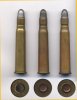
Picture 3
Left is one of the rounds trialled by Woolwich in 1903-4 and may be the Kynoch version.
Centre is Ball, Short Range, Practice Mark I of 1895. The special bullet weighed 150 grns and the charge was 9 grns of Size 3 2/4 Cordite. It did not last long and manufacture was discontinued in 1897.
Right is Ball, Short Range, Practice Mark IV introduced in 1913 for Naval service at certain Coastguard stations. Again a special bullet was used weighing 188 grns. with a charge of 18 grns. Cordite MDT 4-2.
The Short Range Practice Mark II and III were externally identical to the Mark IV, differing only in the charge type and the bullet alloy.
Headstamps
E C * II
R^L C I
R^L 14 IV
Regards
TonyE
Attachments
Thanks Tony for a great write up i just have one other the DAC 16 GP-B so have quit a few to get as yet,
Many thanks
Andy
Many thanks
Andy

smle2009
Well-Known Member
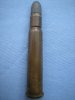
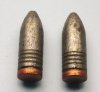
Thought I would post this one thats just arrived,headstamped 8 C IV,seems a little diffrent to the others posted,the heavy neck cannelure is lower down the neck,nearly to the shoulder.
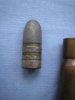
The bullet seems totally different also,has two 'grease' grooves and a metal base??
Is this one a different version or have I picked up a 'wrong un'
Cheers
Tony
The bullet seems totally different also,has two 'grease' grooves and a metal base??
Is this one a different version or have I picked up a 'wrong un'
Cheers
Tony
Last edited:
Hi Tony, the case looks right but it makes you wonder if its been neck sized which has made the crimp look lower and the bullet has a gas check which i think is wrong, perhaps TonyE might know.
Cheers
Andy
Cheers
Andy
Hi Tony, yes its a copper cup that's pressed on the base of the bullet to stop in leading when fired,
Andy
Andy
TonyE
HONOURED MEMBER RIP
The exact identity of the several types of short range cartridges submitted for trial is often difficult to establish, especially as the headstamps are irrelevent since one of the selling points was that any old fired cases could be re-used.
However, I think your round is fine, and is probably a Kynoch B. The seating groove was lower than on the Gaudet as it used a longer heavier bullet and it also had a cupro-nickel gas check. Bullet weight was 115 grains (Gaudet was 89 grains) and the charge was 10 grains of smokeless powder. It is difficult to tell from the picture, but yours looks like it has a CN gas check.
Regards
TonyE
However, I think your round is fine, and is probably a Kynoch B. The seating groove was lower than on the Gaudet as it used a longer heavier bullet and it also had a cupro-nickel gas check. Bullet weight was 115 grains (Gaudet was 89 grains) and the charge was 10 grains of smokeless powder. It is difficult to tell from the picture, but yours looks like it has a CN gas check.
Regards
TonyE