British Ordnance Collectors Network
You are using an out of date browser. It may not display this or other websites correctly.
You should upgrade or use an alternative browser.
You should upgrade or use an alternative browser.
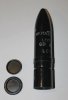
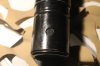
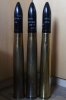
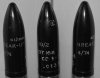
40mm break up projectiles
- Thread starter ken68
- Start date


ken68
Well-Known Member
......now..where did I see a big sack of these? :bigsmile:
Hmmm I wonder ???.. A very large sack at that lol ...... :tinysmile_twink_t2:
Do these turn a Bofors into a Huge shotgun? Were the cartridges marked in any way? Did the drive band engage with the rifling ? Were stoppages very common, bearing in mind the fragility of the projectile? Were the cartridges crimped in? I am Interested in any info on the break up rounds really.
Cheers
Gary
Cheers
Gary
ken68
Well-Known Member
yes a big shotgun used for gunnery practice as they were filled with lead shot 2lb in weight , also made so the gun functioned correctly load eject , I understand the cases were marked but I don't know what markings ?? I am sure I seen the link for this , heres a
link I found on BOCN pretty much sums up the break up projectiles
cheers Ken [
http://www.bocn.co.uk/vbforum/threads/82109-40mm-Bofors-Break-up-projectileQUOTE=hangarman;242013]Do these turn a Bofors into a Huge shotgun? Were the cartridges marked in any way? Did the drive band engage with the rifling ? Were stoppages very common, bearing in mind the fragility of the projectile? Were the cartridges crimped in? I am Interested in any info on the break up rounds really.
Cheers
Gary[/QUOTE]
link I found on BOCN pretty much sums up the break up projectiles
cheers Ken [
http://www.bocn.co.uk/vbforum/threads/82109-40mm-Bofors-Break-up-projectileQUOTE=hangarman;242013]Do these turn a Bofors into a Huge shotgun? Were the cartridges marked in any way? Did the drive band engage with the rifling ? Were stoppages very common, bearing in mind the fragility of the projectile? Were the cartridges crimped in? I am Interested in any info on the break up rounds really.
Cheers
Gary[/QUOTE]

a bit more added info other than in the link kindly found by Kenny
The following text is from page 160 of Ian Hoggs "The illustrated encyclopedia of ammunition"
"Break-up shot . A projectile which when fired sets up the necessary resistance to the bore which will cause the gun to recoil and any automatic mechanism to function,but which then disintegrates either inside the bore or shortly after leaving the muzzle and disperses harmlessly.The object is to operate the gun for test or drill purposes,but not to discharge a projectile which will fly any great distance or cause any damage.Originally they were cylinders of waxed paper filled with sand or water provided for coast artillery guns in locations where it was not possibleto fire a service projectile in peacetime because of danger to shipping.The weight would give rise to recoil,so ensuring that the gun mechanism was functioning correctly,but the shot would split in the bore and the water or sand would be ejected from the muzzle and would evaporate or fall to the ground within a few feet,
The principle was then adapted to light anti aircraft guns in order to test their automatic functioning without the need to take them to a proper firing rang,by using break-up shot it was possible to test them in a workshop area,For this application a plastic projectile filled with either fine dust or a thick innocuous liquid is used,the shot passes up the gun barrel and the gun mechanism functions correctly,but centrifugal force,imparted by the spin of the shot,causes the heavy contents to split the shell and disperse within a few feet of the muzzle.
Break-up shot is not well liked by the people who use it since ,depending upon the direction of the wind it often coats the gun and its crew in fine dust or sticky liquid and necessitates a great deal of additional cleaning"
also on the same page is a photo showing several examples from Rheinmetall from 20mm up to 40mm
The following text is from page 160 of Ian Hoggs "The illustrated encyclopedia of ammunition"
"Break-up shot . A projectile which when fired sets up the necessary resistance to the bore which will cause the gun to recoil and any automatic mechanism to function,but which then disintegrates either inside the bore or shortly after leaving the muzzle and disperses harmlessly.The object is to operate the gun for test or drill purposes,but not to discharge a projectile which will fly any great distance or cause any damage.Originally they were cylinders of waxed paper filled with sand or water provided for coast artillery guns in locations where it was not possibleto fire a service projectile in peacetime because of danger to shipping.The weight would give rise to recoil,so ensuring that the gun mechanism was functioning correctly,but the shot would split in the bore and the water or sand would be ejected from the muzzle and would evaporate or fall to the ground within a few feet,
The principle was then adapted to light anti aircraft guns in order to test their automatic functioning without the need to take them to a proper firing rang,by using break-up shot it was possible to test them in a workshop area,For this application a plastic projectile filled with either fine dust or a thick innocuous liquid is used,the shot passes up the gun barrel and the gun mechanism functions correctly,but centrifugal force,imparted by the spin of the shot,causes the heavy contents to split the shell and disperse within a few feet of the muzzle.
Break-up shot is not well liked by the people who use it since ,depending upon the direction of the wind it often coats the gun and its crew in fine dust or sticky liquid and necessitates a great deal of additional cleaning"
also on the same page is a photo showing several examples from Rheinmetall from 20mm up to 40mm
Attachments
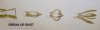
Just found the following amongst my files
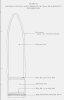
CARTRIDGE, QF, BREAK-UP SHOT
Cartridge, QF, Break-up Shot is used by the Service for testing the auto-loader and recoil mechanism (QF,40-mm, Mk 1/2). The shot is designed to break-up a short distance (50 yds) from the muzzle
CARTRIDGE, QF, BREAK-UP SHOT
Cartridge, QF, Break-up Shot is used by the Service for testing the auto-loader and recoil mechanism (QF,40-mm, Mk 1/2). The shot is designed to break-up a short distance (50 yds) from the muzzle
Attachments
a
also on the same page is a photo showing several examples from Rheinmetall from 20mm up to 40mm
Allan, while Rheinmetall was the parent company the actual "break up" series of ammunition was patented and produced by the Dutch "NWM".