
British Ordnance Collectors Network
You are using an out of date browser. It may not display this or other websites correctly.
You should upgrade or use an alternative browser.
You should upgrade or use an alternative browser.
57mm projectile i.d needed
- Thread starter earni74
- Start date

highlandotter
HONOURED MEMBER RIP
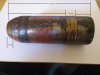
Looks like a Gruson 57mm.

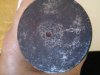
Hotchkiss has been considered, I just don't know, MINENAZ16 has seen one in a museum, so I will opt for Hotchkiss possibly for export, the (VR) stamp on the base of the shell is still a mystery to me.
MINENAZ, do you know the case length for this projectile and which fuze it has
mick
MINENAZ, do you know the case length for this projectile and which fuze it has
mick
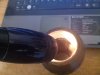
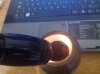
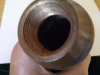
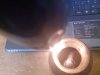 Hi Sebastien, thankyou for your input,very interesting that it was filled with lead balls and segments , i can see inside that there are 6 verticle top to bottom segments, also, it has a thin shelf at the bottom and rounded for the powder cup just like a normal shrapnel round.
I can also see that it had a (TIN ?) liner covering the segments inside although only the top one third is visible, i have tried to take a couple of photo's shining a torch inside the shell, i hope you can see this.
mick

wingsofwrath
Well-Known Member
Well, this is a surprise - I've been on this forum for years now and this is the first time I see this thread and the older one from 2014 about the same projectile. I was searching for "57mm Hotchkiss" with the forum search tool intending to find this other thread and this is the first time it pops up.
In any case, I think I can finally give a firm identification - and I could have done so earlier, had I found the thread before this moment.
This is a Romanian shrapnel for the 57mm Hotchkiss Md.1888/91 guns from the Bucharest forts.
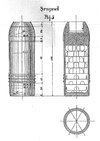
It's incredibly rare, because the only reference of it I could find is in the plates for an article from the "Revista Artileriei" (basically the Romanian version of the French "Revue D'Artillerie") from January, 1899. Interestingly, the actual article does not mention it at all, it mentions just the semi-armour-piercing base fused shell and the case shot, which leads me to believe this was never actually adopted. Thus we have no idea what fuze it might have used.
Of course, we also know that the gun itself would be taken out form the forts and turned into infantry suport guns and AA guns, at which point they would finally get the Md.1915 steel shrapnel which would be used during the war with a bedazzling array of fuzes, from the 10s Md.1880 simple time fuze of the Md.1880 75 and 87mm field guns (modified to fit as the Md.1915 time fuze) to the 15s and 24s Md.13 "Burileanu" fuze of the 53mm Gruson.
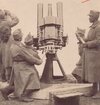
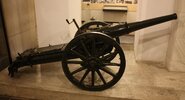
In any case, I think I can finally give a firm identification - and I could have done so earlier, had I found the thread before this moment.
This is a Romanian shrapnel for the 57mm Hotchkiss Md.1888/91 guns from the Bucharest forts.
It's incredibly rare, because the only reference of it I could find is in the plates for an article from the "Revista Artileriei" (basically the Romanian version of the French "Revue D'Artillerie") from January, 1899. Interestingly, the actual article does not mention it at all, it mentions just the semi-armour-piercing base fused shell and the case shot, which leads me to believe this was never actually adopted. Thus we have no idea what fuze it might have used.
Of course, we also know that the gun itself would be taken out form the forts and turned into infantry suport guns and AA guns, at which point they would finally get the Md.1915 steel shrapnel which would be used during the war with a bedazzling array of fuzes, from the 10s Md.1880 simple time fuze of the Md.1880 75 and 87mm field guns (modified to fit as the Md.1915 time fuze) to the 15s and 24s Md.13 "Burileanu" fuze of the 53mm Gruson.
Last edited:
wingsofwrath
Well-Known Member
I was about to type that we have no idea what the fuze was, but I decided to look at the album of the Paris "Exposition Universelle de 1889" (yes, the World's Fair for which the Eiffel Tower was built) from the Cornell University Library and I think I just solved it, because there are these two plates, one of which definitely contains our shrapnel:
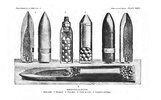
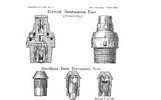
And yes, at the time we were already using that specific shrapnel fuze with the Armstrong 63mm Mountain Gun Md.1883, hence why they didn't feel the need to add it to the plate, because it was already a known quantity.
And yes, at the time we were already using that specific shrapnel fuze with the Armstrong 63mm Mountain Gun Md.1883, hence why they didn't feel the need to add it to the plate, because it was already a known quantity.
wingsofwrath
Well-Known Member
Ok, I did a bit of "experimental archaeology" by 3d printing the shell based on the plans and then sticking the Md.83 double-effect fuze from the 63mm Md.83 Armstrong Mountain Gun on it and it's clear this was made specifically to fit this fuze.
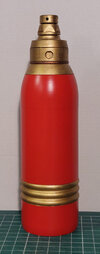
When we contracted Hotchkiss for the 57mm guns for the Bucharest forts, we probably showed them a 63mm Armstrong Shrapnel and asked "can you make us this, with this fuze, but in 57mm?" which also explains why it's base ejecting instead of forwards ejecting.
And the reason they had it at the Paris Exhibition is because it was brand new, they hade made it for us just the year prior.
The only speculation that remains is about the lack of any written record about this shrapnel shell.
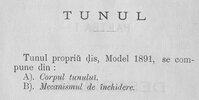
Now, the manual we have is from 1899, which is 11 years after first adoption and two things immediately jump out - first off, the gun is referenced exclusively as being "Model 1891" which is the time of adoption of the armoured turret in which it sits and it mentions that the only ammunition it shoots are the semi-armour-piercing base fused shell and the case shot.
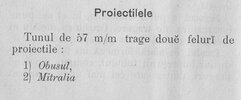
Later documents mark this gun as "Md.88/91" for the field gun and "91/916" for the AA gun and the nose-fuzed common shell is referenced as "Md.1888" with the base-fuzed semi-armour-piercing shell being described as "Md.1891". From this I can deduce that, at one point between 1888 and 1891 both the nose fuzed common shell and the shrapnel were dropped from regular use, which is why the 1899 manual doesn't mention them at all.
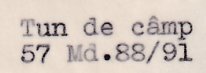
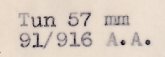
in 1915, when the guns were taken off from the forts and made into infantry guns and AA guns, respectively, the M.88 common shell was bought back into use, but the shrapnel wasn't and instead was replaced with a more advanced one, made of steel and forwards ejecting.
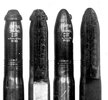
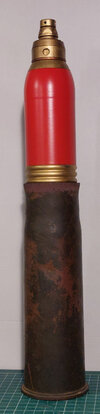
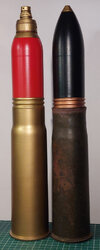
So that's about it, I think. Here's more pictures of the shell replica on the real and a replica cartridge case as well as alongside the Md.88 nose-fuzed common shell.
When we contracted Hotchkiss for the 57mm guns for the Bucharest forts, we probably showed them a 63mm Armstrong Shrapnel and asked "can you make us this, with this fuze, but in 57mm?" which also explains why it's base ejecting instead of forwards ejecting.
And the reason they had it at the Paris Exhibition is because it was brand new, they hade made it for us just the year prior.
The only speculation that remains is about the lack of any written record about this shrapnel shell.
Now, the manual we have is from 1899, which is 11 years after first adoption and two things immediately jump out - first off, the gun is referenced exclusively as being "Model 1891" which is the time of adoption of the armoured turret in which it sits and it mentions that the only ammunition it shoots are the semi-armour-piercing base fused shell and the case shot.
Later documents mark this gun as "Md.88/91" for the field gun and "91/916" for the AA gun and the nose-fuzed common shell is referenced as "Md.1888" with the base-fuzed semi-armour-piercing shell being described as "Md.1891". From this I can deduce that, at one point between 1888 and 1891 both the nose fuzed common shell and the shrapnel were dropped from regular use, which is why the 1899 manual doesn't mention them at all.
in 1915, when the guns were taken off from the forts and made into infantry guns and AA guns, respectively, the M.88 common shell was bought back into use, but the shrapnel wasn't and instead was replaced with a more advanced one, made of steel and forwards ejecting.
So that's about it, I think. Here's more pictures of the shell replica on the real and a replica cartridge case as well as alongside the Md.88 nose-fuzed common shell.