
British Ordnance Collectors Network
You are using an out of date browser. It may not display this or other websites correctly.
You should upgrade or use an alternative browser.
You should upgrade or use an alternative browser.
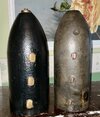
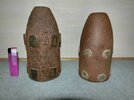
6.6inch howitzer
- Thread starter Tuney
- Start date
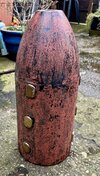
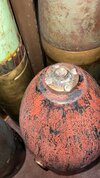
UKWhich Country ?

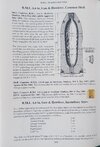
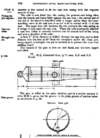
I don’t think that is a British 6.6” projectile. The picture below is of a page from David Ibbetson’s excellent book on British Artillery Ammunition, Volume 1, a must for the collector of early ordnance.
6.6” ammunition was not studded, but had a gas check plate attached to the base. The shell is not typical of British produced ammunition of the period in my opinion. The larger studs would require non standard riffling. The rough base moulding without markings and the wide, flat nose are not typical of British ammunition. If the orange paint is original, which it appears to be, that is typical of paint on early Prussian/German ammunition. I have a similar, smaller calibre projectile with the same studs which I am yet to identify.
6.6” ammunition was not studded, but had a gas check plate attached to the base. The shell is not typical of British produced ammunition of the period in my opinion. The larger studs would require non standard riffling. The rough base moulding without markings and the wide, flat nose are not typical of British ammunition. If the orange paint is original, which it appears to be, that is typical of paint on early Prussian/German ammunition. I have a similar, smaller calibre projectile with the same studs which I am yet to identify.
Attachments
It is English earlier than the gas check ones without studs it is also a very rare shell possibly experimental/test shell if you investigate moreI don’t think that is a British 6.6” projectile. The picture below is of a page from David Ibbetson’s excellent book on British Artillery Ammunition, Volume 1, a must for the collector of early ordnance.
6.6” ammunition was not studded, but had a gas check plate attached to the base. The shell is not typical of British produced ammunition of the period in my opinion. The larger studs would require non standard riffling. The rough base moulding without markings and the wide, flat nose are not typical of British ammunition. If the orange paint is original, which it appears to be, that is typical of paint on early Prussian/German ammunition. I have a similar, smaller calibre projectile with the same studs which I am yet to identify.
Can you provide your source information please.It is English earlier than the gas check ones without studs it is also a very rare shell possibly experimental/test shell if you investigate more
Can you provide your source information please.
Attachments
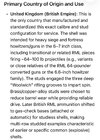
That's interesting but very general in detail. Is it AI generated from the net?
Can you show me pics of a 6.6 inch shell with studs in that British formation three rows of three studs (9 in total ) for a 6.6 inch howitzer please .it also has a boxer fuze on it which Is correct for the shell and the red lead undercoat was often used by the uk on shells . It is also identical to my 64pr just biggerThat's interesting but very general in detail. Is it AI generated from the net?
I think that’s the point here, I have found no reference to any British service ammunition below 12 inch caliber that has three rows of studs, other than the 64pr. The Handbook for the 6.6inch gun dated 1886 only shows use of gas check projectiles.
It could of course be an early experimental shell but I have the same shell bought in Belgium from a German dealer who got it from a closed museum. It would be surprising if a British experimental shell would be found in Europe.
BTW, the fuze in the shell looks like an early naval fuze. These fuzes had the Moorsom thread and were declared obsolete in 1869.
It could of course be an early experimental shell but I have the same shell bought in Belgium from a German dealer who got it from a closed museum. It would be surprising if a British experimental shell would be found in Europe.
BTW, the fuze in the shell looks like an early naval fuze. These fuzes had the Moorsom thread and were declared obsolete in 1869.
Can you post a pic of your shell that’s the same as mineI think that’s the point here, I have found no reference to any British service ammunition below 12 inch caliber that has three rows of studs, other than the 64pr. The Handbook for the 6.6inch gun dated 1886 only shows use of gas check projectiles.
It could of course be an early experimental shell but I have the same shell bought in Belgium from a German dealer who got it from a closed museum. It would be surprising if a British experimental shell would be found in Europe.
BTW, the fuze in the shell looks like an early naval fuze. These fuzes had the Moorsom thread and were declared obsolete in 1869.
The shell next to a 64pr with a smaller one with large studs, unidentified.Can you post a pic of your shell that’s the same as mine
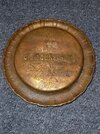
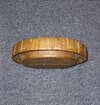
I've also added a pictures of a 6.6 inch gas check. Note the rifling of 20 grooves.
Attachments
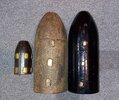
The two big ones are British the small one is not . That one is similar to the French la-hitte but different studsThe shell next to a 64pr with a smaller one with large studs, unidentified.
I've also added a pictures of a 6.6 inch gas check. Note the rifling of 20 grooves.
This might sound crazy, but I believe the small studded shell is Japanese. I know of the existence of only 3 of these, and they are all from either the Japanese Boshin War 1868-69 or the Southwestern War of 1877. They are all 8.7cm in diameter and are for the French 6-Pounder La Hitte howitzer, which were exported to Japan in the 1860s. Interestingly, only this caliber has these style studs; the 4-pounder La hitte shells (8.4 cm) recovered in Japan look identical to your common French La hitte shell, because they were the exact same ones that France was using. These 8.7 cm shells with the thick copper studs are thought to be Japanese-manufactured for French-imported guns. Does yours happen to be 8.7 cm in diameter?The shell next to a 64pr with a smaller one with large studs, unidentified.
I've also added a pictures of a 6.6 inch gas check. Note the rifling of 20 grooves.
I'm afraid I cannot say much about the 6.6" shell, but I would like to emphasise that the AI descriptions are very bad at identifying things like this, as they make up information without having real sources. I wouldn't trust anything other than period artillery docs, manuals, or treatises, or sources that cite period documents. That said, do you know where I can buy a copy of David Ibbetson’s book? Sounds like the perfect book for my research.
Hi EliWright, I’ve passed your post direct to Dave IbbetsonThis might sound crazy, but I believe the small studded shell is Japanese. I know of the existence of only 3 of these, and they are all from either the Japanese Boshin War 1868-69 or the Southwestern War of 1877. They are all 8.7cm in diameter and are for the French 6-Pounder La Hitte howitzer, which were exported to Japan in the 1860s. Interestingly, only this caliber has these style studs; the 4-pounder La hitte shells (8.4 cm) recovered in Japan look identical to your common French La hitte shell, because they were the exact same ones that France was using. These 8.7 cm shells with the thick copper studs are thought to be Japanese-manufactured for French-imported guns. Does yours happen to be 8.7 cm in diameter?
View attachment 208954
I'm afraid I cannot say much about the 6.6" shell, but I would like to emphasise that the AI descriptions are very bad at identifying things like this, as they make up information without having real sources. I wouldn't trust anything other than period artillery docs, manuals, or treatises, or sources that cite period documents. That said, do you know where I can buy a copy of David Ibbetson’s book? Sounds like the perfect book for my research.
Where can these (some) manuals be found online:
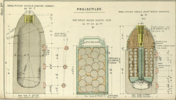
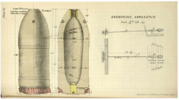
Story ,,plain groove,,
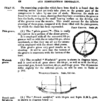
...Intended for others who couldn't find them after searching.
Akon
Story ,,plain groove,,
...Intended for others who couldn't find them after searching.
Akon
Last edited:
I think everyone has seen these online but they don’t explain my 6.6inch shell with 3 rows of 3 studs like the 64pr but a bigger heavier shell.
Where can these (some) manuals be found online:
View attachment 208962
View attachment 208963
...Intended for others who couldn't find them after searching.
Akon
6.6-inch
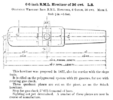
20 grooves.
+
6.6-inch R.M.L.
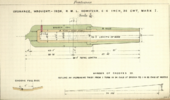
-No barrel is listed in the regulation with 3 grooves and a caliber of 6.6-inch.
20 grooves.
+
6.6-inch R.M.L.
Handbook for the 6.6-inch R.M.L. howitzer on bed and ground platform or on siege travelling carriage 1886.
-No barrel is listed in the regulation with 3 grooves and a caliber of 6.6-inch.
Last edited:
Including the studs the shell is around 7inch also the studs are the same size as the 7inch palliser shell or it’s a very rare early experimental shell6.6-inch
View attachment 208973
20 grooves.
-No barrel is listed in the regulation with 3 grooves and a caliber of 6.6-inch.