What's new
British Ordnance Collectors Network

This is a sample guest message. Register a free account today to become a member! Once signed in, you'll be able to participate on this site by adding your own topics and posts, as well as connect with other members through your own private inbox!

Ammunition for Guns, Howitzers and Mortars made in Canada during WW-2.

Antoon

Well-Known Member
Ordnance approved
I assume that ammunition that was made in Canada was also used by the British Army in the ETO and visa versa.
So no separated supply for the British 2nd Army and 1st Canadian Army. Is that correct?

And another question, how can I see if this ammunition was made in Canada, only by factory codes? Is there a list?

And was the Canadian Broad Arrow (C with an arrow inside) only used in the base of QF cartridges or also in other ammunition parts?

Greetings - Antoon
 
Found two factory codes on Cartridges 25 pr.

RM/C = Robert Mitchell Co.
DB/C = Dominion Bridge Co.
 
Found two factory codes on Cartridges 25 pr.

RM/C = Robert Mitchell Co.
DB/C = Dominion Bridge Co.
I have a list of about 20 Canadian factories that made projectiles.
I will try to type out a list for you tomorrow.
 
Are you sure about DB/C being Dominion Bridge? I have Dominion Brass and/or Dominion Cartridge Company, Brownburg. I am sure some people on thif forum know the correct name, I will adjust my reference list accordingly.
 
DB/C - Dominion Bridge Company

Numerous Canadian companies and organisations were contracted by the British Ministry of Supply to manufacture ordnance for use by British forces etc., they would have also manufactured ordnance for their own armed forces.

TimG
 
I assume that ammunition that was made in Canada was also used by the British Army in the ETO and visa versa.
So no separated supply for the British 2nd Army and 1st Canadian Army. Is that correct?

And another question, how can I see if this ammunition was made in Canada, only by factory codes? Is there a list?

And was the Canadian Broad Arrow (C with an arrow inside) only used in the base of QF cartridges or also in other ammunition parts?

Greetings - Antoon
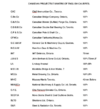
I show my list of Canadian projectile makers in British calibres from various forums and posts.
I have not done a case makers list yet. Obviously this list is missing lots of other makers.
 

Attachments

  • Canada Proj pdf.png
    Canada Proj pdf.png
    264.4 KB · Views: 59
I show my list of Canadian projectile makers in British calibres from various forums and posts.
I have not done a case makers list yet. Obviously this list is missing lots of other makers.
ron3350,

Thank you for the list. Strange, no 25 pr.

Greetings
 
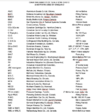
Here is my list of Canadian makers of shell cases etc used by UK.
This is a list from other forum members and I hope I did not mix projectiles and cases.
All these companies I have seen the case or photo so I know they exist. I hope I have Co. names correct.
Obviously there are many more companies amd different cases made by them. Still a good reference for collectors.
 

Attachments

  • PDF Can Cases send to forums.png
    PDF Can Cases send to forums.png
    447.7 KB · Views: 45
I assume that ammunition that was made in Canada was also used by the British Army in the ETO and visa versa.
So no separated supply for the British 2nd Army and 1st Canadian Army. Is that correct?

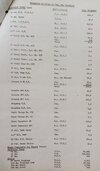
The Canadian Department of Munitions and Supply (DMS) had overall responsibility for organising output of ammunition for Canada and its allies. A number of Canadian government accounts were created to service the different sectors: Canada, Mutual Aid (MA) and War Supplies Ltd (WSL) being the main three main accounts.

The Canada account was for the training needs of its armed services in Canada, and also for combat requirements of the Royal Canadian Navy and Royal Canadian Air Force in home waters and for Atlantic convoy escorts. The MA account was mainly to service the UK, but also at times Russia (especially early in the war) and the Free French. The WSL account was for munitions to the USA. The attached sheet is a monthly snapshot (in this example July 1944) from DMS of shipments from Canadian plants under the various accounts.

Ammunition supplied under MA(UK) was sent to the UK and ultimately through the logisitics chain as required to all services (land, sea, and air) using British Service equipment. British troops fighting in northern Europe would have been supplied with a mix of British and Canadian ammunition: likewise Canadian troops in Europe would have seen a mix of supplies. In the fighting from Normandy there were times when Canadian divisions and brigades were part of the British 2nd Army order of battle, just as there were times when British units were under 1st Canadian Army command. With the commonality of weapons it made sense to supply all the troops under command with whatever was in the dumps and depots, whether British made, Canadian Mutual Aid, or even of Australian or South African manufacture.
 

Attachments

  • 42bc8003.jpg
    42bc8003.jpg
    1 MB · Views: 39
Last edited:
(I claim no expertise :) )

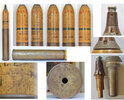
Case was [made] by CL/C = Canadian Motor Lamp Co, Windsor
CF = Cordite Full Charge

Question. Was it normal for the projectile explosive filling company to be the only maker's mark/stamp on the projectile?

I ask because if SC is the filling plant(?) then what mark is for the projectile body maker. Or was this information kept by the explosive filling company, as part of the Lot paperwork, and the maker of the projectile body not (necessarily) indicated on the shell body?

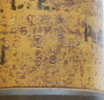
Is Ps/C (Pickering Works, Pickering Township, Ontario) the final(?) inspection stamp, but not necessarily(?) the filling station?

If SC is the filling and assembly plant, then it might be for the Scarborough Munitions Plant, Scarborough, Ontario - a plant operated under the CIL/DIL umbrella.

If SC is for the projectile body manufacturer then the only thing I can think of is Schneider.

??

[edited per TimG correction]
 
Last edited:
It would appear that the projectile was made by Scioto Ordnance Plant, USA.

The case was made by, not filled by, Canadian Lamp Co.

Ps/C is the filler of the projectile, unknown to me

Manufacturers stamp, fillers stencil (generally)(on projectiles and large cartridge cases)

TimG
 
Last edited:
The listed monogram for Pickering is PG/C (the G being a capital, but half size). The marking on the projectile looks very much like PS/C but is somewhat poor quality and actually could be PG/C.

TimG
 
A few more questions if that is OK.

Is there any other indicator that the shell body was made in the US? I was wondering if the any of the other characters, style, or arrangement would be indicators for the US.

Would Scioto have stamped the date on the shell body, or would the Canadian agency responsible for acceptance have done so. IIUC, the accepting Canadian government agency were the ones who stamped the broad arrow inside the C inside the oval symbol, but would this have been for the shell body when receiving it from the US, or for the completed projectile?

Is there any indicator on the case or shell as to who filled the case? Is there some sort of standard way of knowing, like if the agency that filled the shell also fills the case, etc?

I will probably think of more questions.:)
 
Last edited:
The Canadian Department of Munitions and Supply (DMS) had overall responsibility for organising output of ammunition for Canada and its allies. A number of Canadian government accounts were created to service the different sectors: Canada, Mutual Aid (MA) and War Supplies Ltd (WSL) being the main three main accounts.

The Canada account was for the training needs of its armed services in Canada, and also for combat requirements of the Royal Canadian Navy and Royal Canadian Air Force in home waters and for Atlantic convoy escorts. The MA account was mainly to service the UK, but also at times Russia (especially early in the war) and the Free French. The WSL account was for munitions to the USA. The attached sheet is a monthly snapshot (in this example July 1944) from DMS of shipments from Canadian plants under the various accounts.

Ammunition supplied under MA(UK) was sent to the UK and ultimately through the logisitics chain as required to all services (land, sea, and air) using British Service equipment. British troops fighting in northern Europe would have been supplied with a mix of British and Canadian ammunition: likewise Canadian troops in Europe would have seen a mix of supplies. In the fighting from Normandy there were times when Canadian divisions and brigades were part of the British 2nd Army order of battle, just as there were times when British units were under 1st Canadian Army command. With the commonality of weapons it made sense to supply all the troops under command with whatever was in the dumps and depots, whether British made, Canadian Mutual Aid, or even of Australian or South African manufacture.
Thank you very much for this explanation on Mutual Aid, etc. I assume that the figures in the attachments are in (metric) tons?
 
A few more questions if that is OK.

Is there any other indicator that the shell body was made in the US? I was wondering if the any of the other characters, style, or arrangement would be indicators for the US.

Would Scioto have stamped the date on the shell body, or would the Canadian agency responsible for acceptance have done so. IIUC, the accepting Canadian government agency were the ones who stamped the broad arrow inside the C inside the oval symbol, but would this have been for the shell body when receiving it from the US, or for the completed projectile?

Is there any indicator on the case or shell as to who filled the case? Is there some sort of standard way of knowing, like if the agency that filled the shell also fills the case, etc?

I will probably think of more questions.:)
It is likely that there were Canadian inspectors at the projectile factory so once approved it could go straight to the filling factory and be painted filled and stenciled.
It's possible the basic colour would be added at the projectile factory but no more than that.
 
Top