What's new
British Ordnance Collectors Network

Join over 14,000 collectors of inert military ordnance. Get expert identification help for shells, fuzes, grenades, and more — plus access our classifieds marketplace and decades of archived knowledge. Free to register, takes seconds.

Are these ELAZ 55A Fuzes with an anti-handling/anti-disturbance feature?

ChrisR

Active Member
Excuse my ignorance but I am familiar with Ys stamped on 50 Fuzes, but I have a couple of fuzes in my collection that are 55As with 'CPP Y' stamped on them.
So are these markings indicating they are anti-disturbance fuzes, or am I barking up the wrong tree.
And if they are, why have anti-handling on an an impact fuze, unless it was for bombs dropped too low?
Can someone please school me? I'm here to learn!
 

Attachments

  • P1260225.JPG
    P1260225.JPG
    834.9 KB · Views: 71
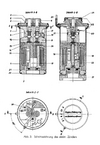
The 55 or 55A was used in bombs specifically for low-level attacks against railway lines and earthen embankments. For this reason, a spike was screwed onto the bombs and provided with a contact head.
 

Attachments

  • 55A.jpg
    55A.jpg
    114.2 KB · Views: 65
  • img_A_383215_98fa9576dee6ed8d1a9735da6cb9097c.jpg
    img_A_383215_98fa9576dee6ed8d1a9735da6cb9097c.jpg
    35.3 KB · Views: 64
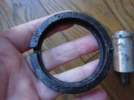
Thanks for that. This is the first time I have seen a close-up photo of the contact head. So why would there be a 55A fuze with an anti-handling feature, or am I mistaken regarding the Y stamp?
 
I found this in my documents.
 

Attachments

  • 102.jpg
    102.jpg
    598.8 KB · Views: 75
  • 103.jpg
    103.jpg
    325 KB · Views: 66
  • 104.jpg
    104.jpg
    272.5 KB · Views: 56
  • 105.jpg
    105.jpg
    545 KB · Views: 55
  • 106.jpg
    106.jpg
    480 KB · Views: 59
  • 107.jpg
    107.jpg
    149 KB · Views: 54
  • 108.jpg
    108.jpg
    175.4 KB · Views: 65
  • 109.jpg
    109.jpg
    442.7 KB · Views: 74
  • empfindlicher Aufschlagzünder (55)-1.jpg
    empfindlicher Aufschlagzünder (55)-1.jpg
    175.3 KB · Views: 79
  • Zünder 361.jpg
    Zünder 361.jpg
    258.1 KB · Views: 80
bonjour, les seules fusées anti manipulation que je connais sont celles de la série 0, pas la série 5 qui est pour un emploi général
 
Hello every one, à traduire dans vos langues respectives, bonne lecture
Best regard
 

Attachments

  • Fusées éléctriques Bbes GER WW2.pdf
    23.3 KB · Views: 49
Hello,

-Does anyone have a drawing of the EL AZ 55A? I only have the EL AZ 55.

–Is it confirmed that the marking "ccp y" stands for an anti-handling device? How was that implemented?

Regards
 
"cpp" is a German wartime manufacturer code that appears on German Luftwaffe electrical bomb fuzes. Published code lists attribute it to Rheinmetall-Borsig AG, Guben. That attribution comes from one secondary list and has not yet been confirmed against a primary source. According to OP 1666, German Explosive Ordnance (US Navy, 1946), the code is followed by either the year of manufacture (e.g. "cpp 1942") or a letter-number group (e.g. "cpp x", "cpp Y 2a"), which probably identifies a factory lot. OP 1666 records "cpp" markings on the El AZ (25) B, (55) A, (76) A and (106)* fuzes, among others. What the suffix letters (x, y, a) mean is not documented there.
 

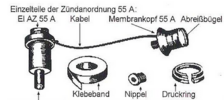
This specimen belongs to the category of bomb accessories/fuzes that have wires extending from the side of the fuze—a group that certainly includes the (55 A):​

​

Druckring : ​


1793108605468.png
Another version that accounts for the wires from the fuse (side outlet)...
1793108780074.png

Photo source: FB, user l Ssglen Stuka Butler ​

Akon
 
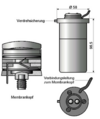
A long time ago, I saw a photo of a "Type 55A" unit, but it differed from the one described in the official documentation (I have continued to refer to it as "55A" for the sake of this discussion). This is the version I am looking for in actual photographs; here is a drawing provided by Fusse 2004 (thanks, Fusse 2004).
It features an aluminum body—unlike the version in the documentation, which has a sheet-metal body—and the wires exit from the front of the igniter rather than from the side.If you look at the diaphragm switch, it is clearly different in terms of its construction (for instance, a spring is missing...).

1793109309595.png
So, a question for the group: Has anyone seen it in person? Is anyone able to take a photo, or does anyone have any further information about it?I’m not sure if it’s a successor to the 55A, an unreleased sibling, or perhaps a competitor from the same "family"...Nothing but questions—as is usually the case! :)
Many thanks
Akon
 
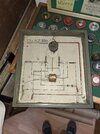
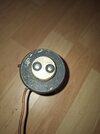
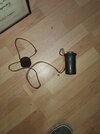
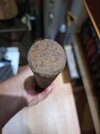
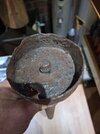
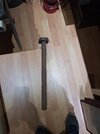
Bit late here but some bits I have
 

Attachments

  • 20260929_124917.jpg
    20260929_124917.jpg
    2.1 MB · Views: 6
  • 20260929_124725.jpg
    20260929_124725.jpg
    1.6 MB · Views: 6
  • 20260929_124711.jpg
    20260929_124711.jpg
    1.8 MB · Views: 5
  • 20260929_124544.jpg
    20260929_124544.jpg
    1.3 MB · Views: 5
  • 20260929_124538.jpg
    20260929_124538.jpg
    1.5 MB · Views: 4
  • 20260929_124532.jpg
    20260929_124532.jpg
    1.6 MB · Views: 5
Bit late here but some bits I have
Hi Millsbomber,I’ll add a brief comment regarding your specimens:Regarding the impact rod: In L.Dv 4200 (1943), the component listed as "Din St 70" features an M14 thread. However, the technical drawing and text in the manual do not show the second, smaller thread—the one that allows for the attachment of an external diaphragm switch. (Although the impact rod has a male thread, and the switch also has a male thread, a connecting nut likely bridged the two. This was necessary to position the switch relative to the edge of the rod, ensuring it wouldn't be sheared off upon impact...)This represents a shift in interpretation. It makes sense that the impact rod was designed with greater functional versatility...As for the visual layout of the fuze: I noticed that two components—likely "impact contact 1" and "impact contact 2"—are missing; they probably broke off over time or didn't survive various relocations. That said, it in no way diminishes the exceptional nature of your specimen!!Otherwise, it serves as an excellent educational aid—it reveals the study materials they had access to, which in turn explains their level of understanding regarding how these fuzes functioned...In my view, it is top-tier quality; it would be a real pleasure to teach or explain concepts using such resources!

Hi Millsbomber, and everyone else who contributed—thank you for your time and for taking these photos.
Akon
 
Top