What's new
British Ordnance Collectors Network

Join over 14,000 collectors of inert military ordnance. Get expert identification help for shells, fuzes, grenades, and more — plus access our classifieds marketplace and decades of archived knowledge. Free to register, takes seconds.

Bi-Metallic 7,7cm FK.96 Case

peregrinvs

Well-Known Member
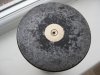
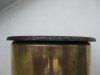
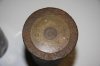
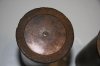
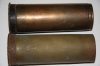
I've just acquired a bi-metallic FK.96 case and I was wondering if the maker could be identified? I attach some pictures. There's a sort of four pointed star in a circle type marking at 12 o'clock, (maker mark?) '210' at 9 o'clock, (batch number?) and '15' at 3 o'clock. (Date?)

I had vaguely assumed the bi-metallic cases were a late war innovation, so I wasn't expecting a 1915 date - if that's what it is?

Thanks,
Mark

7,7cm FK.96 case - bi-metallic - 1915 (3).jpg7,7cm FK.96 case - bi-metallic - 1915 (1).jpg7,7cm FK.96 case - bi-metallic - 1915 (2).jpg7,7cm FK.96 case - bi-metallic - 1915 (4).jpg7,7cm FK.96 case - bi-metallic - 1915 (5).jpg
 
Rheinmetall
 

Attachments

  • C07F3DD4-6144-4D90-B043-6BBF75753060.jpeg
    C07F3DD4-6144-4D90-B043-6BBF75753060.jpeg
    264.3 KB · Views: 27
I had vaguely assumed the bi-metallic cases were a late war innovation, so I wasn't expecting a 1915 date - if that's what it is?

The primary goal of this case type wasn't saving brass but a larger output in mass production through simplified manufacturing. Only machines already available from civil sheet metal production were required to make these cases. Solid brass drawn cases require much heavier machinery and years of experience in heat treatment etc. which they were not able to increase from one to the other day. The later steel cases (several types named after their factories existed) had both the goals to safe brass and increased mass production.
 
Last edited:
The primary goal of this case type wasn't saving brass but a larger output in mass production through simplified manufacturing. Only machines already available from civil sheet metal production were required to make these cases. Solid brass drawn cases require much heavier machinery and years of experience in heat treatment etc. which they were not able to increase from one to the other day. The later steel cases (several types named after their factories existed) had both the goals to safe brass and increased mass production.
Thanks. That’s very interesting. I would have previously assumed that it was a production complication necessitated by raw materials shortages. Hence I thought they were a late war phenomenon.
 
Two cases for 7.7 cm Fk
all dated from 1917
One sure for Fk 96 and the other for FK16 (see the top necking case)IMG_0016.jpgIMG_0017.jpgIMG_0018.jpg
Rheinmetal firm
 
Top