

British Ordnance Collectors Network
You are using an out of date browser. It may not display this or other websites correctly.
You should upgrade or use an alternative browser.
You should upgrade or use an alternative browser.
Break Up Unit ID
- Thread starter Burney Davis
- Start date
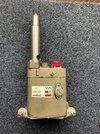
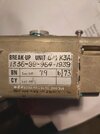
Break-up units were used on missiles to initate self destruct if they went astray, were likely to cause unacceptable colateral damage, or needed to have flight terminated during proof tests. They contained an explosive charge to cause the missile to disintegrate without setting off the warhead. Bloodhound and Seaslug were so equipped. While in British service, for many years there was an annual proof firing from the RAE Aberporth range of a Bloodhound selected from stock, and I suppose there was someone on the break-up telemetry trigger in case the Bloodhound misbehaved.
I don't know what specific missile the photos refer to, but the NATO number might reveal.
ETA: It appears 1336 is the supply classification "Guided Missile Warheads and Explosive Components", 99 the country of manufacture (UK), but the full part designation 1336-99-964-1939 remains classified. See:
https://www.nsndepot.com/FSC/1336?PageNumber=4
I don't know what specific missile the photos refer to, but the NATO number might reveal.
ETA: It appears 1336 is the supply classification "Guided Missile Warheads and Explosive Components", 99 the country of manufacture (UK), but the full part designation 1336-99-964-1939 remains classified. See:
https://www.nsndepot.com/FSC/1336?PageNumber=4
Last edited:
Thanks Tom, that's great. I'll pass it on.Break-up units were used on missiles to initate self destruct if they went astray, were likely to cause unacceptable colateral damage, or needed to have flight terminated during proof tests. They contained an explosive charge to cause the missile to disintegrate without setting off the warhead. Bloodhound and Seaslug were so equipped. While in British service, for many years there was an annual proof firing from the RAE Aberporth range of a Bloodhound selected from stock, and I suppose there was someone on the break-up telemetry trigger in case the Bloodhound misbehaved.
I don't know what specific missile the photos refer to, but the NATO number might reveal.
ETA: It appears 1336 is the supply classification "Guided Missile Warheads and Explosive Components", 99 the country of manufacture (UK), but the full part designation 1336-99-964-1939 remains classified. See:
https://www.nsndepot.com/FSC/1336?PageNumber=4

I just checked my September 1992 version of the ADAC list and it does not appear in that. Numbers around that (T6) NSN relate to Swingfire (as Tim suggested) and also to Vigilant, both of which are obsolete in UK service. Vigilant was declared obsolete probably in the late 1970s as many were destroyed on Exercise Elbow Room in the 1979 - 80 period. CBUs consisted of a small HE charge in front of the rocket motor and were designed to make the missile non-propulsive by blowing a hole in the motor's forward bulkhead. GM = Guided Missile and the K prefix for the model number is a giveaway that it relates to a guided missile. Conventional land ammunition has an L prefix for the model number.
Many thanks, I'll pass that on.I just checked my September 1992 version of the ADAC list and it does not appear in that. Numbers around that (T6) NSN relate to Swingfire (as Tim suggested) and also to Vigilant, both of which are obsolete in UK service. Vigilant was declared obsolete probably in the late 1970s as many were destroyed on Exercise Elbow Room in the 1979 - 80 period. CBUs consisted of a small HE charge in front of the rocket motor and were designed to make the missile non-propulsive by blowing a hole in the motor's forward bulkhead. GM = Guided Missile and the K prefix for the model number is a giveaway that it relates to a guided missile. Conventional land ammunition has an L prefix for the model number.
If you take a look at the photos in the attached thread you will see a partially armed Swingfire safety and arming mechanism (a fuze in other words) but what you posted looks nothing like that. If your photos are of a Swingfire component I'm wondering if that was the hardware used to initiate CBU, rather than an ammunition item. That may acount for why the NSN doesn't appear in the Sep 1992 ADAC list. The same may also apply if your photos are of a Vigilant component. Just thinking out loud. https://www.bocn.co.uk/threads/swingfire.72347/