

British Ordnance Collectors Network
You are using an out of date browser. It may not display this or other websites correctly.
You should upgrade or use an alternative browser.
You should upgrade or use an alternative browser.
British .30" cabine blank
- Thread starter smle2009
- Start date


TonyE
HONOURED MEMBER RIP
.30 Carbine
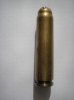
Kynoch made .30 Carbine ball for the British military for use when stocks of US wartime ammo ran out. I have ball rounds dated between 1954 and 1960.
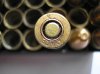
They also made blank and limited quantities of tracer, but it is not known if these were for British use/trial or for export. The lack of a date on your blank example suggests it was not for the UK, and may even have been for film use.
Although loaded with NC propellant, the carbine rounds were not headstamped "1Z". In fact, my Kynoch blank is unheadstamped.
Regards
TonyE
Kynoch made .30 Carbine ball for the British military for use when stocks of US wartime ammo ran out. I have ball rounds dated between 1954 and 1960.
They also made blank and limited quantities of tracer, but it is not known if these were for British use/trial or for export. The lack of a date on your blank example suggests it was not for the UK, and may even have been for film use.
Although loaded with NC propellant, the carbine rounds were not headstamped "1Z". In fact, my Kynoch blank is unheadstamped.
Regards
TonyE

V40
Well-Known Member
From the book I am reading I'm getting information that it is: 7.19g bullet, Vo is 600 m/s, Eo is 1294 J. It was indeed made in Great Britian. It also says that that round is the heaviest round made, the next closes one is 7.14g for weight and it was made by Hertenberger. There seems to be that the rest of NATO's armory is in the upper 6's to lows 7 differences in the bullet. Not sure if this helps you or not.
V-40
V-40
Last edited:
TonyE
HONOURED MEMBER RIP
30 Carbine
I am not sure which book you are quoting from, but there is little or no difference in bullet weights.
Also, we know the round was made in Britain. We have the examples, the specification and I have copies of the production drawings.
Using Imperial measure, which the round was originally specified in, the spec. for the US M1 Ball round has a bullet weight of 111 grns. The British bullet weight spec. was 112 grns and I believe the Hirtengberger bullet weight was 110 grns. Thus the bullet weight of both is within 1 grain of the spec. of the US round. That is far closer than manufacturing tolerances, so it is pointless to say one bullet is the heaviest.
This is military ammunition, not match ammo. Weights between individual bullets can easily vary by 4 grains (if spec'd, at + or - 2 grains).
Regards
TonyE
Source for US data - Frankford Arsenal Ammunition Specification Sheets.
I am not sure which book you are quoting from, but there is little or no difference in bullet weights.
Also, we know the round was made in Britain. We have the examples, the specification and I have copies of the production drawings.
Using Imperial measure, which the round was originally specified in, the spec. for the US M1 Ball round has a bullet weight of 111 grns. The British bullet weight spec. was 112 grns and I believe the Hirtengberger bullet weight was 110 grns. Thus the bullet weight of both is within 1 grain of the spec. of the US round. That is far closer than manufacturing tolerances, so it is pointless to say one bullet is the heaviest.
This is military ammunition, not match ammo. Weights between individual bullets can easily vary by 4 grains (if spec'd, at + or - 2 grains).
Regards
TonyE
Source for US data - Frankford Arsenal Ammunition Specification Sheets.