What's new
British Ordnance Collectors Network

Join over 14,000 collectors of inert military ordnance. Get expert identification help for shells, fuzes, grenades, and more — plus access our classifieds marketplace and decades of archived knowledge. Free to register, takes seconds.

British Torpedo Pistol Class 3.

Sprockets

Well-Known Member
The technical operational description of this popular contact pistol,is difficult to track down. Even the excellent "San Francisco Maritime Park " collection of Naval Manuals has an empty space for this device in a British document. It had a distinctive spherical mounting, enabling it to operate at oblique angles. Has anyone a copy which they might kindly scan?
Thanks, Martin.
 
Never heard of a "Class 3" pistol, only the common "Type 3". Do you have more information, like from what period, what torpedoes it was used with etc.

Even the excellent "San Francisco Maritime Park " collection of Naval Manuals has an empty space for this device in a British document. It had a distinctive spherical mounting, enabling it to operate at oblique angles. Has anyone a copy which they might kindly scan?
I assume that is "The San Francisco Maritime National Park Association". If you are refering to their version of the "Mine Disposal Handbook", be aware that it is in no way complete.
 
Never heard of a "Class 3" pistol, only the common "Type 3". Do you have more information, like from what period, what torpedoes it was used with etc.

I assume that is "The San Francisco Maritime National Park Association" and you are refering to their version of the "Mine Disposal Handbook", be aware that it is in no way complete.

Never heard of a "Class 3" pistol, only the common "Type 3". Do you have more information, like from what period, what torpedoes it was used with etc.

I assume that is "The San Francisco Maritime National Park Association". If you are refering to their version of the "Mine Disposal Handbook", be aware that it is in no way complete.
Thanks, Natter, I do mean the "Type 3"of course, and age is catching up with me! Any idea who might have an operational description? Yes, their copy of the "Mine Disposal Handbook" has massive lacuna, mostly relating to British Weapons for some reason-(British Secrecy concerns?)-Martin.
 
Hi Sprockets,
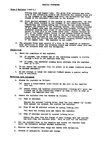
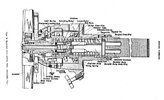
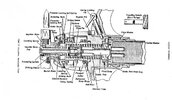
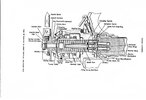
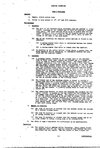
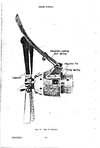
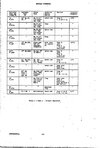
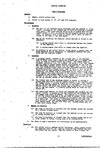
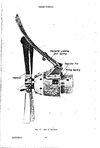
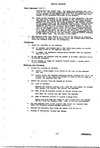
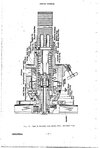
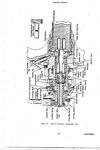
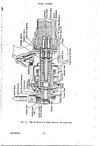
I Found this for you, maybe you can use this.
Somebody gave it to me a long time ago, I can't remember who it was.
LEAFLET
 

Attachments

  • 01.jpg
    01.jpg
    117.2 KB · Views: 24
  • 02.jpg
    02.jpg
    348.2 KB · Views: 23
  • 03.jpg
    03.jpg
    351.8 KB · Views: 24
  • 04.jpg
    04.jpg
    309.7 KB · Views: 24
I Found this for you, maybe you can use this.
That's content from the US Navy Ordnance Pamhplet 1330 Mine Disposal Handbook (ie some of the pages missing from the version posted on the San Francisco Maritime National Park Association website).
 
Hi Sprockets,
I Found this for you, maybe you can use this.
Somebody gave it to me a long time ago, I can't remember who it was.
LEAFLET
Thanks, LEAFLET, I am overwhelmed! I have been looking for this description for years! Only a little bit of introduction missing, but enough to make all plain.Your time much appreciated!
Martin.
 
That's content from the US Navy Ordnance Pamhplet 1330 Mine Disposal Handbook (ie some of the pages missing from the version posted on the San Francisco Maritime National Park Association website).
I have in the past contacted S F M N Park, asking if the omissions might be restored, seeing how much time has elapsed! Incidentally, do you have access to a copy of the first page?
Martin.
 
Hi Sprockets,
I should have a better look at the docs, there was more.
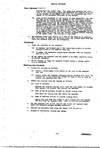
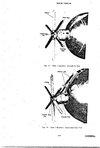
Here they are, it must be compleet now.
LEAFLET
 

Attachments

  • Seite-21.jpg
    Seite-21.jpg
    150.5 KB · Views: 16
  • Seite-22.jpg
    Seite-22.jpg
    65.7 KB · Views: 17
  • Seite-23.jpg
    Seite-23.jpg
    124.5 KB · Views: 16
The complete section for the Type 3-pistol from OP 1330 (obviously, the british handbooks are better with better drawings/photos):
 

Attachments

  • Seite-19.jpg
    Seite-19.jpg
    74.3 KB · Views: 15
  • Seite-20.jpg
    Seite-20.jpg
    87.2 KB · Views: 14
  • Seite-21.jpg
    Seite-21.jpg
    150.5 KB · Views: 9
  • Seite-22.jpg
    Seite-22.jpg
    65.7 KB · Views: 8
  • Seite-23.jpg
    Seite-23.jpg
    124.5 KB · Views: 5
  • Seite-24.jpg
    Seite-24.jpg
    117.2 KB · Views: 6
  • Seite-25.jpg
    Seite-25.jpg
    110.6 KB · Views: 7
  • Seite-26.jpg
    Seite-26.jpg
    107.5 KB · Views: 13
What can I say! I had not realised so much was missing, so thanks for you bothering to do a double-check! You seem to possess a most comprehensive library, which you generously share. Here is the sting-have you anything concerning the fuzing of the South African manufactured Alpha bomblet, encased in rubber to make it bounce. A modified version of a Rhodesian device, which turned up in Iraq, but was unknown to the U.States. Information is rarer than "Hens teeth"
Best regards, Martin Cummins.
 
The complete section for the Type 3-pistol from OP 1330 (obviously, the british handbooks are better with better drawings/photos):
Thanks,Natter, for going to the trouble to scan your copy of the OP1330-I see where the text is incorrect. It refers to a "Rachet", rather than a "Ratchet"-Presumably this is to prevent the arming spindle turning backwards -Wind or water entering a launching tube) ,and jamming screw. Also the curved Safety Lever (Flap) is mislabelled as "Preventer Locking Bolt Spring". It looks as if the Safety lever is spring retained in a streamlining housing, when released from the impeller. The whole design is one of pure genius, bur the Germans still spotted the fact that the firing pins would strike harder if they were moving in the direction of travel (forwardly) at impact.

Regards, Martin Cummins.
 
Last edited:
Here's an old BOCN thread on the Type 3F, where the Germans "copied" the design from a captured British submarine /torpedoes in an effort to reolved the magnetic issues with their exploders:


According to reports, a 1000 were produced and were known as the Pi40. Interesting enough, the Pi40 copies were not "compatiable"on the German trops. There's a book publication on it.

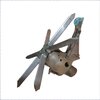
Here's the only reference file photo that I have:

Type 3F.JPG
 
Last edited:
It's strange that the history of the Pi 3F hasn't been posted in here (I feel like I have written about several times).

Germany captured the british submarine HMS Seal on May 5th 1940, with a complete load of torpedoes. As this was at the peak of the german "torpedokrise", Kriegsmarine saw a possibility for a quickfix for their problems with the Pi G7A-AZ/MZ pistols (problems included both the magnetic influence-mechanims in the MZ, as well as the mechanical in regards to the design of the deflectionarms for both), as they deemed the Type 3F pistol a much better design (it was effective with as low speeds as 6 kn, and attack-angles down to 11 degrees). They started with a direct copy, given the development-designation "Pi 40" and rushed it into production with an initial order of 2000 units.
However, as they started testfirings of german torpedoes with the pistol (operational-designation "Pi Typ 3F"), they soon discovered that the british deflectionarms acted like wings and affected the course of the torpedo - often forcing it to seek downwards to the seabed. Production was stopped after 400 units had been delivered, and they went back to the drawingboard continuing development of the "Pi 35", which ended up as the successful "Pi G7H", later re-designated "Pi 1".
 
Top