What's new
British Ordnance Collectors Network

Join over 14,000 collectors of inert military ordnance. Get expert identification help for shells, fuzes, grenades, and more — plus access our classifieds marketplace and decades of archived knowledge. Free to register, takes seconds.

British WW1 18pdr HE Projectiles

Vasco Da Gama

Well-Known Member
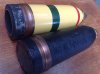
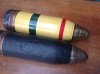
Pictured are what I think are 2 British WW1 18pdr HE projectiles, probably an early model (painted as a HE) fitted with a number 103 fuse and a later slightly more streamlined version (painted black) fitted with a number 101 fuse. The fuse pockets are different in that the painted HE has only sufficient threads for a 103 fuse, the longer threaded 101 will not screw fully home. If anybody can add some detail to the exact models I would appreciate the education.
 

Attachments

  • image.jpg
    image.jpg
    297.9 KB · Views: 82
  • image.jpg
    image.jpg
    291.2 KB · Views: 78
Hi Vasco

I believe the painted one is in fact an 18pr HE shell, I've spent a lot of time recently researching
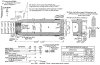
this shell as I'm trying to ID one that I've purchased. Some 18pr HE's did have a threaded recess (see Image)
can I ask is your 101 fuse a Mk II? I've tried a 101 Mk II in my shell but its to big i was going to try a No. 100 next.

QF_18_pdr_HE_Mk_II_Shell_Diagram.jpg
 
Last edited:
To counter any porosity or flaws in the forging at the area exposed to the extreme pressure upon firing.
 
Thanks Gents for your thoughts. I looked over the HE painted projectile very carefully and found some faint markings: 18 pdr QF, III, FS and P. To me this would indicate a Forged Steel Practice projectile, but what type of practice? With the short fuze thread it may be a practice Shrapnel, if they did not contain any contents, or did practice cover both types HE and Shrapnel? The only No 100 fuze I have has damaged threads but it would fit the depth required by this projectile. So for me the fuze pocket would accept a No80, 100 or 103 but not a 101.
 
Top