What's new
British Ordnance Collectors Network

Join over 14,000 collectors of inert military ordnance. Get expert identification help for shells, fuzes, grenades, and more — plus access our classifieds marketplace and decades of archived knowledge. Free to register, takes seconds.

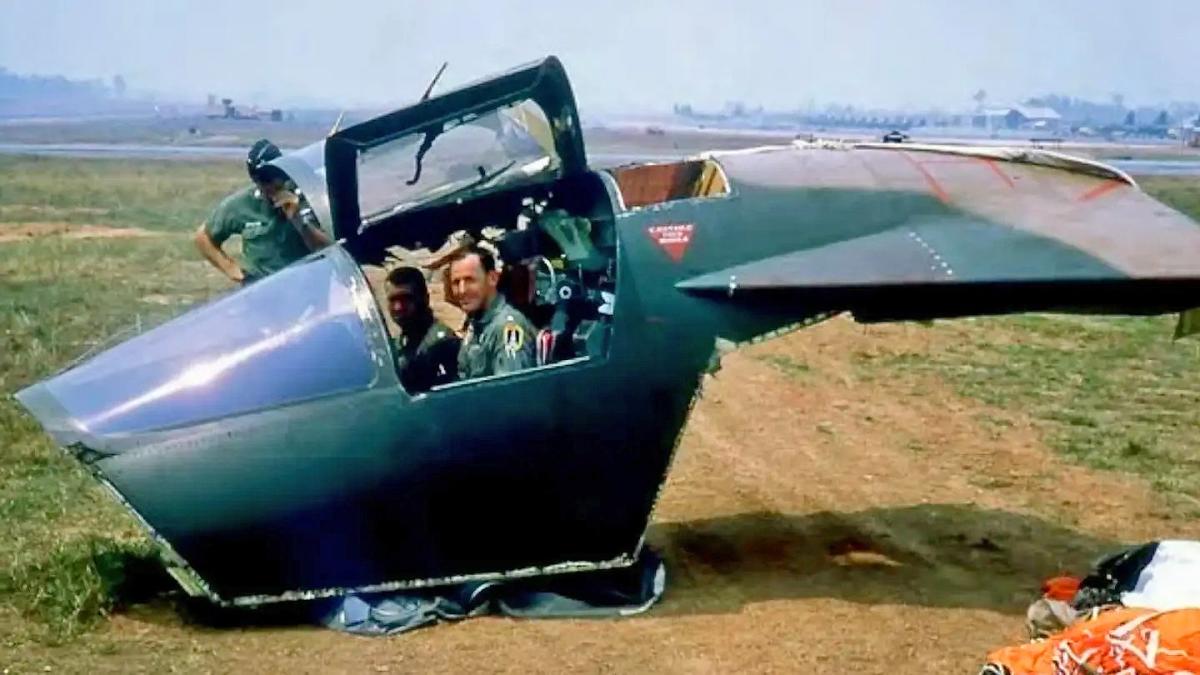
F-111 Aardvark escape module

Vlad, thanks for posting, esp. the link as that article really covered a lot of the Aardvark's history. From an EOD perspective, when the capsule was activated, depending on the conditions, a whole lot of explosive actuators (CAD/PAD items) and "miles" of shielded mild detonating cord would remain live. It would be a "treasure trove" for Pepper. But for the EOD troops clearing the wreckage, it meant LOTS of work. If the capsule was NOT activated, the task of removing all explosives increased exponentially, along with the biologics that EOD was sometimes tasked with. I learned that you didn't want to 1) arrive early, 2) bring lots of gloves and 3) lead intelligent, enthusiastic Troops familiar to some extent with the aircraft, when you respond to an F-111 crash where the module was NOT deployed.
Taber
 
Back around 1979, I used to shoot IPSC pistol with two Test Pilots that were working the kinks out of the EF-111 electronic warfare planes being evaluated near my home. We heard a number of stories regarding the escape capsule. The first, was that the landing attenuation bags failed a lot, and that the capsules were known to hit the ground hard, breaking the backs of the crew because they had no padding under their butts.

The second story was regarding the aircraft hydraulic system. If they lost hydraulic pressure, the vertical stabilizer would slam to one side and invert the plane into an upside-down configuration. An individual certainly didn't want the capsule to rocket straight down towards the ground, so there was a rocket motor in the front wheel well, that would rotate the plane to a right-side-up configuration before the capsule separated.
 
Top