British Ordnance Collectors Network
You are using an out of date browser. It may not display this or other websites correctly.
You should upgrade or use an alternative browser.
You should upgrade or use an alternative browser.
German 2cm projectile
- Thread starter earni74
- Start date
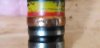
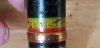
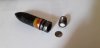
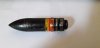
hello 'M', thanks for responding, unfortunately there are no ink markings on the shell body, the screw in tracer sits on the steel disc, under the disc is "lead" , the total weight is 147g with tracer , length of projectile minus the tracer unit is 79.6mm, having gone through my books and paperwork I eventually came to the same as you, AP-T inert filled and due to the weight i am assuming it is for the 2cm flak 20x138B cartridge
Mick
Mick
Attachments
Hey Mick,
There are several types of inert fillers used with German WW2 2cm AP.
The one most commonly associated with 20x138/B AP being sulphursand. This may come out as an off-white crumbly pellet which could well be perceived as oxidized lead.
I have not found evidence of any of the other types: bakelite, preßstoff, being used in this calibre. Have found filler pellets of those in 2cm AP for MGFF and 151/20.
I've read and believe(d) that ceramic fillers are in existence as well, but can imagine a very compact sulphursand filler being mistaken for ceramic.
Greetz,
Menno.
There are several types of inert fillers used with German WW2 2cm AP.
The one most commonly associated with 20x138/B AP being sulphursand. This may come out as an off-white crumbly pellet which could well be perceived as oxidized lead.
I have not found evidence of any of the other types: bakelite, preßstoff, being used in this calibre. Have found filler pellets of those in 2cm AP for MGFF and 151/20.
I've read and believe(d) that ceramic fillers are in existence as well, but can imagine a very compact sulphursand filler being mistaken for ceramic.
Greetz,
Menno.
Last edited:

Many thanks for the Link 'M' great to see, here is another round i found on Sunday....Greek 20x110mm Oerlikon, crimped in projectile but with a M505 series fuze, i have tried other Oerlikon and Hispano fuzes but none will fit, it appears to be inert made with a struck primer,any thoughts Mick