What's new
British Ordnance Collectors Network

Join over 14,000 collectors of inert military ordnance. Get expert identification help for shells, fuzes, grenades, and more — plus access our classifieds marketplace and decades of archived knowledge. Free to register, takes seconds.

German naval measuring charge?

Tmine35

Well-Known Member
Premium Member
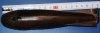
Any information about this "bomb"? Made of bakelite. It has been assumed that it could be kind of a measuring charge, dropped over board a ship and exploding when hitting seabed, water depth measured by recording sinking time but no confirmation to this found.
 

Attachments

  • bomb-1.jpg
    bomb-1.jpg
    139.2 KB · Views: 62
  • bomb-text.jpg
    bomb-text.jpg
    150.9 KB · Views: 41
By no means sure of this, but might it be a charge designed to blow up magnetic mines (which would have been unapproacheable for any metal vessel / destruction charge) ?
Nowadays charges packed in glassfibre etc. are used.

just a thought,

greetz,

Menno.
 
The writing reads Attention Live Demolision block , so it looks as though its use is to be towed behind minesweepers , to snag moored mines and to explode them ! the Germans called them sweep obstructors.
 
Last edited by a moderator:
It has no attachment for towing wire, further it has fins to make it rotate quite rapidly. Therefore I rather think it's dropped overboard. Also the maker "Hydroakustik, Kiel" somehow sounds more like a measuring device. All internal parts are missing but there seems to have been some kind of centrifucal safety device and compartment for charge is just a fingertip size.
 
Is that hole in the front for the towing cable with the wording demolision block i would dought it was for measuring ! more for blowing something up, i dont think you can read too much into the maker as a lot of companies were engaged in war work Ie Jurgens the watch makers made demolision timers
 
Last edited by a moderator:
No, there has been a centrifugal safety device. I have seen another one with some remains of internal parts and in this hole there were pieces of metal which centrifugal force from rotation pushed out releasing a striker pin safety.
 
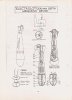
Here is some info on it.
I hope it helps.
 

Attachments

  • 003.jpg
    003.jpg
    136.1 KB · Views: 33
  • 005.jpg
    005.jpg
    130.8 KB · Views: 53
Thanks Mad,
That's it. Slightly different from mine in some details but use is the same.
Tmine35
 
Top