Join over 14,000 collectors of inert military ordnance. Get expert identification help for shells, fuzes, grenades, and more — plus access our classifieds marketplace and decades of archived knowledge. Free to register, takes seconds.
these days ammo boxes all have the orange and black 'military explosive' label with various category numbers. But did they bother with such things during WW2? If so, does anyone have a picture of one?
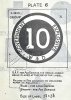
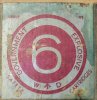
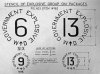
Government Explosive Group labels were put on packages, but in many cases they were stencilled on the package with a stencil cut on a suitable machine in ROFs and Ammunition Depots. Stencilling was usually in white.
The actual labels were in different colours, indicating whether they were land, sea or air service explosive stores.
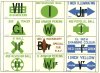
Later in WWII it became necessary to have a system of labelling packages so that those unable to read, could be sent with a number of labels bearing the same shape, and in some cases the same colour, to collect a package for the same shape and number of labels he had been given.
The person in charge of the ammunition party had no need to know what he was collecting, only that he had a package with, say a red rooster on it, for each of the red rooster labels he had been given.
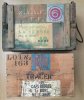
I've had .303 and 7.92 (BESA) crates with paper explosive group labels on them, but no I longer have the crates or photos of them.
I do have two War Department shotgun cartridge crates with Group 6 explosive labels on them. The TRACER crate is not dated and looks like a commercial cartridge crate, (the tracer cartridges are presumed to be wartime ELEY Rocket), the other crate is 1944 dated.
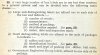
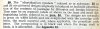
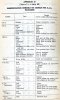
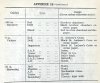
Here is some more info. Sorry to disappoint you Skippy, but I knew it was a Cockerel but I did not want to go back upstairs at the time.
In Para 59 you will find reference to "illiterates", this should now read "learning difficulties". The ID labels were very heavily used in Burma where there were a lot of East and West African troops handling SAA, particularly when they were hunting round stacks in the dark, with their little right angle torches, with the red filter fitted. Similarly, after the war there was a lot of sorting to be done in Europe, using a lot of 'displaced persons (DPs)', many of whom became 'European Voluntary Workers (EVWs) and worked in our Ammunition Depots at home and overseas.
The label I have put in is a GEG 10 label with Army and RAF differential and you can see from Reccetroopers labels that they are Army.
The labels went up to 15 although I can only remember 13. There were also associated Fire Risk signs which went on the ends of the stacks or outside buildings. I did not put these in because they are not on packages.
Things changed a bit in the mid 1950s with the introduction of less Groups, 1 to 6 and Metallic powders, with Fire Risk signs X,Y,Z,and ZZ and these did go on the packages.
In the mid 1960s things got more international and the Orange Labels with the Bursting Bomb symbol came into use.
pity about the chickens but thats answered all my questions in one go. I'm sure a lot of others will find these posts useful. many thanks. I still think that the symbol for Cockerel rounds should have been a red rooster though!
This site uses cookies to help personalise content, tailor your experience and to keep you logged in if you register.
By continuing to use this site, you are consenting to our use of cookies.