British Ordnance Collectors Network
You are using an out of date browser. It may not display this or other websites correctly.
You should upgrade or use an alternative browser.
You should upgrade or use an alternative browser.
ICI .22lr ammunition, dated 1945
- Thread starter Shootist
- Start date

TonyE
HONOURED MEMBER RIP
.22 lr
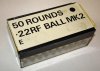
Are you talking about the normal 100 round box of military .22LR, probably still Mark I in 1945? Square box with white label and green printing. (Mark II would have red printing)
These are not particularly scarce, but it would be better to keep them than to shoot them. It is getting harder to find WW2 boxes.
If you have something different, please post details.
Regards and welcome to the Forum.
TonyE
Are you talking about the normal 100 round box of military .22LR, probably still Mark I in 1945? Square box with white label and green printing. (Mark II would have red printing)
These are not particularly scarce, but it would be better to keep them than to shoot them. It is getting harder to find WW2 boxes.
If you have something different, please post details.
Regards and welcome to the Forum.
TonyE
F
Fuzeman
Guest
That was the ammunition we used at our rifle club in the late 80,s i sold the empty box on ebay for 8.50 , a full box was 1.50p
TonyE
HONOURED MEMBER RIP
.22 lr
Yes, the Mark I rounds are copper cased and the Mark II are brass cased. Before that there were several Marks of .22, including powder loaded and the .22 long (not Long Rifle).
The really nice ones are those with the dished base and British military headstamps, RL, KN and I even have a Kirkee from India.
Regards
TonyE
Yes, the Mark I rounds are copper cased and the Mark II are brass cased. Before that there were several Marks of .22, including powder loaded and the .22 long (not Long Rifle).
The really nice ones are those with the dished base and British military headstamps, RL, KN and I even have a Kirkee from India.
Regards
TonyE
Thanks Tony,
Wish I had kept the .22 collection I had when younger, it included the .22 long which you refer to, and some .22 tracer, I still had the empty box (Military), untill a couple of marriage's ago! Also some fairground short rounds which as I remember were very fragile and powdered on impact with the falling ducks, seem to remember trying to remove the projectile from one, (picked up from the ground at Billy Mannings Fairground), with a pair of pliers and it just disintegrated. Am I getting too old and imagining these amusement arcade rounds?
Cheers,
navyman.
Wish I had kept the .22 collection I had when younger, it included the .22 long which you refer to, and some .22 tracer, I still had the empty box (Military), untill a couple of marriage's ago! Also some fairground short rounds which as I remember were very fragile and powdered on impact with the falling ducks, seem to remember trying to remove the projectile from one, (picked up from the ground at Billy Mannings Fairground), with a pair of pliers and it just disintegrated. Am I getting too old and imagining these amusement arcade rounds?
Cheers,
navyman.
TonyE
HONOURED MEMBER RIP
.22 Short
No, you are not imagining them!. They went under names like "Spatterpruf" and millions of rounds were used at fairgrounds. The bullets were a compostion of lead dust and something like bakelite and as you say, shattered to dust on impact so that there was no possibility of any ricochets.
Most of them (at least in the south) were supplied by Tom Collins at the London Armoury in the New Kent Road who also made a lot of the target frames and cut -out ducks for the fairground industry.
Regards
TonyE
No, you are not imagining them!. They went under names like "Spatterpruf" and millions of rounds were used at fairgrounds. The bullets were a compostion of lead dust and something like bakelite and as you say, shattered to dust on impact so that there was no possibility of any ricochets.
Most of them (at least in the south) were supplied by Tom Collins at the London Armoury in the New Kent Road who also made a lot of the target frames and cut -out ducks for the fairground industry.
Regards
TonyE
TonyE
HONOURED MEMBER RIP
U.M.C.Co
U.M.C.Co. were the Union Metallic Cartridge Company and were one of the foremost manufacturers in the US, having been founded in 1867. The holding company of UMC purchased the Remington Arms Co. in 1888 and in 1912 the companies were merged to form Remington UMC, which still exists today.
Their headstamp of "REM-UMC" is one of the best known in the world.
All I know about Gruson revolving cannons is that they were basically the Hotchkiss gun built in Germany under licence.
Regards
TonyE
U.M.C.Co. were the Union Metallic Cartridge Company and were one of the foremost manufacturers in the US, having been founded in 1867. The holding company of UMC purchased the Remington Arms Co. in 1888 and in 1912 the companies were merged to form Remington UMC, which still exists today.
Their headstamp of "REM-UMC" is one of the best known in the world.
All I know about Gruson revolving cannons is that they were basically the Hotchkiss gun built in Germany under licence.
Regards
TonyE


Is 10,000 too many?
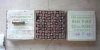
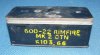
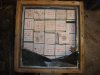
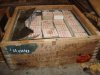
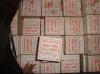
I have some boxes of green label Mk1 and red label Mk2. The Mk2 are '77 dated and packed 100 packets of 100 cartridges to the case, a total of 10,000 cartridges, but light enough to tuck under your arm!
I have some boxes of green label Mk1 and red label Mk2. The Mk2 are '77 dated and packed 100 packets of 100 cartridges to the case, a total of 10,000 cartridges, but light enough to tuck under your arm!
Attachments
Nice one mate i know where to come if i run out lol
Cheers
Andy
Cheers
Andy