Join over 14,000 collectors of inert military ordnance. Get expert identification help for shells, fuzes, grenades, and more — plus access our classifieds marketplace and decades of archived knowledge. Free to register, takes seconds.
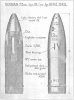
The shell you are showing is the 8,8 cm Sprgr L/4,5 (Kz). It is the type with the screwed-in base plate. The stamps are somewhat difficult to read. 41 kam 50 a?. These are the production stamps of the shell body. Year of manufacturing 1941; kam (= Hasag Eisen-und Metallwerke GmbH, Werk Skarzysko-Kamienna); Lot 50, series a?.
FES = Sintered Iron driving bands.
13 Sk 5.44. These are filling stamps. 13 = code for the explosive filler = amatol 60/40; Sk is the code for the filling station; 5.44 = month and year of filling.
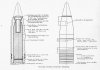
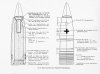
The early shells with the screwed-in base plate have a HE charge in a cardboard container which was inserted thru the base of the shell body. Later on the explosive was poured in, these shells were marked with a + in black paint on the ogive indicating that the screwed-in base plate was sealed with magnesia-paste.
I think your shell is of the poured-in type, because the cardbord containers were always filled with pressed TNT which had the explosive filler code 1.
Below drawings of the two different shell types with the screwed-in base plate.
This site uses cookies to help personalise content, tailor your experience and to keep you logged in if you register.
By continuing to use this site, you are consenting to our use of cookies.