Hi Chris,
The drawing does not carry a service designation. The Regia Marina named its submarine mines by manufacturer initial plus charge weight: P 200 (Pignone, 200 kg), T 200 (Tosi, 200 kg). By the same convention this Ansaldo design with a 200 kg charge would be designated A 200. That designation does not appear in available open Italian naval records, which means the A 200 was either a competing prototype that was not put into series production, or it entered service under a designation not yet confirmed in accessible sources.
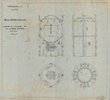
Italian Submarine Mine A 200 (Ansaldo) / "Torpedine da sommergibili per tubi lanciamine orizzontali da m/m 1000"
Moored contact mine, submarine-laid, for horizontal-tube deployment.
Status: Prototype or limited-production design; service adoption unconfirmed in open sources.
The Regia Marina identified submarine-laid mines by manufacturer initial and charge weight: P 200 by Pignone of Florence and T 200 by Cantieri navali Tosi di Taranto. Ansaldo S.A. produced a parallel design with the same 200 kg charge. It is documented in factory drawing A15858, titled "Torpedine da sommergibili per tubi lanciamine orizzontali da m/m 1000" (mine for submarines, for 1000 mm horizontal mine-laying tubes), drawn at 1:5 for the Regia Marina Italiana. Whether it entered series production as the A 200 or remained a prototype is unconfirmed by open sources.
Bragadin-class submarine minelayers, based on the Pisani class, were single-hulled and carried mines in two horizontal tubes in the aft hull. The 1000 mm diameter shown in the Ansaldo drawing matches this arrangement. The T 200 was listed for Bragadin- and Atropo-class submarines; the Ansaldo A 200 had identical launch parameters and was almost certainly intended for the same classes.
At the beginning of hostilities, Italy possessed almost 25,000 mines distributed among naval bases from La Spezia to Massawa. Bragadin- and Atropo-class submarines used the T 200, while Foca-class submarines used the P 150. The Pietro Micca and later classes adopted downward minelaying, avoiding the trimming problems of horizontal tubes but introducing limitations regarding keel clearance.