
View attachment 72743family bring back from new guinea ww2,any id info welcome.Dave
British Ordnance Collectors Network
You are using an out of date browser. It may not display this or other websites correctly.
You should upgrade or use an alternative browser.
You should upgrade or use an alternative browser.
jap mortar
- Thread starter steelshot
- Start date
Hi,
I have been following this discussion with interest as I have recently acquired a Japanese 81mm mortar round with a Type 88 Fuze. I saw a Japanese manual for the Type 97 81mm mortar for sale on ebay. It has 2 pages which deal with the fuze for the bomb. I can't read Japanese so it is unintelligible to me! The fuze drawn looks like a Type 93. Maybe there is some information in the manual which might be useful, if someone can read Japanese?
Regards,
Draoich
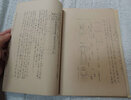
I have been following this discussion with interest as I have recently acquired a Japanese 81mm mortar round with a Type 88 Fuze. I saw a Japanese manual for the Type 97 81mm mortar for sale on ebay. It has 2 pages which deal with the fuze for the bomb. I can't read Japanese so it is unintelligible to me! The fuze drawn looks like a Type 93. Maybe there is some information in the manual which might be useful, if someone can read Japanese?
Regards,
Draoich

Download and use a mobile application called LENS - then just position the phone over the kanji and it should both automatically detect the lanaguge and translate.
Unable to translate the posted image as it is not high enough resolution.
Here's a previous post on the App:
Cheers
D
Unable to translate the posted image as it is not high enough resolution.
Here's a previous post on the App:
Blasting Machines
EXPLODER DYNAMO MARK VII These would both have been made to the same standard although 5 years apart. It was designed to fire through 150-ohms resistance. The increased current required to fire Detonators Electric No.33 and the commercial equivalent of the time, was 15 detonators through 400...
www.bocn.co.uk
Cheers
D
Download and use a mobile application called LENS - then just position the phone over the kanji and it should both automatically detect the lanaguge and translate.
Unable to translate the posted image as it is not high enough resolution.
Here's a previous post on the App:
Blasting Machines
EXPLODER DYNAMO MARK VII These would both have been made to the same standard although 5 years apart. It was designed to fire through 150-ohms resistance. The increased current required to fire Detonators Electric No.33 and the commercial equivalent of the time, was 15 detonators through 400...www.bocn.co.uk
Cheers
D
Hi,
I wonder if someone could explain the difference between the Japanese 81mm mortar bomb Type 97 and the Type 100 (apart from the fuze difference)? I have a Japanese 81mm mortar bomb (see photo) but I am unable to identify which type it is. The attached type 88 fuze is a plastic fake.
Regards,
Draoich
I wonder if someone could explain the difference between the Japanese 81mm mortar bomb Type 97 and the Type 100 (apart from the fuze difference)? I have a Japanese 81mm mortar bomb (see photo) but I am unable to identify which type it is. The attached type 88 fuze is a plastic fake.
Regards,
Draoich
Attachments
I have checked online sources and now think it is a 81mm Type 97 mortar bomb because:
I have checked online sources to find the differences between the Type 97 and the Type 100 mortar bomb with little success. According to Wikipedia the key differences between the Type 98 (I assume they mean Type 97) and a Type 100 are:
Type 98 Round:
Designed as the "light" HE projectile for the Type 97 mortar, it had an overall weight of about 3.3kg. The main charge consisted of approximately 0.540kg of TNT.
Type 100 Round:
Designed as a "heavy" HE projectile, it weighed from about 3kg to 3.3kg depending on the specific manufacturing variant. The main charge consisted of approximately 0.535kg of TNT.
So much for Wikipedia! This information is contradictory and unhelpful.
Another online source describes the Type 97 as follows:
“The body is of one piece streamline construction having a threaded opening in the nose to receive the fuze adapter ring. A steel booster cup screws (LH) into the lower end of the adapter ring. The booster cup is closed by a shaped aluminium container which receives the Gaine of the fuze. The Bourrelet is well-machined and has 4 grooves cut in it.”
The above information corresponds to my 81mm mortar bomb. Unfortunately I do not have the steel booster cup but the lower end of the adapter ring has female threading (approximately M35 x 2 LH) which seems to exist to receive a booster cup (See attached photos).
A different online source describes the Type 100 as follows:
“Except for minor details, this shell is similar to the Type 97 81mm HE projectile. The cup to receive the fuze Gaine is held in place in the booster cup by being fitted into a brass ring which screws into the fuze adapter ring above the booster cup.”
I conclude, based on this information, that the main difference between the Type 97 and the Type 100 mortar bomb is that the collar/ fuze adapter is different.
I would appreciate any information on this.
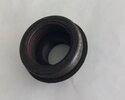
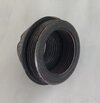
Regards,
Draoich
- It looks correct.
- It has a collar/ Fuze adapter ring which has an M24x2 Left Hand thread.
- The fuze is secured into the collar/ fuze adapter ring by a small diameter grub screw.
- This collar/ fuze adapter ring is secured into the main mortar bomb body by a small diameter grub screw.
I have checked online sources to find the differences between the Type 97 and the Type 100 mortar bomb with little success. According to Wikipedia the key differences between the Type 98 (I assume they mean Type 97) and a Type 100 are:
Type 98 Round:
Designed as the "light" HE projectile for the Type 97 mortar, it had an overall weight of about 3.3kg. The main charge consisted of approximately 0.540kg of TNT.
Type 100 Round:
Designed as a "heavy" HE projectile, it weighed from about 3kg to 3.3kg depending on the specific manufacturing variant. The main charge consisted of approximately 0.535kg of TNT.
So much for Wikipedia! This information is contradictory and unhelpful.
Another online source describes the Type 97 as follows:
“The body is of one piece streamline construction having a threaded opening in the nose to receive the fuze adapter ring. A steel booster cup screws (LH) into the lower end of the adapter ring. The booster cup is closed by a shaped aluminium container which receives the Gaine of the fuze. The Bourrelet is well-machined and has 4 grooves cut in it.”
The above information corresponds to my 81mm mortar bomb. Unfortunately I do not have the steel booster cup but the lower end of the adapter ring has female threading (approximately M35 x 2 LH) which seems to exist to receive a booster cup (See attached photos).
A different online source describes the Type 100 as follows:
“Except for minor details, this shell is similar to the Type 97 81mm HE projectile. The cup to receive the fuze Gaine is held in place in the booster cup by being fitted into a brass ring which screws into the fuze adapter ring above the booster cup.”
I conclude, based on this information, that the main difference between the Type 97 and the Type 100 mortar bomb is that the collar/ fuze adapter is different.
I would appreciate any information on this.
Regards,
Draoich
With reference to the difference between The Japanese WW2 81mm Type 97 and Type 100 mortar bombs, I have now stumbled upon a US military document which details the one significant difference between these mortar bombs. JAPANESE MORTARS AND GRENADE DISCHARGERS - SPECIAL SERIES No. 30 - 1945 describes both the Type 97 and the Type 100 81mm mortar bombs.
According to this document both the Type 97 and the Type 100 81mm mortar have the following characteristics:
According to this document the main difference seem to be:
In relation to the Type 97:
“The body is of one piece streamline construction having a threaded opening in the nose to receive the fuze adapter ring. A steel booster cup screws (L.H.) into the lower end of the adapter ring. The booster cup is closed by a shaped aluminium container which receives the Gaine of the fuze. The Bourrelet is well-machined and has 4 grooves cut in it.
In relation to the Type 100:
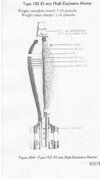
“Except for minor details, this shell is similar to the Type 97 81mm HE projectile. The cup to receive the fuze gaine is held in place in the booster cup by being fitted into a brass ring which screws into the fuze adapter ring above the booster cup. There is no retaining ring to hold the cartridge in the tail fin section. Instead the cartridge is held by a friction fit.”
Well I now realise that my Japanese 81mm bomb is almost definitely a Type 100 because the cartridge relies on a friction fit exactly the same as a Brandt 81mm mortar shell of the same period .
Draoich
According to this document both the Type 97 and the Type 100 81mm mortar have the following characteristics:
- Each has a collar/ Fuze adapter ring which has an M24x2 Left Hand thread.
- The fuze is secured into the collar/ fuze adapter ring by a small diameter grub screw.
- The Bourrelet is well-machined and has 4 grooves cut in it.
According to this document the main difference seem to be:
- The propellant cartridge (Primary) for the Type 100 is held place in the tail fin section by a friction fit.
- The propellant cartridge (Primary) for the Type 97 is held in place by a countersunk ring screwed into the end of the tube.
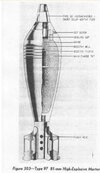
In relation to the Type 97:
“The body is of one piece streamline construction having a threaded opening in the nose to receive the fuze adapter ring. A steel booster cup screws (L.H.) into the lower end of the adapter ring. The booster cup is closed by a shaped aluminium container which receives the Gaine of the fuze. The Bourrelet is well-machined and has 4 grooves cut in it.
In relation to the Type 100:
“Except for minor details, this shell is similar to the Type 97 81mm HE projectile. The cup to receive the fuze gaine is held in place in the booster cup by being fitted into a brass ring which screws into the fuze adapter ring above the booster cup. There is no retaining ring to hold the cartridge in the tail fin section. Instead the cartridge is held by a friction fit.”
Well I now realise that my Japanese 81mm bomb is almost definitely a Type 100 because the cartridge relies on a friction fit exactly the same as a Brandt 81mm mortar shell of the same period .
Draoich