
British Ordnance Collectors Network
You are using an out of date browser. It may not display this or other websites correctly.
You should upgrade or use an alternative browser.
You should upgrade or use an alternative browser.
Mills Detonator Tin Markings... T P
- Thread starter staples57
- Start date
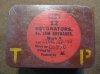

I think there is another thread about this subject and the conclusion was T.P. is Training Purposes,,,,,,, Dave
I spent the better part of 2 hours yesterday searching the various threads and couldn't find anything relevant.
"Training Purposes" and "Temporary Packaging" are both feasible.
I would have imagined that the tins would have been marked DRILL, to match the markings on the detonators themselves (DRILL Mk III). Just a thought.
It was my understanding that the round Mills detonator tins were just a different variation from the rectangular ones and not to designate any specif purpose?
Hopefully someone will recall the thread that you mentioned Dave or will know definitively what "T P" stands for.
Thanks Chaps!
"Training Purposes" and "Temporary Packaging" are both feasible.
I would have imagined that the tins would have been marked DRILL, to match the markings on the detonators themselves (DRILL Mk III). Just a thought.
It was my understanding that the round Mills detonator tins were just a different variation from the rectangular ones and not to designate any specif purpose?
Hopefully someone will recall the thread that you mentioned Dave or will know definitively what "T P" stands for.
Thanks Chaps!
The rectangular tins are Canadian thy also made round ones, we need Alan on the case as he is the expert on finding old threads,,,, Dave

ive been looking and im afraid i cant find the post in question,
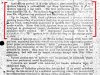
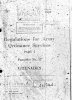
I dont know if this helps but did find the following info (see images attached below),quoting T & P as temporary packing ,but it does not refer to the oblong tins only cylinders
quote
"upto august 1943 these cylinders contained a circular wooden packing piece,it was found due to excessive moisture content of the wood,considerable quantities of the igniters were rapidly becoming unserviceable.From this date igniters received from factories were wrapped in greaseproof paper,shellaced paper or cellophene,>the cylinders being marked T P (temporary packing).There is no "restriction ?" "missing word" TP igniters from either the user or the storage point "unknown word"
I dont know if this helps but did find the following info (see images attached below),quoting T & P as temporary packing ,but it does not refer to the oblong tins only cylinders
quote
"upto august 1943 these cylinders contained a circular wooden packing piece,it was found due to excessive moisture content of the wood,considerable quantities of the igniters were rapidly becoming unserviceable.From this date igniters received from factories were wrapped in greaseproof paper,shellaced paper or cellophene,>the cylinders being marked T P (temporary packing).There is no "restriction ?" "missing word" TP igniters from either the user or the storage point "unknown word"
Attachments
Interesting read, but I'm not convinced that it stands for Temporary Packaging. These detonator tins went to the front and were not temporary.
The front of the tin is marked "5" in the same colour paint as the "T P", also the same height.
...indicating a 5 second fuze as far as I know
Maybe Tom (Snufkin) shed some light on this one.
The front of the tin is marked "5" in the same colour paint as the "T P", also the same height.
...indicating a 5 second fuze as far as I know
Maybe Tom (Snufkin) shed some light on this one.
I have only encountered the TP as meaning Temporary Packaging (the document quoted by Allan). As for the "5" on the tin I don't know what that refers to, although no doubt in some documentation it may indicate the type and mark of the igniter set; the fuze burn times were nominal 4 or 7 seconds depending on use as hand or rifle grenade.
What is ironic about the problem of the circular wooden packing piece is that this very same occurred in WWI.
From the Royal Commission on Awards to Inventors, Mr FW Vickery's Claim "Transport Box and Mill Board Holder for Mills Grenades", July 1919, Vickery's Counsel said: "The second claim in this case is in respect of a design for holding those metal fuses, because the original design included the use of wood, and the wood, owing to the sap and natural moisture, had a way of injuring in some way the metal fuses, which caused trouble; it caused the fuses not to go off..."
Vickery's solution was the use of perforated mill board spacers, which apart from solving the problem of moisture damage to the igniters also saved a lot of money over a run of 4 million boxes. It would appear the lesson from WWI was not heeded in WWII.
Tom.
What is ironic about the problem of the circular wooden packing piece is that this very same occurred in WWI.
From the Royal Commission on Awards to Inventors, Mr FW Vickery's Claim "Transport Box and Mill Board Holder for Mills Grenades", July 1919, Vickery's Counsel said: "The second claim in this case is in respect of a design for holding those metal fuses, because the original design included the use of wood, and the wood, owing to the sap and natural moisture, had a way of injuring in some way the metal fuses, which caused trouble; it caused the fuses not to go off..."
Vickery's solution was the use of perforated mill board spacers, which apart from solving the problem of moisture damage to the igniters also saved a lot of money over a run of 4 million boxes. It would appear the lesson from WWI was not heeded in WWII.
Tom.