

pzgr40
Well-Known Member
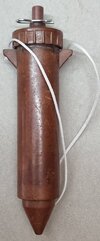
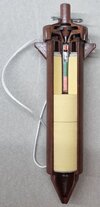
Cutaway model of the No.6 Carrot mine, with a bit of cheating. As this mine is rare as hens teeth -exept for sometimes a practice mine at an amount that hurts the wallet- I descided to use two Dummy fuzes to allow for a replica fuze nearing the original. As I have the factory drawings, dimensions were easy to derive, but to make one fuze I had to canibalize two dummy ones, one for the cap and one for the fuze housing. The firing pin is a replica, as well as the breaking ring (black).
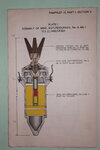
The mine consists of a plastic body housing three stacked cilinders of explosives. The lower one consists of 51,4 grams of TNT, the middle one 28,35 grams of Tetryl, the top one -around the detonator- 35,45 grams of Tetryl. A cartboard disc is placed below the lower TNT pellet, and a felt washer with a cartboard washer is placed on top of the upper CE pellet The detonator housing is glued in top of the mine body. The detonator used is the stab sensitive detonator No.2
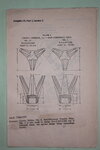
The fuze, mine, anti personel No.2 is screwed into the mine body. The firing pin is held in safe position by a hair pin which is removed after placing the mine. The firing pin is held in position by a break ring (black) that will shatter when placed under pressure, allowing the firing pin to move into the detonator when stepped upon. A three pronged crown can be placed upon the top of the firing pin, allowing the mine to be burried deeper.
As this mine hardly houses any metal parts it is difficult to detect, and a detection ring was available to allow the mine to be refound. The shape of the mine -long and thin- was meant to make it more difficult to find the mine by prodding.
The rope is meant to enable the mine to be pulled from the ground.
The No.6 carrot mine was replaced by the C3A1/2 Elsie mine.
An anti personel mine derived from the carrot mine was the Rhodesian RAP-1 mine, although the RAP-1 had a different fuze in functioning.
Length of the complete mine w/o crown : 190 mm
Diameter mine body : 36 mm
Diameter over rope housing : 58 mm
Diameter fuze ring : 42,5 mm
Weight complete mine : 227 grams
Little question… does anybody happen to have the crown and an original safety wire for sale?
If anybody has more info about this mine (f.i. was it ever used in active service, and where), please let me know.
Regards, DJH.
The mine consists of a plastic body housing three stacked cilinders of explosives. The lower one consists of 51,4 grams of TNT, the middle one 28,35 grams of Tetryl, the top one -around the detonator- 35,45 grams of Tetryl. A cartboard disc is placed below the lower TNT pellet, and a felt washer with a cartboard washer is placed on top of the upper CE pellet The detonator housing is glued in top of the mine body. The detonator used is the stab sensitive detonator No.2
The fuze, mine, anti personel No.2 is screwed into the mine body. The firing pin is held in safe position by a hair pin which is removed after placing the mine. The firing pin is held in position by a break ring (black) that will shatter when placed under pressure, allowing the firing pin to move into the detonator when stepped upon. A three pronged crown can be placed upon the top of the firing pin, allowing the mine to be burried deeper.
As this mine hardly houses any metal parts it is difficult to detect, and a detection ring was available to allow the mine to be refound. The shape of the mine -long and thin- was meant to make it more difficult to find the mine by prodding.
The rope is meant to enable the mine to be pulled from the ground.
The No.6 carrot mine was replaced by the C3A1/2 Elsie mine.
An anti personel mine derived from the carrot mine was the Rhodesian RAP-1 mine, although the RAP-1 had a different fuze in functioning.
Length of the complete mine w/o crown : 190 mm
Diameter mine body : 36 mm
Diameter over rope housing : 58 mm
Diameter fuze ring : 42,5 mm
Weight complete mine : 227 grams
Little question… does anybody happen to have the crown and an original safety wire for sale?
If anybody has more info about this mine (f.i. was it ever used in active service, and where), please let me know.
Regards, DJH.
Attachments
Last edited: