What's new
British Ordnance Collectors Network

Join over 14,000 collectors of inert military ordnance. Get expert identification help for shells, fuzes, grenades, and more — plus access our classifieds marketplace and decades of archived knowledge. Free to register, takes seconds.
Mine mystery

Drewz

Member
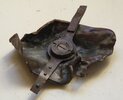
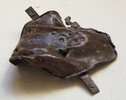
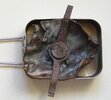
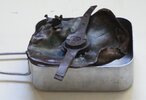
I was wondering if anyone could identify this piece of metal. It was found many years ago on a local beach alongside a stack of type C Beach Mines. I have been told that it is the top of a 'mess tin mine', a sort of improvised landmine using a standard British army pattern (small) mess tin as the body. It certainly seems to fit onto a mess tin by the size and corner curves but I have been unable to find any mention of such a device anywhere. I cannot see any identifying markings on it. Any information or suggestions would be welcome.
 

Attachments

  • Mess tin mine (5).jpg
    Mess tin mine (5).jpg
    767.5 KB · Views: 41
  • Mess tin mine (8).jpg
    Mess tin mine (8).jpg
    581 KB · Views: 40
  • Mess tin mine (14).jpg
    Mess tin mine (14).jpg
    755.2 KB · Views: 39
  • Mess tin mine (15).jpg
    Mess tin mine (15).jpg
    737.7 KB · Views: 40
I was wondering if anyone could identify this piece of metal. It was found many years ago on a local beach alongside a stack of type C Beach Mines. I have been told that it is the top of a 'mess tin mine', a sort of improvised landmine using a standard British army pattern (small) mess tin as the body. It certainly seems to fit onto a mess tin by the size and corner curves but I have been unable to find any mention of such a device anywhere. I cannot see any identifying markings on it. Any information or suggestions would be welcome.
Looks to me to be a lid off a tin holding "Slab, Demolition. Wet Guncotton" There is a couple of threads on here, one labelled "Metal plates" which give a bit more detail.
I have never heard of a "Mess Tin mine" so would be interested if anyone has any information on such a device.
Hope this helps.
Cheers
Switch
 
I was wondering if anyone could identify this piece of metal. It was found many years ago on a local beach alongside a stack of type C Beach Mines. I have been told that it is the top of a 'mess tin mine', a sort of improvised landmine using a standard British army pattern (small) mess tin as the body. It certainly seems to fit onto a mess tin by the size and corner curves but I have been unable to find any mention of such a device anywhere. I cannot see any identifying markings on it. Any information or suggestions would be welcome.

I was wondering if anyone could identify this piece of metal. It was found many years ago on a local beach alongside a stack of type C Beach Mines. I have been told that it is the top of a 'mess tin mine', a sort of improvised landmine using a standard British army pattern (small) mess tin as the body. It certainly seems to fit onto a mess tin by the size and corner curves but I have been unable to find any mention of such a device anywhere. I cannot see any identifying markings on it. Any information or suggestions would be welcome.

Thanks switch, it does make sense for it being a guncotton container lid, for where it was found. It is slightly different from the one shown on the 'metal plates' thread, looks smaller and only the one leg, but otherwise identical. I would presume that guncotton was used to blow up the piles of lifted beach mines.
 
I would concur with the lid proposal.. there are several designs of charge containers that used this type of lid. Many of them derive from Naval designs of containers for propelling charges that were designed to vent at a set pressure to prevent explosions during a magazine fire.

Wet guncotton was also kept in this type of container with removable, but sealable lids as the moisture level of the guncotton had to be inspected at regular intervals and water added if it was too dry. Wet guncotton became more sensitive if allowed to dry out, but would detonate if initiated using a dry guncotton primer.
 
Top