
What's new
British Ordnance Collectors Network

Join over 14,000 collectors of inert military ordnance. Get expert identification help for shells, fuzes, grenades, and more — plus access our classifieds marketplace and decades of archived knowledge. Free to register, takes seconds.

Mine

Hi Akon!
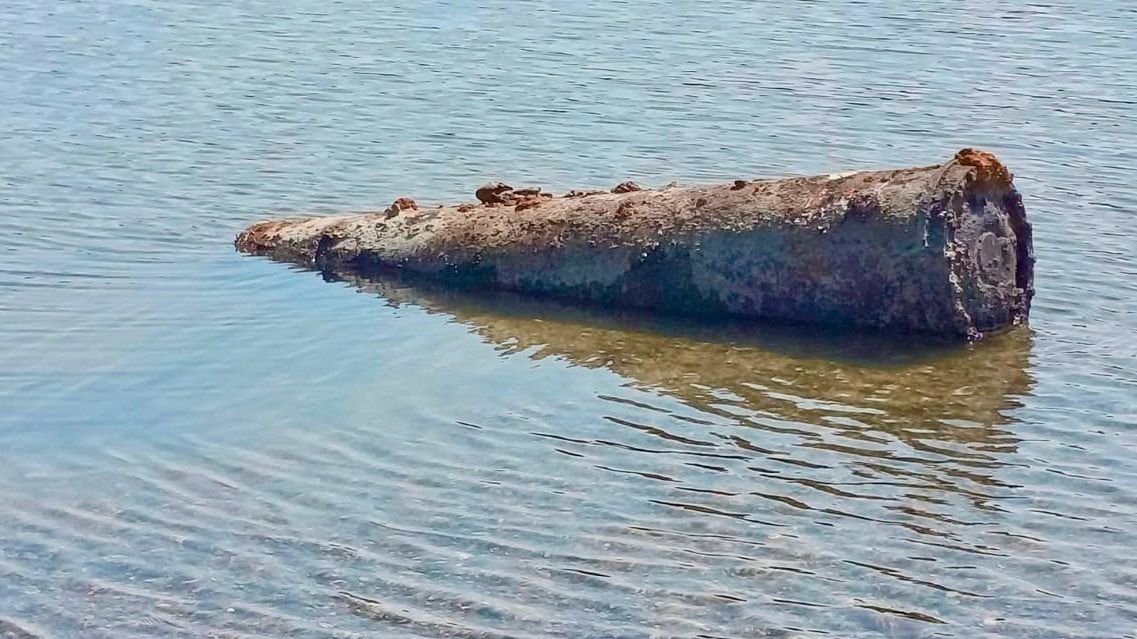
Indeed - quite unexpected finding!

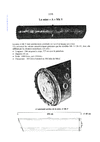
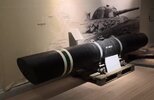
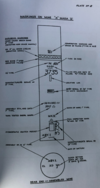
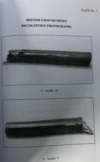
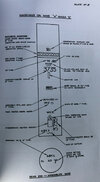
Here some doc from Henry Belot's Deminest, about the British air drooped A MkV (the Mk I-IV had similar shape with variations in dimensions, in the parachute installation system - when used , in the type of fuzing and in the eventual use of a tubular stabilizer)

Mine  A MkV.gif
 
Last edited:
I am looking for details about the initiation device and also the exact configuration inside the mine ...but so far I have nothing at all.I have only found some links to archival sources such as:

Efficency of mines A type H and A Mk 5 in inland waterways of Western Europe.

Characteristics of German (?) mine units A Mk 5 and AP Mk 1.

Actuation of Z circuit in mines A Mks 1 to 5 by sweeping pulse of rectangular form.

https://discovery.nationalarchives.gov.uk/details/r/C594520
I have no document, I only know of its existence ---


Any input on the initiation device is welcome.
Thank you.
Snímek obrazovky z 2026-08-08 12-07-43.png
Akon
PS:

Basic statement: the mine had an induction initiator or a sound initiator (both are so-called single-channel initiation mechanisms)Then, through development, another option was for the mine to be equipped with a two-channel ignition, i.e. induction and sound. (mine type "A", "Mk.V)
The last option was a reaction to German mine clearance work... when mines were to be artificially brought to an explosion by artificially exciting the magnetism, for example, with an induction coil when acting on the initiator....I don't know yet how they imitated the sound. If there is no sound and induction, the two-channel initiator will not give an initiation stimulus.
 
Last edited:
Top