
British Ordnance Collectors Network
You are using an out of date browser. It may not display this or other websites correctly.
You should upgrade or use an alternative browser.
You should upgrade or use an alternative browser.
Mk 1 en Mk 2 Incendiary Darts
- Thread starter Chris
- Start date
A few mor info and a photo here : https://forum.cartridgecollectors.o...-after-ww1-ended-what-are-these-darts/53674/7
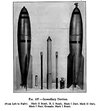
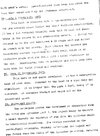
Hello Chris,Dreamk &sgdbdr,
Another use for Darts was to set on fire Zepplin airships. Incendiary bullets had not had the success expected, and the story developed that the exhausts from the engnes was led into the envelope, surroundig the gasbags with a reduced oxygen atmosphere. This was supposed to be negating the incendisry effect of the bullets.
The solution was to drop darts, which had an expanding support frame, so that the burning dart would be suspended in the rented envelope, where the atmosphere could reach the burning tip.
In the sixties, while working at Smiths Industries, Cricklewood. I found an old blueprint detailing such a dart, designed by Primus Otto Dorer, the then Chief Engineer, around 1915. The by then retired P.O D told me that he had made a sample, and placed it on a table in the drawing room, ready to take to the Navy early nest day. He wa horrified to hear his very young son had woken early, and found him happily playing with the live device! It ws complex and I don't think that it was used. I think Brock designed one that saw service
I still have the blueprint, hidden somewhere in the atic!
Another use for Darts was to set on fire Zepplin airships. Incendiary bullets had not had the success expected, and the story developed that the exhausts from the engnes was led into the envelope, surroundig the gasbags with a reduced oxygen atmosphere. This was supposed to be negating the incendisry effect of the bullets.
The solution was to drop darts, which had an expanding support frame, so that the burning dart would be suspended in the rented envelope, where the atmosphere could reach the burning tip.
In the sixties, while working at Smiths Industries, Cricklewood. I found an old blueprint detailing such a dart, designed by Primus Otto Dorer, the then Chief Engineer, around 1915. The by then retired P.O D told me that he had made a sample, and placed it on a table in the drawing room, ready to take to the Navy early nest day. He wa horrified to hear his very young son had woken early, and found him happily playing with the live device! It ws complex and I don't think that it was used. I think Brock designed one that saw service
I still have the blueprint, hidden somewhere in the atic!
Additional information hs come to light regarding the Ranken Dart (Not Brock!!) There is a full description of this in GB191517157, taken out in 1915, but published in 1920..Francis Ranken-Engineer, Lieut Commander, Royal Navy, Air Dept, Admiralty. This is where P O Dorer took hid invention so, being Swiss, he gifted it to Britain, F Ranken also patented in detail the Baby Incendiary.
Additional information hs come to light regarding the Ranken Dart (Not Brock!!) There is a full description of this in GB191517157, taken out in 1915, but published in 1920..Francis Ranken-Engineer, Lieut Commander, Royal Navy, Air Dept, Admiralty. This is where P O Dorer took hid invention so, being Swiss, he gifted it to Britain, F Ranken also patented in detail the Baby Incendiary.
This relates to the ww1 period Ranken dart :
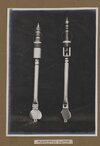
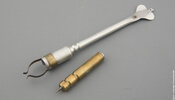
"The 9inch long tin tube explosive darts (above) designed by Lt Cdr Francis Ranken RN have a cast iron point and at the other end an aluminium cap retaining three spring arms and a rubber over-cap which acts as a parachute when dropped. The sprung arms act as a grapnel on the skin of the airship whilst the body continues falling drawing the phosphorus igniter up the igniter tube to cause a flame which explodes the charge and causes a shower of sparks from the coarse black powder in the top designed to help ignite the hydrogen blowing through the burst fabric as it mixes with the air. 24 x 13 ounce darts in each container can be dropped in a sequence or together."
"Ranken dart consisted of a tinplate tube 23cm long, with a cast iron pointed nose at one end, and a plug and three spring loaded arms at the other. The arms were kept closed in storage by means of a cap, either tin or rubber, which acted as a buffer when the dart was in its dropping tube. When released, the arms opened up and locked in place to act as a grapnel, thus ensuring that the body entered the fabric. The Dart contained high explosive, black powder and phosphorus which were ignited when the head penetrated the airship's outer skin."
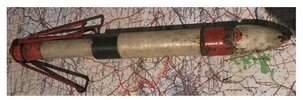
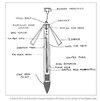
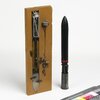
The paten for this dart was applied for by Francis Ranken in December 1915 (GB 191517157) but published in may 1920 only
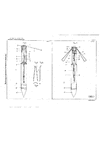
However in September 1919 Francis Ranken applied for a patent that relates to something quite different (US patent 1395769 published in November 1921) - the Baby Incendiary bomb , already entered in service in the RAF by the end of ww1
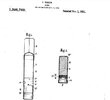
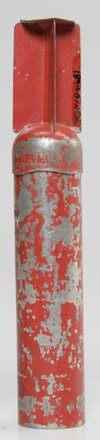
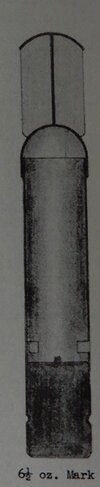
What is also relevant to the present thread is the "flechette Pacton" one of the early incendiary darts aimed at destroying Zeppelins:
Lengh 12cm Diameter 0.8cm used by the French in 1913-1916
Developped by Capitaine Henri Antoine Pacton from the "Laboratoire d’aéronautique militaire" at Chalais-Meudon between 1911 and 1913
"The 9inch long tin tube explosive darts (above) designed by Lt Cdr Francis Ranken RN have a cast iron point and at the other end an aluminium cap retaining three spring arms and a rubber over-cap which acts as a parachute when dropped. The sprung arms act as a grapnel on the skin of the airship whilst the body continues falling drawing the phosphorus igniter up the igniter tube to cause a flame which explodes the charge and causes a shower of sparks from the coarse black powder in the top designed to help ignite the hydrogen blowing through the burst fabric as it mixes with the air. 24 x 13 ounce darts in each container can be dropped in a sequence or together."
"Ranken dart consisted of a tinplate tube 23cm long, with a cast iron pointed nose at one end, and a plug and three spring loaded arms at the other. The arms were kept closed in storage by means of a cap, either tin or rubber, which acted as a buffer when the dart was in its dropping tube. When released, the arms opened up and locked in place to act as a grapnel, thus ensuring that the body entered the fabric. The Dart contained high explosive, black powder and phosphorus which were ignited when the head penetrated the airship's outer skin."
The paten for this dart was applied for by Francis Ranken in December 1915 (GB 191517157) but published in may 1920 only
However in September 1919 Francis Ranken applied for a patent that relates to something quite different (US patent 1395769 published in November 1921) - the Baby Incendiary bomb , already entered in service in the RAF by the end of ww1
What is also relevant to the present thread is the "flechette Pacton" one of the early incendiary darts aimed at destroying Zeppelins:
Lengh 12cm Diameter 0.8cm used by the French in 1913-1916
Developped by Capitaine Henri Antoine Pacton from the "Laboratoire d’aéronautique militaire" at Chalais-Meudon between 1911 and 1913
Last edited: