Can anyone help in identifying this 57mm AP-T Shell while keeping the following in mind?
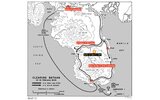
Recovered from a remote battlefield on Bataan, Philippines where the U.S. equipped Philippine Army was routed by the Japanese on April 7, 1942.
The Filipinos had no artillery or tank support while the Japanese had full range of artillery and used tanks in the battle.
The design and dimensions closely match to the American M70 AP-T and are within an acceptable margin of error given the heavy corrosion clean-up.
The British 6-Pounder and U.S. M70-AP-T weren’t produced until 1942, well after the Philippines was cut-off from resupply. At the time, the U.S. had no 57mm gun in its arsenal.
The only Japanese 57mm AP Shell I can locate was an AP-HE for use on tank mounted guns.
It's a far reach but perhaps of British or German origin, produced for WW1 or pre-WW2 and sold to Japan under an arms agreement. Either this or I’m missing something from the Japanese reference books.
Any help is appreciated...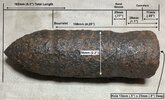
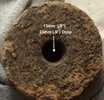
Recovered from a remote battlefield on Bataan, Philippines where the U.S. equipped Philippine Army was routed by the Japanese on April 7, 1942.
The Filipinos had no artillery or tank support while the Japanese had full range of artillery and used tanks in the battle.
The design and dimensions closely match to the American M70 AP-T and are within an acceptable margin of error given the heavy corrosion clean-up.
The British 6-Pounder and U.S. M70-AP-T weren’t produced until 1942, well after the Philippines was cut-off from resupply. At the time, the U.S. had no 57mm gun in its arsenal.
The only Japanese 57mm AP Shell I can locate was an AP-HE for use on tank mounted guns.
It's a far reach but perhaps of British or German origin, produced for WW1 or pre-WW2 and sold to Japan under an arms agreement. Either this or I’m missing something from the Japanese reference books.
Any help is appreciated...
Last edited: