

British Ordnance Collectors Network
You are using an out of date browser. It may not display this or other websites correctly.
You should upgrade or use an alternative browser.
You should upgrade or use an alternative browser.
Mystery thing.
- Thread starter SG500
- Start date
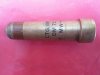
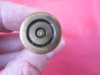


27mm Mauser Cannon Re-cocking cartridge, still in use today with the RAF. Used to clear a duff unfired round from the breech of the cannon that cannot be electrically fired. The revolver type holder holds 5 carts and the designate is DM72. They are more powerful than the 27mm shell!
Can be found on this http://janes-store.ihs.com/pdf/Ammunition-Handbook-2008-9.pdf
along with other stuff of interest.
Can be found on this http://janes-store.ihs.com/pdf/Ammunition-Handbook-2008-9.pdf
along with other stuff of interest.
The only function for this item it to eject a round from the breech (in the firing position) but a jam is still a jam.
For instance, (Training Only) on a belt of ammunition we use to put a drill round at the start and remove the re-cocking cylinder for safety on the ground. The arming would to be the fitment of the cylinder and on firing it would recognize a non fireable round in the main chamber, eject it and continue firing the remainder of the belt.
If the aircraft was required for training gunnery of 45 rounds per gun, due to the lengthy turn round of loading a fresh belt of ammo, the belt would be set as follows
1 x drill
45 x live
3 x drill
45 x live
total belt of 94 per gun.
As you can select a gun or both, you could get 4 flights out of it before reloading.
The gun system would work normally ejecting the first round but the three round drill would cause the gun to shut down after identifying the third non firing round in a row, thereby ejecting the first two leaving the third in position. Once the aircraft was shut down the system would be reset and good to go again. Should the aircrew only fire a part belt we would manually eject rounds to the leave a drill round in the breech with live next in line.
I could go on but you get the gist.
JP
For instance, (Training Only) on a belt of ammunition we use to put a drill round at the start and remove the re-cocking cylinder for safety on the ground. The arming would to be the fitment of the cylinder and on firing it would recognize a non fireable round in the main chamber, eject it and continue firing the remainder of the belt.
If the aircraft was required for training gunnery of 45 rounds per gun, due to the lengthy turn round of loading a fresh belt of ammo, the belt would be set as follows
1 x drill
45 x live
3 x drill
45 x live
total belt of 94 per gun.
As you can select a gun or both, you could get 4 flights out of it before reloading.
The gun system would work normally ejecting the first round but the three round drill would cause the gun to shut down after identifying the third non firing round in a row, thereby ejecting the first two leaving the third in position. Once the aircraft was shut down the system would be reset and good to go again. Should the aircrew only fire a part belt we would manually eject rounds to the leave a drill round in the breech with live next in line.
I could go on but you get the gist.
JP
The Mauser BK-27 is a 27mm cannon fitted to the Tornado F3 and the Tornado GR4 aircraft for air-to-air or air-to-ground firing (and many other aircraft). The cannon is a single-barrel, high performance, breech cylinder gun operated by a fully automatic gas-operated system at a selective rate of 1000 or 1700 rounds per minute. The belted-link ammunition box is positioned to the side of the gun-feed mechanism and a floating buffer system imposes a very small recoil and vibration load on the airframe of the aircraft. Spent cartridge cases and empty links are ducted from the rear of the gun into a collection bay immediately behind the gun. Automatic ram air purges the gun compartment and spent cases bay during and after firing. The weapon has a very good hit-accuracy and one of its main strengths is the cannon’s ability to achieve a full 1700-rounds-per-minute rate of fire almost from the first round. This is an important asset, particularly if the cannon is being used against a fast-moving target. Targeting of the cannon is done through the aircraft’s head-up-display (HUD). When the cannon is selected in the cockpit, a firing predictor is projected onto the HUD; this depicts a moving line (continuously compacted impact line), or snake, that predicts where the next few rounds of cannon fire will go. The cannon can be aimed by using either a prediction sight or, in the case of the F3, a radar-designated sight. The cannon has a very high muzzle velocity and its high rate of fire, coupled with its ability to fire several different types of high-explosive shells, make it equally suitable for both interceptor-type aircraft and ground attack aircraft alike.
Hope this helps
Hope this helps
Last edited: