lostmyspoon
Member
Hi Everyone,
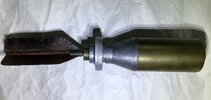
Found this in the bottom of a cabinet in an old antique centre under a pile of bits and pieces, only the wind vane was visible and I only recognised it because of a popular space franchise! It had clearly been in there for a very long time and required about half an hour of wrangling to get the thing out by myself and the elderly assistant. Once out I wasn’t quite sure what I was looking at and after looking over it I was still none the wiser. It had a tag stating “unknown ww2 item” and I considered it might just be something that had been made up as a bit of trench art possibly. I could sense the assistant wanted to get on and so still in two minds I thought it looked cool and if it was nothing I could use the wind vane on another project… plus I didn’t have the heart to say no that’s ok put it back!
Got it home, cleaned up the wind vane which revealed the lettering “Cotton”etc.and confirmed what I had thought, that then led to only one picture on the whole of the web I could find of the No.4 or10.
However, and heres the but, obviously they usually have a rod, but this one has fins instead and have clearly been with it all or most of its life.
Was this an experimental thing or actually used in service? Did it fire from a cup discharger or was there a specialist use like aircraft dropped maybe?
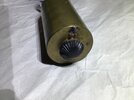
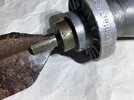
Also any idea on value as I cannot find a single one for sale anywhere, I would also like to see a picture of a complete one to see if I could replace the rusted remnants of the pieces on the fuse end. And if still not asking enough what type of fuse did this type use please?
Thanks in advance
Found this in the bottom of a cabinet in an old antique centre under a pile of bits and pieces, only the wind vane was visible and I only recognised it because of a popular space franchise! It had clearly been in there for a very long time and required about half an hour of wrangling to get the thing out by myself and the elderly assistant. Once out I wasn’t quite sure what I was looking at and after looking over it I was still none the wiser. It had a tag stating “unknown ww2 item” and I considered it might just be something that had been made up as a bit of trench art possibly. I could sense the assistant wanted to get on and so still in two minds I thought it looked cool and if it was nothing I could use the wind vane on another project… plus I didn’t have the heart to say no that’s ok put it back!
Got it home, cleaned up the wind vane which revealed the lettering “Cotton”etc.and confirmed what I had thought, that then led to only one picture on the whole of the web I could find of the No.4 or10.
However, and heres the but, obviously they usually have a rod, but this one has fins instead and have clearly been with it all or most of its life.
Was this an experimental thing or actually used in service? Did it fire from a cup discharger or was there a specialist use like aircraft dropped maybe?
Also any idea on value as I cannot find a single one for sale anywhere, I would also like to see a picture of a complete one to see if I could replace the rusted remnants of the pieces on the fuse end. And if still not asking enough what type of fuse did this type use please?
Thanks in advance