
pzgr40
Well-Known Member
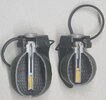
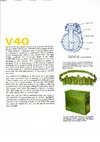
Cutaway models models of the NWM V40 Mini hand grenade (right) and the NWM V45 hand grenade (left), designed by Mr. Henk Visser –late managing director of the former NWM ordnance factory in ’s-Hertogenbosch, Netherlands-.
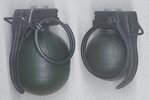
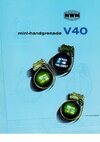
The V40 is the smallest hand grenade in the world with a diameter of 40 mm; the V45 is slightly larger with a diameter of 45 mm.
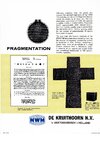
Both hand grenades consist of two halves of pre-fragmented steel plate welded together.
Despite the unique design, neither hand grenade was ever put into service by the Dutch Army. However, the V40 was used by American special forces in Vietnam (SEAL teams and MACV-SOG), who nicknamed the grenade the Hootch pooper (a hootch is Vietnamese for hut or shelter, a pooper, derived from popper, is a hand grenade), as the V40 was particularly suitable for combating the enemy in confined spaces.
The advantage of the V40 was that one could carry many of them because the V40 was no bigger than a golf ball, a disadvantage of the V40 was that it was dangerous if the pitcher wore gloves because -due to its small size- it was difficult to feel whether the lever had already come loose when removing the safety pin.
Both the V40 and the V45 use a mousetrap fuse where the lever fixates the spring-loaded firing pin until the moment the lever is released and the firing pin rotates in the primer. The primer ignites the fuse (black), which in turn ignites the detonator (yellow), after which the hand grenade detonates. The fuse body is made of pressed steel plate that is subsequently phosphated black. The grenade bodies are painted olive green.
There is also a V60 (60 mm diameter), which has a different type of fuse, however, this hand grenade is so rare that it is never encountered.
The V41 is the training version of the V40 and is blue in color with a dummy fuze.
The V45 and V60 hand grenades were not adopted by any army.
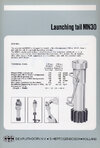
An MN30 tail could be purchased for the V40 grenade, allowing it to be converted into a rifle grenade. The hand grenade was attached to the tail using a type of wire latch. The rifle grenade version of the V40 could be fired from both 7.62x51 caliber rifles and 5.56x45 propellant cartridges.
Data V40 :
Purpose : both offensive and defensive
Diameter : 40 mm (1.58 inch)
Length of complete grenade (incl. fuse) : 56 mm (2.20 inch)
Weight : 140 grams (4.9 ounce)
Weight of charge : 36 grams (1.27 ounce) Comp. B
Delay: 4 plm. 0.5 seconds
Number of fragments: minimum 326
Fragment velocity: 1830 m/sec (6000 ft/sec)
Lethal radius: 5 meters (16.4 ft)
Safe radius: 25 meters (82 ft)
V45 Data:
Target: both offensive and defensive
Diameter: 45 mm (1.77 inches)
Length of complete shell (incl. fuse): 70 mm (2.75 inches)
Delay: 4 approx. 0.5 seconds
No further info available
Regards, DJH
The V40 is the smallest hand grenade in the world with a diameter of 40 mm; the V45 is slightly larger with a diameter of 45 mm.
Both hand grenades consist of two halves of pre-fragmented steel plate welded together.
Despite the unique design, neither hand grenade was ever put into service by the Dutch Army. However, the V40 was used by American special forces in Vietnam (SEAL teams and MACV-SOG), who nicknamed the grenade the Hootch pooper (a hootch is Vietnamese for hut or shelter, a pooper, derived from popper, is a hand grenade), as the V40 was particularly suitable for combating the enemy in confined spaces.
The advantage of the V40 was that one could carry many of them because the V40 was no bigger than a golf ball, a disadvantage of the V40 was that it was dangerous if the pitcher wore gloves because -due to its small size- it was difficult to feel whether the lever had already come loose when removing the safety pin.
Both the V40 and the V45 use a mousetrap fuse where the lever fixates the spring-loaded firing pin until the moment the lever is released and the firing pin rotates in the primer. The primer ignites the fuse (black), which in turn ignites the detonator (yellow), after which the hand grenade detonates. The fuse body is made of pressed steel plate that is subsequently phosphated black. The grenade bodies are painted olive green.
There is also a V60 (60 mm diameter), which has a different type of fuse, however, this hand grenade is so rare that it is never encountered.
The V41 is the training version of the V40 and is blue in color with a dummy fuze.
The V45 and V60 hand grenades were not adopted by any army.
An MN30 tail could be purchased for the V40 grenade, allowing it to be converted into a rifle grenade. The hand grenade was attached to the tail using a type of wire latch. The rifle grenade version of the V40 could be fired from both 7.62x51 caliber rifles and 5.56x45 propellant cartridges.
Data V40 :
Purpose : both offensive and defensive
Diameter : 40 mm (1.58 inch)
Length of complete grenade (incl. fuse) : 56 mm (2.20 inch)
Weight : 140 grams (4.9 ounce)
Weight of charge : 36 grams (1.27 ounce) Comp. B
Delay: 4 plm. 0.5 seconds
Number of fragments: minimum 326
Fragment velocity: 1830 m/sec (6000 ft/sec)
Lethal radius: 5 meters (16.4 ft)
Safe radius: 25 meters (82 ft)
V45 Data:
Target: both offensive and defensive
Diameter: 45 mm (1.77 inches)
Length of complete shell (incl. fuse): 70 mm (2.75 inches)
Delay: 4 approx. 0.5 seconds
No further info available
Regards, DJH