
wingsofwrath
Well-Known Member
Since the last thread concerning the 120mm Gruson and Krupp howitzers in Romanian service did so well and you managed to answer all my questions, I thought it was time to move on to another turn-of-the-last-century artillery piece in Romanian employ, this time with a more British persuasion.
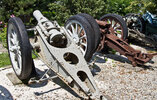
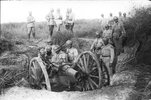
Namely, this is the Ordnance BL 5-inch howitzer famously used during the Second Boer War and which we adopted in 1916 as the "Obuzierul „Vickers” de 127 mm, Model 1896" (127 mm „Vickers” Howitzer Model 1896) or "Obuzierul englez de 127 mm M.1896" (127 mm English howitzer M.1896) of which we received 28 via Russia in early 1917.
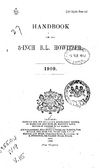
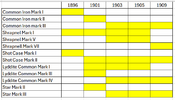
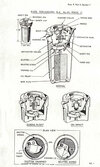
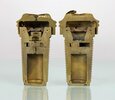
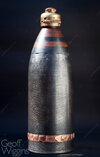
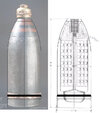
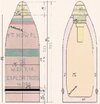
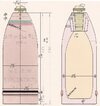
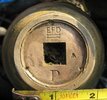
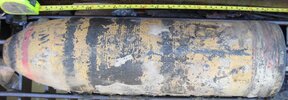
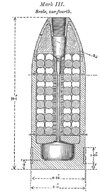
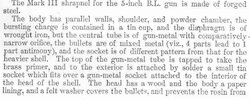
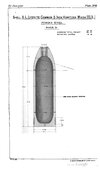
The problem I have with it is I can only find ammunition drawings from 1902-5 of the "common shell Mk.I-III", which do not correspond at all with the ammunition we actually used with it, which seems to be two types of shell, one fitted with a No.44 fuze and one with a No.100.
So, my question is this - do any of you have proper drawings and/or pictures of this latter type of shell? I know for a fact the British Army used them as well in the Middle East.
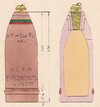
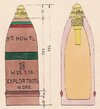
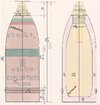
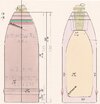
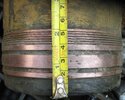
it's interesting to note both shells have the later pattern No.7 cupro-nickel driving band and also that, by the time they were drawn into this album (roundabout the early 30s) the paint on them had degraded so much they are drawn as brown rather than the original golden yellow.
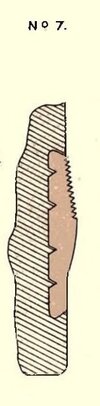
Namely, this is the Ordnance BL 5-inch howitzer famously used during the Second Boer War and which we adopted in 1916 as the "Obuzierul „Vickers” de 127 mm, Model 1896" (127 mm „Vickers” Howitzer Model 1896) or "Obuzierul englez de 127 mm M.1896" (127 mm English howitzer M.1896) of which we received 28 via Russia in early 1917.
The problem I have with it is I can only find ammunition drawings from 1902-5 of the "common shell Mk.I-III", which do not correspond at all with the ammunition we actually used with it, which seems to be two types of shell, one fitted with a No.44 fuze and one with a No.100.
So, my question is this - do any of you have proper drawings and/or pictures of this latter type of shell? I know for a fact the British Army used them as well in the Middle East.
it's interesting to note both shells have the later pattern No.7 cupro-nickel driving band and also that, by the time they were drawn into this album (roundabout the early 30s) the paint on them had degraded so much they are drawn as brown rather than the original golden yellow.