microplastic
Well-Known Member
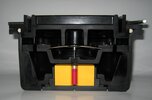
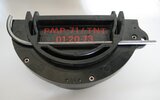
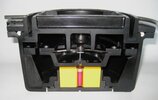
Cutaway model of a PMP-71 antipersonnel mine in armed condition manufactured in the German Democratic Republic. This mine was used in the 1970s (1971-1977) along the inner-German border; it has retaining eyelets to prevent it from being washed away and an aluminum detection foil for easier location during recovery. A total of approximately 90,000 PMP71 mines were laid along this border.
The complete mine is made of black Bakelite; the housing is riveted together. In the center, there is a cross-shaped spring together with the detection foil and the striker. The pressure plate serves simultaneously as a locking element; in the Safety position, two pins prevent the pressure plate from being pressed down. Only in the armed position do these pins align with two slots, allowing the pressure plate to be pressed down. The pressure plate also has holes for the locking rods for additional safety during transport.
Operation: After the safety rods are removed, the pressure plate is turned from the Safety (Gesichert) Position to the Armed (Entsichert) Position (see markings on the top). When a force of more than 10 kg is applied to the pressure plate, the plate is pushed into the housing, forcing the tensioned spring downward. Upon passing the midpoint, the spring snaps downwards, and the strike hits the detonator, which explodes the main charge.
Height: 115 mm
Diameter: 200 mm
Weight: 1,9kg
Charge: 130 g TNT
Operating pressure: 10 to 30 kg
Found in: Somalia, Eritrea, Ethiopia
The complete mine is made of black Bakelite; the housing is riveted together. In the center, there is a cross-shaped spring together with the detection foil and the striker. The pressure plate serves simultaneously as a locking element; in the Safety position, two pins prevent the pressure plate from being pressed down. Only in the armed position do these pins align with two slots, allowing the pressure plate to be pressed down. The pressure plate also has holes for the locking rods for additional safety during transport.
Operation: After the safety rods are removed, the pressure plate is turned from the Safety (Gesichert) Position to the Armed (Entsichert) Position (see markings on the top). When a force of more than 10 kg is applied to the pressure plate, the plate is pushed into the housing, forcing the tensioned spring downward. Upon passing the midpoint, the spring snaps downwards, and the strike hits the detonator, which explodes the main charge.
Height: 115 mm
Diameter: 200 mm
Weight: 1,9kg
Charge: 130 g TNT
Operating pressure: 10 to 30 kg
Found in: Somalia, Eritrea, Ethiopia