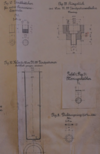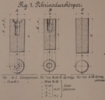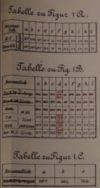
If you want to take a closer look at the detonation chain of RU ammunition on the specific example of the M.15 fuse, you will definitely find that in the picture (Fert) there is a short primer charge and a long primer charge .
Let's get a little oriented in this ...
First, let's put it in the time frame of RU ammunition. We will start reasonably far in history, i.e. the M.75 ammunition where there was "only" a fuse that created a flame that moved to the black powder charge in the shell body.Then there is the next generation of ammunition, i.e. the M.99, and here progress has been made. The detonation chain has undergone changes > There was a fuse, a detonator and explosive (Amonal), which is a big difference compared to the M.75 model. Among other things. There was a radical leap in performance in terms of fragmentation of the body, i.e. the cast iron body was replaced by a steel one (fragmentation rings were retained, among other things), and thus a larger volume of explosive charge was achieved and, in conjunction with a more powerful explosive, a more adhesive effect, among other things, there was a rapid increase in the speed of fragments. Fragmentation of a body filled with powder and high explosive has big differences. Newly, in addition to the fragmentation effect (against manpower), the projectiles were also supposed to have the desired effect on solid targets: fortification systems (brick, concrete, earth covers), and this forced the use of more powerful explosives, delayers, etc.In general, the initiation of powerful explosives (Amonal, Melinit) was needed, and this had the result: a different solution to the detonation chain of igniters.
----------------------------------------------------------------------------------------------------
The picture shows what it is about:

Akon
Let's get a little oriented in this ...
First, let's put it in the time frame of RU ammunition. We will start reasonably far in history, i.e. the M.75 ammunition where there was "only" a fuse that created a flame that moved to the black powder charge in the shell body.Then there is the next generation of ammunition, i.e. the M.99, and here progress has been made. The detonation chain has undergone changes > There was a fuse, a detonator and explosive (Amonal), which is a big difference compared to the M.75 model. Among other things. There was a radical leap in performance in terms of fragmentation of the body, i.e. the cast iron body was replaced by a steel one (fragmentation rings were retained, among other things), and thus a larger volume of explosive charge was achieved and, in conjunction with a more powerful explosive, a more adhesive effect, among other things, there was a rapid increase in the speed of fragments. Fragmentation of a body filled with powder and high explosive has big differences. Newly, in addition to the fragmentation effect (against manpower), the projectiles were also supposed to have the desired effect on solid targets: fortification systems (brick, concrete, earth covers), and this forced the use of more powerful explosives, delayers, etc.In general, the initiation of powerful explosives (Amonal, Melinit) was needed, and this had the result: a different solution to the detonation chain of igniters.
----------------------------------------------------------------------------------------------------
The picture shows what it is about:
Akon