
British Ordnance Collectors Network
You are using an out of date browser. It may not display this or other websites correctly.
You should upgrade or use an alternative browser.
You should upgrade or use an alternative browser.
Russian 120mm krupp
- Thread starter ArtilleryManiac1916
- Start date
ArtilleryManiac1916
Well-Known Member
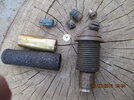
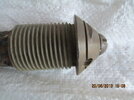
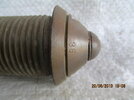
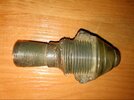
Gt 14 is relatively common.
In the eastern europe.
In the eastern europe.
Attachments
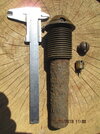
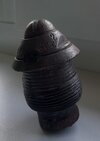
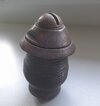
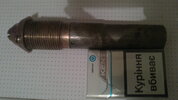
ArtilleryManiac1916
Well-Known Member
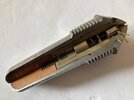
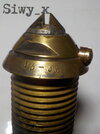
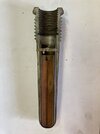
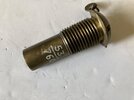
The real one thats rare thats from the same technological tree is 2 gm and 1 gm.Never seen a picture of a 14GT (14 ГТ) fuze. Didn't know it existed until today. Not much online.
Attachments
ArtilleryManiac1916
Well-Known Member
So.
Have everyone seen the russian 120mm krupp howitzer shell.
That uses 14 gt , and 4gt .
Thats one to the right. With tnt"
Have everyone seen the russian 120mm krupp howitzer shell.
That uses 14 gt , and 4gt .
Thats one to the right. With tnt"
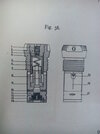
I don`t have drawings or measurements with the shells you are asking about, but i can tell you that the fuze in the left shell is a typical Krupp export fuze.
The same fuze was used by ammunition for the Romanian model 1901 Krupp field howitzer.
The same fuze was used by ammunition for the Romanian model 1901 Krupp field howitzer.
Attachments
ArtilleryManiac1916
Well-Known Member
Well no doubt about it , but the main thing that i need is : driving band picture , base pictures .
ArtilleryManiac1916
Well-Known Member
Rdultovsky have writen about this in his tractat. With pictures etc.I don`t have drawings or measurements with the shells you are asking about, but i can tell you that the fuze in the left shell is a typical Krupp export fuze.
The same fuze was used by ammunition for the Romanian model 1901 Krupp field howitzer.
I just cant find krupp shell thats compatible with gt 4 , gt 14 fuzes
Hi AM16Rdultovsky have writen about this in his tractat. With pictures etc.
I just cant find krupp shell thats compatible with gt 4 , gt 14 fuzes
I think you are looking for something that was never actually produced—specifically, German shells made by Krupp equipped with 4GT or 14GT fuzes.
Even at the time the weapons and ammunition were purchased, it was clear that the ammunition supply would not last for the weapon's entire service life.
Russia’s strategic thinking was certainly that it would manufacture the ammunition domestically.
And that is exactly what happened; furthermore, they already had their own munitions plants and manufacturers of explosives and initiators, so it was not a problem.
-120/45 Canet (France), adopted by the Russian Navy in 1892. Produced under license in Russia.
12cm naval shell (Canet), 23 kg, 2.87 kg TNT. ...
-------
Interestingly, in 1905, the Krupp :
-12cm (119mm; 47 ,,) howitzer was adopted as the Model 1905 (even though the initial concept had been for a 122mm caliber)...
Ammunition: 12cm melinite shell, 21 kg, 2.05 kg melinite. 12cm howitzer shell, 21 kg, 2.56 kg TNT.
It made a one-off purchase of weapons from Krupp and acquired additional units from Japan...
-122mm (48 ,, ) (Путиловского и Обуховского заводов) also introduced in 1905.
.....
After a short period of service, a new requirement for fuzes emerged—specifically, bore safety—which neither the German fuzes nor those of earlier Russian designs could meet... consequently, Russian-designed fuzes such as the ,,safe,, 4GT, 14GT, and others were introduced... ...
Akon
Last edited:
ArtilleryManiac1916
Well-Known Member
IM not looking for german shells im looking for russian shell for 120mm krupp howitzer.
I recently found one defused , and its diameter is precisely 120mm.
It doesnt look alike as other russian shells ive dug out in the same caliber range , il make photos once i can.
With measurements , the whole tread purpouse is to find info about it and make proper comparasion.
I recently found one defused , and its diameter is precisely 120mm.
It doesnt look alike as other russian shells ive dug out in the same caliber range , il make photos once i can.
With measurements , the whole tread purpouse is to find info about it and make proper comparasion.
ArtilleryManiac1916
Well-Known Member
It would be helpful if someone could measure with roulete ruller the diameter of the base of 122 mm russian shell.
Okay, that’s a new situation.IM not looking for german shells im looking for russian shell for 120mm krupp howitzer.
I recently found one defused , and its diameter is precisely 120mm.
It doesnt look alike as other russian shells ive dug out in the same caliber range , il make photos once i can.
With measurements , the whole tread purpouse is to find info about it and make proper comparasion.
Now it makes sense to me.

We look forward to the photos—ideally with measurements. It would also be helpful to know what markings are stamped on the shell body.
---
When dealing with this specific (Russian) material, have you tried consulting primary sources—such as the GAU collection held in the Military Historical Archive in Russia? You will never find comprehensive, in-depth information on the internet; at best, you might find fragments that, if pieced together, would likely lead to a distorted view. Just looking at the list of file names categorized by 12cm caliber reveals a vast number of archival sources...
Last edited:
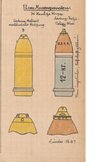
A German manuscript dated 1917, Berlin (the drawings in the first post are from it), also lists
:- 12cm Japanese howitzer (Krupp)
Steel shell: 20.07 kg; 1.33 kg Melinite; Muzzle velocity (Vo): 273 m/s
Shrapnel shell: 20.07 kg
I believe that the Japanese and Russian shells supplied by Krupp for this 1905-model gun are identical.
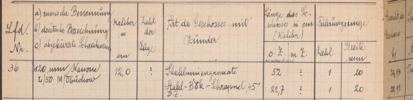
- 12cm Cannon L/50 (Obuchov)
Steel high-explosive shell: 20.98 kg; 2.05 kg Tritol; Muzzle velocity (Vo): 930 m/s ; Length of the projectile without the fuze: 520 mm.
Steel shrapnel shell: 20.98 kg ; Length of the projectile without the fuze: 227 mm.
Cu band width: 20 mm.
Akon
:- 12cm Japanese howitzer (Krupp)
Steel shell: 20.07 kg; 1.33 kg Melinite; Muzzle velocity (Vo): 273 m/s
Shrapnel shell: 20.07 kg
I believe that the Japanese and Russian shells supplied by Krupp for this 1905-model gun are identical.
- 12cm Cannon L/50 (Obuchov)
Steel high-explosive shell: 20.98 kg; 2.05 kg Tritol; Muzzle velocity (Vo): 930 m/s ; Length of the projectile without the fuze: 520 mm.
Steel shrapnel shell: 20.98 kg ; Length of the projectile without the fuze: 227 mm.
Cu band width: 20 mm.
Akon
ArtilleryManiac1916
Well-Known Member
Okay, that’s a new situation.
Now it makes sense to me.
We look forward to the photos—ideally with measurements. It would also be helpful to know what markings are stamped on the
The 120mm obuchov is actually a naval Vickers canon , but good guess , il check on it.A German manuscript dated 1917, Berlin (the drawings in the first post are from it), also lists
:- 12cm Japanese howitzer (Krupp)
Steel shell: 20.07 kg; 1.33 kg Melinite; Muzzle velocity (Vo): 273 m/s
Shrapnel shell: 20.07 kg
I believe that the Japanese and Russian shells supplied by Krupp for this 1905-model gun are identical.
- 12cm Cannon L/50 (Obuchov)
Steel high-explosive shell: 20.98 kg; 2.05 kg Tritol; Muzzle velocity (Vo): 930 m/s ; Length of the projectile without the fuze: 520 mm.
Steel shrapnel shell: 20.98 kg ; Length of the projectile without the fuze: 227 mm.
Cu band width: 20 mm.
Akon
Last edited:
That is precisely (apparently) different material, because in the manuscript it is a separate entry in the table:The 12cm Vickers gun has different figures compared to the 12cm Obukhov: compare...The 120mm obuchov is actually a naval Vickers canon , but good guess , il check on it.
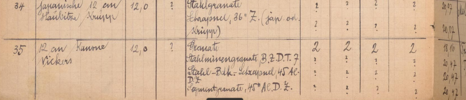
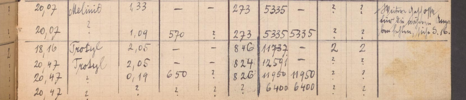
12cm Obuchov
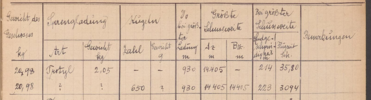
12cm frz kanon M 78


Akon
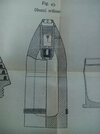
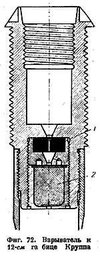
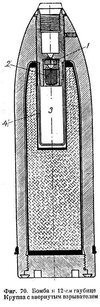
The German ammunition and fuze for the Russian 12cm Krupp howitzer of 1905 had the following configuration:I don`t have drawings or measurements with the shells you are asking about, but i can tell you that the fuze in the left shell is a typical Krupp export fuze.
The same fuze was used by ammunition for the Romanian model 1901 Krupp field howitzer.
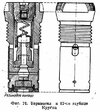
ArtilleryManiac1916
Well-Known Member
120/50-mm Guns of the First and Second PatternsThat is precisely (apparently) different material, because in the manuscript it is a separate entry in the table:The 12cm Vickers gun has different figures compared to the 12cm Obukhov: compare...
View attachment 211614
View attachment 211615
12cm Obuchov
View attachment 211616
View attachment 211617
12cm frz kanon M 78
View attachment 211618
View attachment 211619
Akon
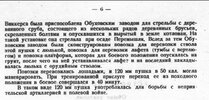
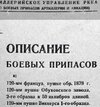
The appearance of 120/50-mm guns in Russian artillery was connected with the experience of the Russo-Japanese War. Initially, the War Ministry attempted to obtain 120/45-mm Canet guns from the Naval Ministry, but this was unsuccessful. Therefore, in 1905, Russia purchased 24 guns from Vickers, with a caliber of 120 mm and a barrel length of 50 calibers. They arrived in Libava that summer, after which 22 guns were sent to Harbin. They saw practically no combat during the war against Japan.
120/50-mm Gun of the First Pattern
The guns purchased from Vickers received the designation 120/50-mm Gun of the First Pattern from the Main Artillery Directorate (GAU). Production of the same type of gun was subsequently established at the Obukhov Steel Works. The gun was primarily a naval system and was installed on various ships of the Russian fleet.
Thus, the First Pattern became the original design on which later variants of the 120/50-mm gun were developed for different operating conditions.
120/50-mm Gun of the Second Pattern
The Second Pattern was not a fundamentally new system; rather, it was a further development of the 120/50-mm gun of the First Pattern. The main artillery components were retained, but the design was modified to meet the requirements of the War Ministry and to allow the gun to be used as coastal artillery.
Particular attention was paid to the gun mounting and to the possibility of installing it on different types of foundations. The gun had good ballistic performance and relatively low weight, allowing it to be mounted on both concrete and wooden foundations.
The first Second Pattern gun was tested at the Main Artillery Test Range in 1912–1913. A total of 230 rounds were fired during the trials, with a muzzle velocity reaching 930 m/s. However, the trials revealed a deficiency in the mounting: firing caused significant displacement of the aiming mechanisms, reaching up to 40° in elevation and 50° in traverse. This deficiency required structural corrections.
As a result, by the beginning of the First World War there were two closely related variants of the same 120/50-mm artillery system: the First Pattern, representing the original Vickers design and its Russian production, and the Second Pattern, a modified version adapted primarily for coastal use.
The subsequent widespread use of 120/50-mm guns led to their employment not only in coastal defense and aboard ships, but also on the land front.
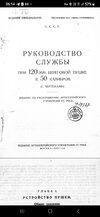
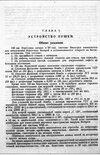
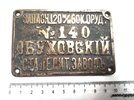
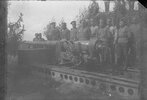
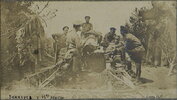
the photos of the canon are related to the second model of the russian vickers 120mm thats adopted for the land use.
Basically its the same gun wich verifies my thesis , but its been produced diffrently wich lead to ballistical improvement.
Attachments
-
 Screenshot_20260918_061421_ReadEra.jpg681.6 KB · Views: 4
 -
 Screenshot_20260918_061436_ReadEra.jpg1.1 MB · Views: 4
 -
 Screenshot_20260918_061520_ReadEra.jpg342 KB · Views: 4
 -
 Screenshot_20260918_061652_Gallery.jpg574.8 KB · Views: 5
 -
 IMG.jpg176.8 KB · Views: 5
 -
 10547856.jpg101.7 KB · Views: 5
 -
 38200413+Орудие+Виккерс+июль+1916.jpg147.8 KB · Views: 3
ArtilleryManiac1916
Well-Known Member
This text is a exscert from russian armory journal from 1997 wich is a legit source.120/50-mm Guns of the First and Second Patterns
The appearance of 120/50-mm guns in Russian artillery was connected with the experience of the Russo-Japanese War. Initially, the War Ministry attempted to obtain 120/45-mm Canet guns from the Naval Ministry, but this was unsuccessful. Therefore, in 1905, Russia purchased 24 guns from Vickers, with a caliber of 120 mm and a barrel length of 50 calibers. They arrived in Libava that summer, after which 22 guns were sent to Harbin. They saw practically no combat during the war against Japan.
120/50-mm Gun of the First Pattern
The guns purchased from Vickers received the designation 120/50-mm Gun of the First Pattern from the Main Artillery Directorate (GAU). Production of the same type of gun was subsequently established at the Obukhov Steel Works. The gun was primarily a naval system and was installed on various ships of the Russian fleet.
Thus, the First Pattern became the original design on which later variants of the 120/50-mm gun were developed for different operating conditions.
120/50-mm Gun of the Second Pattern
The Second Pattern was not a fundamentally new system; rather, it was a further development of the 120/50-mm gun of the First Pattern. The main artillery components were retained, but the design was modified to meet the requirements of the War Ministry and to allow the gun to be used as coastal artillery.
Particular attention was paid to the gun mounting and to the possibility of installing it on different types of foundations. The gun had good ballistic performance and relatively low weight, allowing it to be mounted on both concrete and wooden foundations.
The first Second Pattern gun was tested at the Main Artillery Test Range in 1912–1913. A total of 230 rounds were fired during the trials, with a muzzle velocity reaching 930 m/s. However, the trials revealed a deficiency in the mounting: firing caused significant displacement of the aiming mechanisms, reaching up to 40° in elevation and 50° in traverse. This deficiency required structural corrections.
As a result, by the beginning of the First World War there were two closely related variants of the same 120/50-mm artillery system: the First Pattern, representing the original Vickers design and its Russian production, and the Second Pattern, a modified version adapted primarily for coastal use.
The subsequent widespread use of 120/50-mm guns led to their employment not only in coastal defense and aboard ships, but also on the land front.
the photos of the canon are related to the second model of the russian vickers 120mm thats adopted for the land use.
Basically its the same gun wich verifies my thesis , but its been produced diffrently wich lead to ballistical improvement.
ArtilleryManiac1916
Well-Known Member
Ah yes i forgot that rdultovsky had the scheme of german shell , for presenting wich i send my best regards.The German ammunition and fuze for the Russian 12cm Krupp howitzer of 1905 had the following configuration:
View attachment 211621View attachment 211622View attachment 211620
It looks very similar my shell also have screwed bottom. Well il get pictures once i can regards.
ArtilleryManiac1916
Well-Known Member
Could you make full photo of schemes? On that pageI don`t have drawings or measurements with the shells you are asking about, but i can tell you that the fuze in the left shell is a typical Krupp export fuze.
The same fuze was used by ammunition for the Romanian model 1901 Krupp field howitzer.