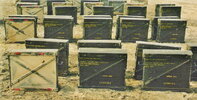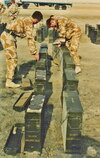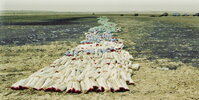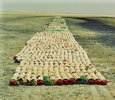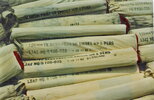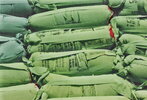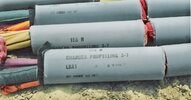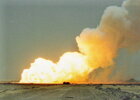

A lot of unused British ammunition that had been in theatre in Saudi and Kuwait had to be disposed of after the end of the First Gulf War. The theory was that in the elevated temperatures in the Middle East, the gun propellants especially, would be degraded by the heat, with incorporated stabilisers likely to be used up or nearly so. It was decided it would be uneconomic to return some items to British and European ammunition depots and so dispose of them in theatre or by deep sea dumping some (heavy calibre shell) on a ship returning to Europe. I was based at what was termed the "de-bombing site," a quarry in the Saudi desert that was close to the Main Supply Route (MSR) that led to Kuwait. For a number of weeks there was one propellant burn a day close to our site, with a senior ammunition technician or Ammunition technical officer in charge, plus a couple of ATs, and a group of teeth-arms badged men to lay the propelling charges, plus of course one or two RAOC plant handlers to offload and position pallets of the charges. The heat could be felt from several hundred yards / metres away and a burn would be completed in a minute or less.