
Hi all,
My name is Tom and I am an archaeologist based in the Scottish Highlands. I am currently researching the 19th century British Volunteer Force and the archaeological remains present on their former rifle ranges. Although these sites dot the landscape across the Highlands we know very little about their archaeological potential or, in other words, what their physical remains can tell us that maps and newspapers cannot. As well as studying the topographic details of the range and its infrastructure (firing points, markers' butts, and targets), the main way in which it is possible to test and validate the historical sources is by studying their ammunition recovered through systematic metal detecting survey. This basically centres on marking out grids and metal detecting the ground completely while recording the depth and location of each find.
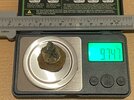
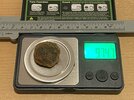
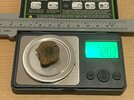
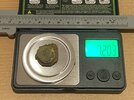
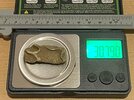
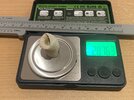
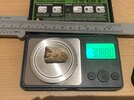
Now, I am trying to find some metrics that I can use to compare my fired projectiles and cartridge cases with the originals. For this, it would be great if any of you on this forum would be kind enough to weigh and measure (or point me onto sources) of your standard .577 Enfield, Snider-Enfield, .450 Martini-Henry and Lee-Enfield and Lee-Metford .303 ammunition. Now, of course, I understand these were manufactured in standard weights but I would like to know if there was any slight variation in production between calibres or when bits like the wooden plug were removed from the .577. Information on the base to tip length and the base diameter of these projectiles including any slight variations would be useful. This would help me to map variations in the condition of bullets that have been GPS located once recovered so that it might be possible to determine if targets were altered or moved through time. Any sources you might know of that mention how bullets deform on impact with iron targets or other things would also help compare the bullet condition with mapping and written evidence.
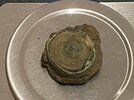
Knowing the standard weight, diameter and how to tell the difference between an iron-based Snider-Enfield and Martini-Henry case would help as I have several heavily corroded examples recovered from a range newspapers indicate was used between 1871-85. The other ammunition was found on another range used throughout the period the volunteers were active.
Any further ideas on interesting areas to research in this field would be greatly appreciated as there are always forgotten questions to ask about these little researched sites!
Best wishes and thanks for reading,
Tom

An example of a distribution map showing bullets by weight based on an initial test run.
My name is Tom and I am an archaeologist based in the Scottish Highlands. I am currently researching the 19th century British Volunteer Force and the archaeological remains present on their former rifle ranges. Although these sites dot the landscape across the Highlands we know very little about their archaeological potential or, in other words, what their physical remains can tell us that maps and newspapers cannot. As well as studying the topographic details of the range and its infrastructure (firing points, markers' butts, and targets), the main way in which it is possible to test and validate the historical sources is by studying their ammunition recovered through systematic metal detecting survey. This basically centres on marking out grids and metal detecting the ground completely while recording the depth and location of each find.
Now, I am trying to find some metrics that I can use to compare my fired projectiles and cartridge cases with the originals. For this, it would be great if any of you on this forum would be kind enough to weigh and measure (or point me onto sources) of your standard .577 Enfield, Snider-Enfield, .450 Martini-Henry and Lee-Enfield and Lee-Metford .303 ammunition. Now, of course, I understand these were manufactured in standard weights but I would like to know if there was any slight variation in production between calibres or when bits like the wooden plug were removed from the .577. Information on the base to tip length and the base diameter of these projectiles including any slight variations would be useful. This would help me to map variations in the condition of bullets that have been GPS located once recovered so that it might be possible to determine if targets were altered or moved through time. Any sources you might know of that mention how bullets deform on impact with iron targets or other things would also help compare the bullet condition with mapping and written evidence.
Knowing the standard weight, diameter and how to tell the difference between an iron-based Snider-Enfield and Martini-Henry case would help as I have several heavily corroded examples recovered from a range newspapers indicate was used between 1871-85. The other ammunition was found on another range used throughout the period the volunteers were active.
Any further ideas on interesting areas to research in this field would be greatly appreciated as there are always forgotten questions to ask about these little researched sites!
Best wishes and thanks for reading,
Tom
An example of a distribution map showing bullets by weight based on an initial test run.
