
British Ordnance Collectors Network
You are using an out of date browser. It may not display this or other websites correctly.
You should upgrade or use an alternative browser.
You should upgrade or use an alternative browser.
Signal double star Mk1
- Thread starter MINENAZ16
- Start date
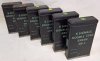
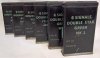
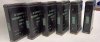
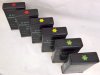
![WP_20170806_002[1].jpg](https://www.bocn.co.uk/data/attachments/114/114981-e1da671cf529448b6754fc9e578a981b.jpg "WP_20170806_002[1].jpg")
Hi Tim,
The lack of the word "Cartridge" and any reference to calibre makes me think its the hand held double star ejector as opposed to a cartridge for a Very pistol. Id like to find an original too... I do have the cork and the remnants of the ignitor from one I found at Bisley camp many years ago, it gets ejected when the star is fired and consists of a cork with a cut down 9mm cartridge crimped into a short brass tube.
Cheers
Gary
The lack of the word "Cartridge" and any reference to calibre makes me think its the hand held double star ejector as opposed to a cartridge for a Very pistol. Id like to find an original too... I do have the cork and the remnants of the ignitor from one I found at Bisley camp many years ago, it gets ejected when the star is fired and consists of a cork with a cut down 9mm cartridge crimped into a short brass tube.
Cheers
Gary
The tins in the original photos were 1945 but the hand held signals in the later photos were 1960 and from the style of the pages were taken from one of the joint services markings handbooks. Timg's plates were from an air ministry publication and I think he is right.
No dimensions were given for the tins and most of the real indicators were missing.
A downed airman in a dinghy would not need to give coloured signals for survival, his survival kit would have contained Signals Distress Day and Night (which I believe are still used today). These are hand held and have a screw cap both ends, much like the 1960 signals but double ended. By night, if you hear an aircraft overhead, you fire off the red distress flare end and the same by day. By day you use the other end and fire off the smoke end hoping the aircraft spotted your flare. Both ends are operated by a release fork and pull ring. You have more than one of these because they get very hot, particularly the smoke end.
More likely TimG's plates are the colours of the day recognition signals, which aircrew would know from the operational target briefing and use the correct colours on return. Operational bombers would have had the Signal Pistol 1 and a half inch and would fire these off when approaching the coast returning from a raid, to prevent infiltration of the returning bomber streams by enemy aircraft and to prevent themselves from being shot down by friendly fire. These pistols have a violent kick so were locked into a bracket in a manner similar to the interrupted breach screw on an artillery piece, before firing.
No dimensions were given for the tins and most of the real indicators were missing.
A downed airman in a dinghy would not need to give coloured signals for survival, his survival kit would have contained Signals Distress Day and Night (which I believe are still used today). These are hand held and have a screw cap both ends, much like the 1960 signals but double ended. By night, if you hear an aircraft overhead, you fire off the red distress flare end and the same by day. By day you use the other end and fire off the smoke end hoping the aircraft spotted your flare. Both ends are operated by a release fork and pull ring. You have more than one of these because they get very hot, particularly the smoke end.
More likely TimG's plates are the colours of the day recognition signals, which aircrew would know from the operational target briefing and use the correct colours on return. Operational bombers would have had the Signal Pistol 1 and a half inch and would fire these off when approaching the coast returning from a raid, to prevent infiltration of the returning bomber streams by enemy aircraft and to prevent themselves from being shot down by friendly fire. These pistols have a violent kick so were locked into a bracket in a manner similar to the interrupted breach screw on an artillery piece, before firing.

Thanks for all these interesting details.
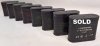
Tim, I thought cartridges in these large box were longer than those (1 1/2) of your doc.
In another thread you posted documentation of 1in signal L3a1 series (maybe with similar length of 1 1/2) and box are shorter.
No mention of caliber on box's markings could suggest other model.
Regards
Smaller boxes
Tim, I thought cartridges in these large box were longer than those (1 1/2) of your doc.
In another thread you posted documentation of 1in signal L3a1 series (maybe with similar length of 1 1/2) and box are shorter.
No mention of caliber on box's markings could suggest other model.
Regards
Smaller boxes
Last edited:
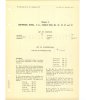
Gary raises a very valid point regarding the absence of Cartridge and Calibre. It was something I was aware of when looking through AP.1661E as I had to check both 1" and 1.5" Cartridges. The signals as described in AP.1661 E are "Cartridges, Signal, 1 1/2 in., Double Star, Mk. 2T - which is what you would expect to find stencilled on the container.
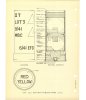
The item shown on Gary's image is described as "Signal Double Star Mk1" As there is no mention of a "L" number, one presumes it was introduced before 1954. Also, in small print on both parts of the image is "Land Service". There is no trace of the store in either (my) AP.1661E or RAOS Vol. 4 Pam 18. Pyrotechnics.
The RAF did have a "Signal, Distress, Two-Star, Red, Mk 4" for use at sea and was contained in K-type (fighter) dinghy pack.
TimG
The item shown on Gary's image is described as "Signal Double Star Mk1" As there is no mention of a "L" number, one presumes it was introduced before 1954. Also, in small print on both parts of the image is "Land Service". There is no trace of the store in either (my) AP.1661E or RAOS Vol. 4 Pam 18. Pyrotechnics.
The RAF did have a "Signal, Distress, Two-Star, Red, Mk 4" for use at sea and was contained in K-type (fighter) dinghy pack.
TimG
Identified - what Gary said (but it's Land Service) - see attached
TimG
View attachment 1.pdfView attachment 2.pdfView attachment 3.pdfView attachment 4.pdfView attachment 5.pdf
TimG
View attachment 1.pdfView attachment 2.pdfView attachment 3.pdfView attachment 4.pdfView attachment 5.pdf