British Ordnance Collectors Network
You are using an out of date browser. It may not display this or other websites correctly.
You should upgrade or use an alternative browser.
You should upgrade or use an alternative browser.
Time fuze setting ring cloth washers
- Thread starter BMG50
- Start date
frijoles108
Well-Known Member
Speaking from personal experience with U.S. fuzes of ww1 and prior era when we did start using powder time train fuze's, the material I have in my fuzes is either some form of felt, but I have also been told by some people that they also used leather washers. I also would agree with the assumption of it being soaked in some solution to make it resistant to moisture, as mine seem to have some sort of glaze or agent on them.
heres a description for the NO.80 fuze
2nd row left to right
-washer, box cloth,body platform
-washer,vegetable paper,bottom ring
-washer,vegetable paper,top ring
-washer,box cloth,top ring
-washer leather,lubricated
im not sure what box cloth and vegetable paper are,but someone will know
2nd row left to right
-washer, box cloth,body platform
-washer,vegetable paper,bottom ring
-washer,vegetable paper,top ring
-washer,box cloth,top ring
-washer leather,lubricated
im not sure what box cloth and vegetable paper are,but someone will know
Attachments
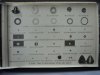

Very nice display board. I assume knowing the characteristics of gunpower being prone to moisture the vegetable paper washer was sealed to the brass ring which rode on the felt washer which protected the paper washer from scuffing up breaking the seal. I wonder if the percentage of failures of dud projectile were due to using this method of sealing against damp and if it improved on later fuzes.
https://www.merriam-webster.com/dictionary/box cloth
Original parts which I have seen were looking like felt.
Vegetable paper (we call it Pflanzenpapier) is a very thin paper with smooth surface and a tight closed structure. The paper of some single packages of teabags are looking like vegetable paper. It is grey and more transparent than normal white paper. Some liners of labels also go into this direction.
Original parts which I have seen were looking like felt.
Vegetable paper (we call it Pflanzenpapier) is a very thin paper with smooth surface and a tight closed structure. The paper of some single packages of teabags are looking like vegetable paper. It is grey and more transparent than normal white paper. Some liners of labels also go into this direction.
Last edited:
Yes backing paper also looks similar just a little bit darker (also prior to baking  ).
).
But I would be more interested in finding a replacement product for the "box cloth" felt. The thickness of the material is the most important point otherwise the fuze ogive isn't looking good. At the moment regarding the thickness the best replacement I found is the paper mache from the cover of egg-boxes
). But I would be more interested in finding a replacement product for the "box cloth" felt. The thickness of the material is the most important point otherwise the fuze ogive isn't looking good. At the moment regarding the thickness the best replacement I found is the paper mache from the cover of egg-boxes
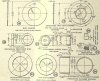
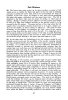
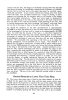
The attached pages are for the American made "Model 1907 M" but values should be similar for the No.80 and others I think.
40/1000 Inch uncompressed, 30/1000 compressed
As far as I know the caps on PTTF fuzes were tightened with as much force that was required to reach a predefined torque for rotating the lower time ring. This required to compress the felt washers by some percent.
PS: the manual mentions "onion skin" paper instead "vegetable paper". It seems only good tasting paper was used
40/1000 Inch uncompressed, 30/1000 compressed
As far as I know the caps on PTTF fuzes were tightened with as much force that was required to reach a predefined torque for rotating the lower time ring. This required to compress the felt washers by some percent.
PS: the manual mentions "onion skin" paper instead "vegetable paper". It seems only good tasting paper was used
Attachments
Last edited: