Hello, all-Alan1, Lefa, Dronic,Natter,Dreamk, ANTOON, Chris, Burney-Davis & Tim G, it has been 8 years since the last flurry of interest, and I cannot believe that between you all, much new information has not come to light.
Sadly, two leading lights have either died, or disappeared. Denis of Melbourne, who apart from researching the Whitehead and trying to preserve the two Thorneycroft Torpedo Boats, now resting on the bottom, had donated his library to the Rijeka institute, was still trying to ensure that the torpedoes on display n the open were properly protected at the time of his death.
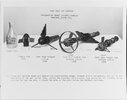
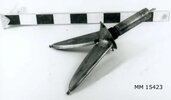
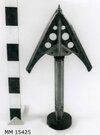
Ben Turnbull has disappeared, just as he was about to publish a history of the Admiralty, following a massive analysis of the financial acounts. He came across rhe "Pioneer" Net Cutter, covered by a secret patent to Arthur "Tug" Wilson, HMS Vernon. He was about to write a monagraph on the subject.
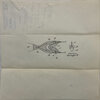
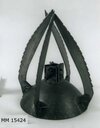
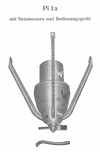
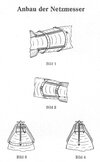
The "Pioneer" had four blades, set at 90deg to each other The inwardly directed cutting edges were provided with vee notches, the apexes of which faced rearwardly, and four striker pins were positioned here, The pins were positnd in the thicknessv of the main blades. I presume that when the net was severed, a pin was depressed, and a delay would allow for the thirty foot gap between net and hull. If no net was present, then no detonation woud take place, which was a disadvantage.
Ben told me that the Admiralty had never bothred about patents until a private inventor patented a cutter and wanted to sell it at an exorbitant price. The Navy had already tried out the concept, and said they were not interested. He then said he would sell it to a foreign powere, but the blackmail failed!
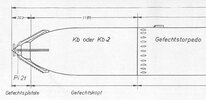
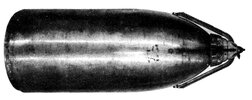
Does anyone know if Britain tried out an explosive cutter? Are any Gernan, Dutch, Scandinavian cutters known? France had the clever cartridge operated scissor cutter, and did the Japanese only try out scissors? The very subtle Bellone was Italian, but were there others?
Finally, I have been looking for a description of the Mk 3 British Contact pistol,which was quite complex and very successful.
Thanks, gentlemen for your time and comments.
Martin.
Sadly, two leading lights have either died, or disappeared. Denis of Melbourne, who apart from researching the Whitehead and trying to preserve the two Thorneycroft Torpedo Boats, now resting on the bottom, had donated his library to the Rijeka institute, was still trying to ensure that the torpedoes on display n the open were properly protected at the time of his death.
Ben Turnbull has disappeared, just as he was about to publish a history of the Admiralty, following a massive analysis of the financial acounts. He came across rhe "Pioneer" Net Cutter, covered by a secret patent to Arthur "Tug" Wilson, HMS Vernon. He was about to write a monagraph on the subject.
The "Pioneer" had four blades, set at 90deg to each other The inwardly directed cutting edges were provided with vee notches, the apexes of which faced rearwardly, and four striker pins were positioned here, The pins were positnd in the thicknessv of the main blades. I presume that when the net was severed, a pin was depressed, and a delay would allow for the thirty foot gap between net and hull. If no net was present, then no detonation woud take place, which was a disadvantage.
Ben told me that the Admiralty had never bothred about patents until a private inventor patented a cutter and wanted to sell it at an exorbitant price. The Navy had already tried out the concept, and said they were not interested. He then said he would sell it to a foreign powere, but the blackmail failed!
Does anyone know if Britain tried out an explosive cutter? Are any Gernan, Dutch, Scandinavian cutters known? France had the clever cartridge operated scissor cutter, and did the Japanese only try out scissors? The very subtle Bellone was Italian, but were there others?
Finally, I have been looking for a description of the Mk 3 British Contact pistol,which was quite complex and very successful.
Thanks, gentlemen for your time and comments.
Martin.
Last edited: