What's new
British Ordnance Collectors Network

Join over 14,000 collectors of inert military ordnance. Get expert identification help for shells, fuzes, grenades, and more — plus access our classifieds marketplace and decades of archived knowledge. Free to register, takes seconds.

Trench Warfare Course, 1915, Cpl. H. Ranyer(?)

Interesting reading . I had always been told that the segmentation on the outside of the No 5's and No36's was mainly for grip in the wet and muddy trenches and have seen many exploded gren bodies to show that they don,t always break along the set lines but here on page 9 it is clearly stated that that is what they are for and this is dated 1915 and would have been written down after hearing it from the instructors ???
 
Grenades in service before the No 5 also had external segments, such as the No 2, but in positions where you would not be holding the grenade, therefore it was believed at that time by designers, that grenades would fracture along the weakened lines.
In order not to appear foolish, the reason for the segments was changed from "made like a bar of chocolate, so everybody gets a bit" to "the ability to grip the grenade in wet, muddy conditions".
Later grenades which were held by the body, such as the No 16 and the No 34 were smooth so it had been realised that they did not fracture along any externally engraved lines.
More modern offensive grenades are notched on the inside to aid fragmentation which does work.
 

Attachments

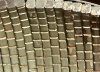
  • Grenade internally notched.jpg
    Grenade internally notched.jpg
    97.5 KB · Views: 12
Last edited:
Top