
pzgr40
Well-Known Member
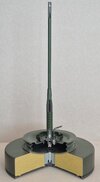
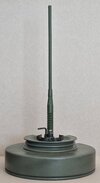
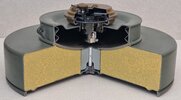
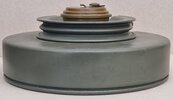
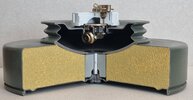
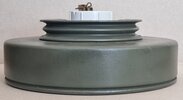
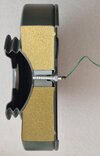
Cutaway model of a Hungarian UKA-63 anti-tank mine. UKA stands for ‘Univerzalis Kumulativ Akna’, which translates to Universal Cumulative Mine. The mine consists of a cylindrical steel body on which a corrugated cylinder is mounted on top, upon which the pressure plate is mounted. The fuse is screwed into the pressure plate. A steel safety band is fitted around the corrugated cylinder to ensure that the pressure plate cannot be pressed down in transport mode, thus maintaining the corrugated cylinder at the correct length. When the mine is laid, the safety band is removed.
The term cumulative refers to the fact that the mine has a projectile-forming charge, also referred to as the Misnay-Schardin effect (Fig. 01). This is a form of shaped charge in which the cone has a very low apex angle (appr. between 5 and 15 degrees) and the shaped charge does not form a jet, but a solid projectile. This is also known as an EFP (Explosively formed Penetrator) or an SFF (Self-Forming Fragment). The penetration of the EFP is considerably lower than that of a shaped charge with a sharp cone angle (between 60 and 90 degrees), but the effect after penetrating armor is significantly greater in terms of damage to the target. The speed of an EFP is between 2,000 and 2,500 meters per second, depending on the material used for the cone and the type of explosives used.
The UKA-63 mine can be used in three ways:
- As a blast mine (Figs. 2 to 10 and 15 to 22), where the gas pressure from the explosion destroys the track, suspension, or belly of a vehicle.
- As an EFP mine (Figs. 11 to 14), where an EFP is activated using a tilt rod fuse, which shoots through the belly plate of the tank as a projectile.
- As an off route horizontal effect mine (Fig. 23), where the mine is placed on its side and aimed at a specific point where a vehicle is expected, and is detonated either by means of an electronic pressure sensor or manually (command detonated). The mine can be positioned up to 50 meters from the intended target, as the EFP can travel long distances.
Data:
Mine body diameter: 300 mm
Mine body height (to top of pressure plate): 105 mm
Mine weight: 9 kg
Explosive charge weight: 6 kg TNT
The UKA-63 mine can use six different types of fuzes;
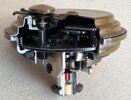
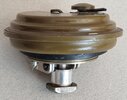
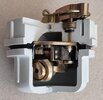
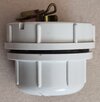
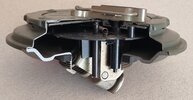
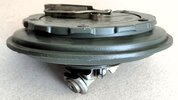
-TheAOG-69 pressure fuse (Pict 02, 03, 04 & 05). The term AOG stands for "Atombiztos Óraműves Gyújtó," which means "Atomic explosion-proof clockwork fuse." The AOG-69 is screwed into the top of the mine and has the detonator and a spring-loaded firing pin with break wire in a horizontal position when the fuse is unarmed. By pressing the button on top of the fuse, a delay mechanism (25 to 30 seconds) runs down, causing the assembly to rotate from horizontal to vertical and the fuse to become armed. When pressure is applied, the corrugated cylinder under the pressure plate will move downwards until the moment the break wire fixating the firing pin is cut off, launching the firing pin into the detonator, detonating the mine.
Certainly a reassuring thought that at least the anti-tank mines will still function properly after a nuclear war.
Diameter fuze body : 103 mm
Height fuze Body : 37 mm
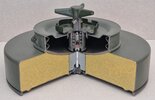
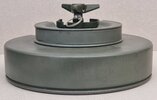
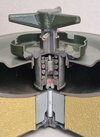
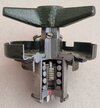
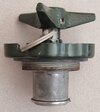
-The NHG-63 fuze (pict. 06, 07, 08, 09 & 10) is a pressure fuze with a springloaded firing pin which is held in a tensioned state by means of a shear pin. A detonator is screwed into the lower side of the fuze, directly below the firing pin. A heavy spring is placed around the firing pin mechanism, which pushes a pressure piece with a flange at the bottom upward. A three-spoke manifold is fitted to the top of the pressure piece, increasing the surface area of the pressure piece. When the pressure piece is pressed down, it presses on the top of the firing pin until the shear pin breaks and the firing pin is driven into the detonator, detonating the mine. A split pin is placed in the pressure piece as a safety pin.
Due to the small surface of the spoke mandifold, the mine is not susceptible to overpressure
Diameter fuze body : 90 mm
Height fuze body : 90 mm
Diameter of manifold over spokes: 90 mm
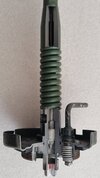
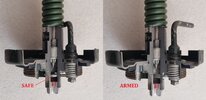
-The DPG-65 (DöntőPálcás Gyújtó-1965) which stands for tilt rod fuze type 1965 (fig. 11,12,13 & 14). The fuze is a so-called 'full width' fuze; if the tank drives over it with the tracks the mine functions as a blast mine breaking the track, if the tank drives over it between the tracks the bottom plate of the tank will bend the rod of the fuze after which the mine is activated and the EFP is shot through the bottom plate of the tank. The spring-loaded firing pin is kept tensioned by means of a wire that runs up to the top of the antenna. If the antenna is bent, the wire will break loose and the firing pin will be driven into the firing cap, after which the mine detonates. Between the detonator body and the antenna, a spring is placedwhich facilitated bending of the rod. On the fuze body, a safety in the form of a rotary switch is placed, which rotates a disk in or out of the line of the firing pin. Under the armed position, a red dot is painted so that it can be observed whether the mine is armed or not.
This experimental detonator was never taken into production.
Diameter fuze body : 90 mm
Length fuze : 470 mm
-The MVZ-57 pressure fuze (pict 15,16,17,18) is screwed in the top of the mine and has the detonator and spring loaded break wire firing pin mechanism placed in horizontal position when unarmed. By pressing the knob on top of the fuze, a delay gear (25 to 30 seconds) runs down, allowing the assembly to rotate from horizontal to vertical, arming the mine. When pressure is applied, the stepped pressure plate will collapse up to the moment the break wire in the firing pin mechanism is sheared off, launching the firing pin into the detonator, detonating the mine. The MVZ-57 fuze allows for mechanical mine laying with the GMZ and PMR minelayer vehicles, pressing the knob on top of the mine just prior to sliding the mine off the ramp, allowing the mine to be buried before fully arming.
Diameter fuze body : 93 mm
Height fuze Body : 35 mm
-The EGB-68 pressure fuze (pict 19, 20, 21 & 22) is the plastic version of the MVZ-57 fuze, however without arming delay. After the push button on top of the fuze is pressed in, the firing pin mechanism immediately rotates to the armed position. There are versions in dark brown and white plastic, reportedly the white version is the practice version.
Diameter fuze body : 79 mm
Height fuze body : 32 mm
-Off route mine with an electrically ignited detonator (pict 23), the mine is placed on its side and aimed at a specific point where a vehicle is expected, and is detonated either by means of an electronic pressure sensor or manually (command detonated). The mine can be positioned up to 50 meters from the intended target, as the EFP can travel long distances.
Aiming is achieved by turning the center screw out of the basepate and aiming at a specific point by looking through the hole. By placing a stick in the ground next to the road, one knows when the vehicle is in the correct position as it passes by, and the mine is detonated manually.
When using a pressure sensor or contact switch, the mine is aimed at a point approximately 3 meters behind the sensor so that the vehicle is hit in the center as soon as the track or wheel activates the switch.
Regards, DJH
The term cumulative refers to the fact that the mine has a projectile-forming charge, also referred to as the Misnay-Schardin effect (Fig. 01). This is a form of shaped charge in which the cone has a very low apex angle (appr. between 5 and 15 degrees) and the shaped charge does not form a jet, but a solid projectile. This is also known as an EFP (Explosively formed Penetrator) or an SFF (Self-Forming Fragment). The penetration of the EFP is considerably lower than that of a shaped charge with a sharp cone angle (between 60 and 90 degrees), but the effect after penetrating armor is significantly greater in terms of damage to the target. The speed of an EFP is between 2,000 and 2,500 meters per second, depending on the material used for the cone and the type of explosives used.
The UKA-63 mine can be used in three ways:
- As a blast mine (Figs. 2 to 10 and 15 to 22), where the gas pressure from the explosion destroys the track, suspension, or belly of a vehicle.
- As an EFP mine (Figs. 11 to 14), where an EFP is activated using a tilt rod fuse, which shoots through the belly plate of the tank as a projectile.
- As an off route horizontal effect mine (Fig. 23), where the mine is placed on its side and aimed at a specific point where a vehicle is expected, and is detonated either by means of an electronic pressure sensor or manually (command detonated). The mine can be positioned up to 50 meters from the intended target, as the EFP can travel long distances.
Data:
Mine body diameter: 300 mm
Mine body height (to top of pressure plate): 105 mm
Mine weight: 9 kg
Explosive charge weight: 6 kg TNT
The UKA-63 mine can use six different types of fuzes;
-TheAOG-69 pressure fuse (Pict 02, 03, 04 & 05). The term AOG stands for "Atombiztos Óraműves Gyújtó," which means "Atomic explosion-proof clockwork fuse." The AOG-69 is screwed into the top of the mine and has the detonator and a spring-loaded firing pin with break wire in a horizontal position when the fuse is unarmed. By pressing the button on top of the fuse, a delay mechanism (25 to 30 seconds) runs down, causing the assembly to rotate from horizontal to vertical and the fuse to become armed. When pressure is applied, the corrugated cylinder under the pressure plate will move downwards until the moment the break wire fixating the firing pin is cut off, launching the firing pin into the detonator, detonating the mine.
Certainly a reassuring thought that at least the anti-tank mines will still function properly after a nuclear war.
Diameter fuze body : 103 mm
Height fuze Body : 37 mm
-The NHG-63 fuze (pict. 06, 07, 08, 09 & 10) is a pressure fuze with a springloaded firing pin which is held in a tensioned state by means of a shear pin. A detonator is screwed into the lower side of the fuze, directly below the firing pin. A heavy spring is placed around the firing pin mechanism, which pushes a pressure piece with a flange at the bottom upward. A three-spoke manifold is fitted to the top of the pressure piece, increasing the surface area of the pressure piece. When the pressure piece is pressed down, it presses on the top of the firing pin until the shear pin breaks and the firing pin is driven into the detonator, detonating the mine. A split pin is placed in the pressure piece as a safety pin.
Due to the small surface of the spoke mandifold, the mine is not susceptible to overpressure
Diameter fuze body : 90 mm
Height fuze body : 90 mm
Diameter of manifold over spokes: 90 mm
-The DPG-65 (DöntőPálcás Gyújtó-1965) which stands for tilt rod fuze type 1965 (fig. 11,12,13 & 14). The fuze is a so-called 'full width' fuze; if the tank drives over it with the tracks the mine functions as a blast mine breaking the track, if the tank drives over it between the tracks the bottom plate of the tank will bend the rod of the fuze after which the mine is activated and the EFP is shot through the bottom plate of the tank. The spring-loaded firing pin is kept tensioned by means of a wire that runs up to the top of the antenna. If the antenna is bent, the wire will break loose and the firing pin will be driven into the firing cap, after which the mine detonates. Between the detonator body and the antenna, a spring is placedwhich facilitated bending of the rod. On the fuze body, a safety in the form of a rotary switch is placed, which rotates a disk in or out of the line of the firing pin. Under the armed position, a red dot is painted so that it can be observed whether the mine is armed or not.
This experimental detonator was never taken into production.
Diameter fuze body : 90 mm
Length fuze : 470 mm
-The MVZ-57 pressure fuze (pict 15,16,17,18) is screwed in the top of the mine and has the detonator and spring loaded break wire firing pin mechanism placed in horizontal position when unarmed. By pressing the knob on top of the fuze, a delay gear (25 to 30 seconds) runs down, allowing the assembly to rotate from horizontal to vertical, arming the mine. When pressure is applied, the stepped pressure plate will collapse up to the moment the break wire in the firing pin mechanism is sheared off, launching the firing pin into the detonator, detonating the mine. The MVZ-57 fuze allows for mechanical mine laying with the GMZ and PMR minelayer vehicles, pressing the knob on top of the mine just prior to sliding the mine off the ramp, allowing the mine to be buried before fully arming.
Diameter fuze body : 93 mm
Height fuze Body : 35 mm
-The EGB-68 pressure fuze (pict 19, 20, 21 & 22) is the plastic version of the MVZ-57 fuze, however without arming delay. After the push button on top of the fuze is pressed in, the firing pin mechanism immediately rotates to the armed position. There are versions in dark brown and white plastic, reportedly the white version is the practice version.
Diameter fuze body : 79 mm
Height fuze body : 32 mm
-Off route mine with an electrically ignited detonator (pict 23), the mine is placed on its side and aimed at a specific point where a vehicle is expected, and is detonated either by means of an electronic pressure sensor or manually (command detonated). The mine can be positioned up to 50 meters from the intended target, as the EFP can travel long distances.
Aiming is achieved by turning the center screw out of the basepate and aiming at a specific point by looking through the hole. By placing a stick in the ground next to the road, one knows when the vehicle is in the correct position as it passes by, and the mine is detonated manually.
When using a pressure sensor or contact switch, the mine is aimed at a point approximately 3 meters behind the sensor so that the vehicle is hit in the center as soon as the track or wheel activates the switch.
Regards, DJH
Attachments
-
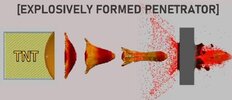 01 - EFP principle.jpg94.9 KB · Views: 34
 -
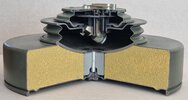 02 - AKU-63 anti -tank mine with AOG-69 pressure fuze cutaway.jpg1.2 MB · Views: 32
 -
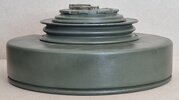 03 - AKU-63 anti-tank mine with AOG-69 pressure fuze backside.jpg910.5 KB · Views: 31
 -
 04 - AOG-69 pressure fuze cutaway.jpg754.8 KB · Views: 29
 -
 05 - AOG-69 pressure fuze backside.jpg723.3 KB · Views: 30
 -
 06 - UKA-63 anti-tank mine with NHG-63 pressure fuze cutaway.jpg1.7 MB · Views: 28
 -
 07 - UKA-63 anti-tank mine with NHG-63 pressure fuze backside.jpg1.2 MB · Views: 27
 -
 08 - UKA-63 with NHG-63 pressure fuze detail.jpg1.5 MB · Views: 25
 -
 09 - NHG-63 pressure fuze cutaway.jpg875.8 KB · Views: 25
 -
 10 - NHG-63 pressure fuze backside .jpg896.7 KB · Views: 29
Last edited: