
British Ordnance Collectors Network
You are using an out of date browser. It may not display this or other websites correctly.
You should upgrade or use an alternative browser.
You should upgrade or use an alternative browser.
Unknown german 50kg smoke aerial bomb
- Thread starter Tom40_fr
- Start date
-
- Tags
- german bomb
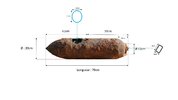
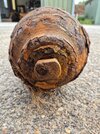
Just a thought...Looking at the body construction, I don't see any vents for smoke to escape. We can therefore rule out the idea of it being a smoke bomb involving the combustion of a solid composition—there would be no way for the smoke to get out.As for a liquid variant, that is a possibility; I imagine there would be a fairly substantial booster charge running lengthwise inside the bomb—though we would need an X-ray image of the initial detonator charge and its connection to the booster charge (if one exists) to confirm. Unfortunately, the portable filling (if it is so thoughtful ) would be very problematic to place inwards through that small working hole, so it rather does not look like a classic liqid smoke concept . ....
Also, considering that unusual screw... I’d consider the possibility of it being filled with a highly hazardous liquid. I’m not sure—I haven't encountered the KC 50 before. Back in the early 40s, there was a bomb with a similar purpose; it didn't have the "KC" designation, but it was a chemical bomb.Are post-war bomb types being developed in your country? They are in mine; they have the characteristics of German bombs but were never used by the German Air Force because they were developed and manufactured after the war.Without an X-ray... we don't have much to go on. Can you manage to take some photos of it at work? It’s a bit unclear in the drawing, and the photo doesn't show it clearly: is there a fuze well? Is it the classic German system, or is something different?
Akon
Also, considering that unusual screw... I’d consider the possibility of it being filled with a highly hazardous liquid. I’m not sure—I haven't encountered the KC 50 before. Back in the early 40s, there was a bomb with a similar purpose; it didn't have the "KC" designation, but it was a chemical bomb.Are post-war bomb types being developed in your country? They are in mine; they have the characteristics of German bombs but were never used by the German Air Force because they were developed and manufactured after the war.Without an X-ray... we don't have much to go on. Can you manage to take some photos of it at work?
It’s a bit unclear in the drawing, and the photo doesn't show it clearly: is there a fuze well? Is it the classic German system, or is something different?Akon
Last edited:
A certain possibility is still looming here .... (there is the use of explosives filling in liquid form ....such a solution was used, for example, in the Russian air force and they also used trophy German bombs ... ) when some types of bombs were filled with liquid explosive substance ....I am not sure about the type, so take it as one of the working hypotheses. It is certain that the precise closure of the whole body should be really special, including that there will be no holes on the body for screws that will allow the stabilizer to attach. Of course, the openings in such a thin wall would have to be structurally treated so that they were not the reason for the leakage .... I won't be moving anywhere without X-rays
Akon
Akon
As for the development(1946-1955) of, for example, Skoda in Czechoslovakia, on the example of here, there are a lot of different types of training ,. incendiary , smoke, etc...
....to illustrate ..in France you certainly have a development after the war, because I would be surprised if it was not so ...
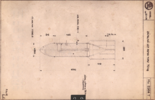
....to illustrate ..in France you certainly have a development after the war, because I would be surprised if it was not so ...
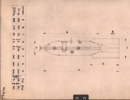
In France there were in fact large stockpiles of French produced bombs that remained available after ww2. Keep in mind that the French Vichy authorities kept producing some of these bombs (10kg, 50kg) and selling them to the Germans all along the war.
The stocks of French bombs in North Africa were relatively unused during ww2, as the American supervisors prefered (most wisely) the post 1942 reformed French Air Force, re-equipped with US aircraft, to use US made bombs (and the adequate bombing tables and apparatus).
Photographic evidence show these "pre-war" bombs used operationally till 1962 (at least): 10kg (package of 3 or 4 wre quite common), 50kg Dt (the most successful French bomb ever made), 100kg and 200kg bombs
Although large stocks of German bombs remained also in French hands, their use was transient as was the use of British bombs (though some photographs from the time of the Algerian conflict show the presence of a few British bomsb in the operational inventory). The influx of US bombs from 1943 onwards, increased after France joined NATO. In fact it is only after France left NATO in 1966 that the need for developping indigeneous bombs was really felt.
BTW the issue with flares was different and very soon after ww2, teh local Fireworks industry (Ruggieri) began devlopping indigenous flares (the so-called Lucioles) and smoke rockets.
The stocks of French bombs in North Africa were relatively unused during ww2, as the American supervisors prefered (most wisely) the post 1942 reformed French Air Force, re-equipped with US aircraft, to use US made bombs (and the adequate bombing tables and apparatus).
Photographic evidence show these "pre-war" bombs used operationally till 1962 (at least): 10kg (package of 3 or 4 wre quite common), 50kg Dt (the most successful French bomb ever made), 100kg and 200kg bombs
Although large stocks of German bombs remained also in French hands, their use was transient as was the use of British bombs (though some photographs from the time of the Algerian conflict show the presence of a few British bomsb in the operational inventory). The influx of US bombs from 1943 onwards, increased after France joined NATO. In fact it is only after France left NATO in 1966 that the need for developping indigeneous bombs was really felt.
BTW the issue with flares was different and very soon after ww2, teh local Fireworks industry (Ruggieri) began devlopping indigenous flares (the so-called Lucioles) and smoke rockets.
HI ALL
I get the feeling that the bomb didn't just land randomly in the middle of nowhere—in a forest or a field—all on its own.
If the site is a location where bombs were tested—whether during the war, after the war, or otherwise—or if it was a target for air raids, that needs to be taken into account; it also serves as a clue for where to focus the search.
Perhaps Tom 40_fr will add some information, now that he’s read this...
Akon
I get the feeling that the bomb didn't just land randomly in the middle of nowhere—in a forest or a field—all on its own.
If the site is a location where bombs were tested—whether during the war, after the war, or otherwise—or if it was a target for air raids, that needs to be taken into account; it also serves as a clue for where to focus the search.
Perhaps Tom 40_fr will add some information, now that he’s read this...
Akon
I Akon.
Thanks for your interest. So i have xray shot of the bottom. I just forgot to joint us
For sure its not a NC50 because my team found in reality two bombs in the same hole. Same body. But the second one have already piece of tail fin and this is not the NC50 tail fin. And the size of the body not matching.
Last thing, this is not filled with explosive : one of them was found already full and my team open her wit explosive. The bomb start to smoking for few hours...
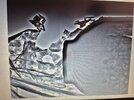
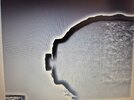
X ray of bottom of bomb one and two. And one view fron inside.
Thanks for your interest. So i have xray shot of the bottom. I just forgot to joint us
For sure its not a NC50 because my team found in reality two bombs in the same hole. Same body. But the second one have already piece of tail fin and this is not the NC50 tail fin. And the size of the body not matching.
Last thing, this is not filled with explosive : one of them was found already full and my team open her wit explosive. The bomb start to smoking for few hours...
X ray of bottom of bomb one and two. And one view fron inside.
Attachments

Exactly.HI ALL
I get the feeling that the bomb didn't just land randomly in the middle of nowhere—in a forest or a field—all on its own.
If the site is a location where bombs were tested—whether during the war, after the war, or otherwise—or if it was a target for air raids, that needs to be taken into account; it also serves as a clue for where to focus the search.
Perhaps Tom 40_fr will add some information, now that he’s read this...
Akon
This airfield was a BF-109 base during World War two and a large area for test. We found sometimes a very strange or rare item...
Hi Tom40_frI Akon.
Thanks for your interest. So i have xray shot of the bottom. I just forgot to joint us
For sure its not a NC50 because my team found in reality two bombs in the same hole. Same body. But the second one have already piece of tail fin and this is not the NC50 tail fin. And the size of the body not matching.
Last thing, this is not filled with explosive : one of them was found already full and my team open her wit explosive. The bomb start to smoking for few hours...
X ray of bottom of bomb one and two. And one view fron inside.
The base of the bomb has a (relatively) thick wall made from a single piece, which is important for maintaining a seal...
I assume that the view from the videoscope is looking at the screw in the base through the hole created by the explosion (? Blade)...
There is still the question of the booster charge near the fuze, though.
That would give us a better idea of the internal configuration... Thanks for the feedback, anyway. It’s not often that someone asking a question works up the courage to actually communicate. Please don't take that the wrong way...
------
To properly open the bomb casing and "direct" the smoke from the filling, you really need a charge oriented lengthwise along the bomb... so I really don't think this is an ordinary smoke bomb... the substitute substance could well be that "smoke acid."
When I look closely at the X-ray, the bottom offers two different closure options... nice
Akon
Last edited:
Its exactly the same body of SC50 JA. Only the bottom was different.
We have a fuze hole ( i dont have the exact word in english sorry) but empty. One bomb have a storage cap on it.
And you right, we do a test and we have a positive answer for sulfuric acid (50%)... Maybe a smoke agent like in bulb of german ZC bombs class.
We have a fuze hole ( i dont have the exact word in english sorry) but empty. One bomb have a storage cap on it.
And you right, we do a test and we have a positive answer for sulfuric acid (50%)... Maybe a smoke agent like in bulb of german ZC bombs class.
I think is not that for many reason:Is this a Sprengbrand C50 or Brand C 50 phosphorous incendiary bomb, which could account from the smoke emitted? Both have a similar construction
-no rest of bottle of phosphor
- the filler was liquide
- bottom is différent
-no phosphor détection after openning
But me too i look for that in first time
Very interesting! Do you have a documentation or something liké that about Skoda bomb production?As for the development(1946-1955) of, for example, Skoda in Czechoslovakia, on the example of here, there are a lot of different types of training ,. incendiary , smoke, etc...
....to illustrate ..in France you certainly have a development after the war, because I would be surprised if it was not so ...
View attachment 211808
In my location, we found often lot af Skoda artillery shell but i know nothing about bomb!
HI Tom40_fr
Feel free to browse the forum and use the search function—try the keyword "Škoda," for instance—and you'll find plenty of study material, including information on Czech bombs.
Regarding the Czechoslovak ammunition you personally have on hand: are you asking about ... 9cm anti-aircraft gun ammo, for example, or something else?
Akon
Feel free to browse the forum and use the search function—try the keyword "Škoda," for instance—and you'll find plenty of study material, including information on Czech bombs.
Regarding the Czechoslovak ammunition you personally have on hand: are you asking about ... 9cm anti-aircraft gun ammo, for example, or something else?
Akon